 The world of artificial intelligence no longer merely innovates. It redistributes power. And India has just sent a clear signal: it intends to be part of the inner circle.
Artificial intelligence is no longer just a technology. It has become an infrastructure of sovereignty. It shapes economic balances, redefines energy dependencies, transforms industrial systems, and reconfigures the hierarchy of nations.
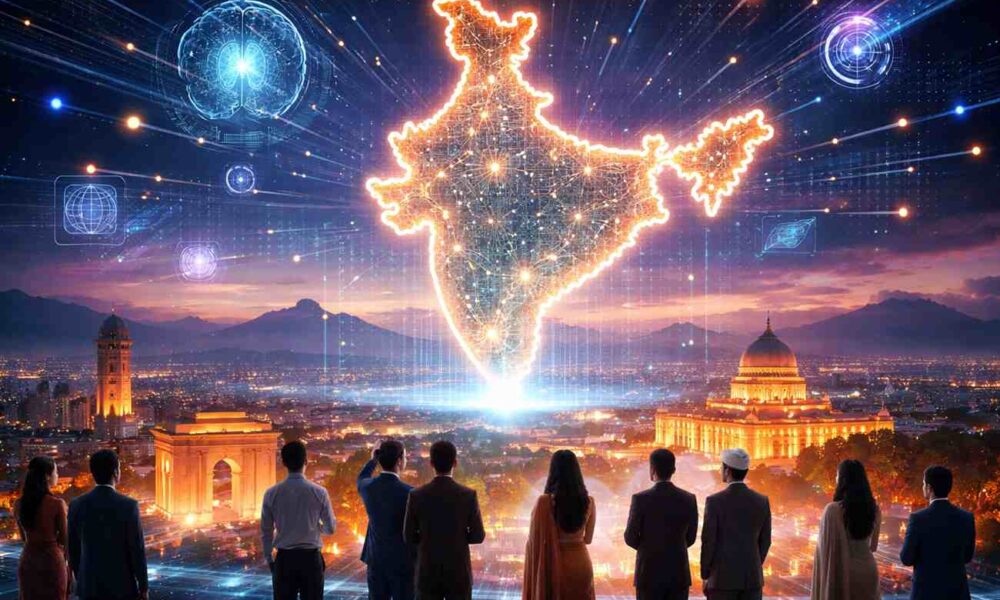
For years, the global debate has been structured around Sino-American rivalry. But the latest international summit held in New Delhi marks a strategic rupture:
India refuses to be a mere execution ground for models designed elsewhere. It wants to design, host, train, and govern artificial intelligence on its own soil.
This summit was not symbolic. It was structural. Behind the diplomatic statements, India is deploying a coherent strategy: a massive ramp-up of computing capabilities, colossal investments in data centers, energy security to power these infrastructures, positioning itself as the voice of the Global South in AI governance.
India is not merely seeking to participate in the digital revolution. It seeks to become a pillar of it.
And it is precisely here that Tunisia must face reality.
The world is entering an era where power is no longer measured solely in hydrocarbons, in armaments, or in heavy industry. It is measured in gigawatts for data centers, in GPU capacity, in control of data flows, in control of digital infrastructures.
In this quiet realignment, Tunisia cannot remain peripheral. Our country has a major strategic asset rarely exploited in its full depth: its immediate proximity to Europe. Within less than two hours of flight from the main European economic centers, Tunisia could become a natural hub of low-latency data centers for Southern Europe, while serving as a gateway to Africa.
In a context where Europe tightens its requirements regarding digital sovereignty, data localization, and regulatory security, Tunisia can position itself as a complementary platform: cost-competitive, energy-adaptable, geographically ideal.
But that requires a clear political decision.
Moving closer to India does not simply mean signing academic cooperation agreements. It means integrating a strategic dynamic: co-developing AI training capabilities, attracting cross-investments in digital infrastructures, positioning Tunisia as a regional node between Europe, Africa, and Asia. Because India understands one essential thing: AI is not just a sector. It is an architecture of power.
The real question for Tunisia, therefore, is not whether it wants to participate in the AI revolution.
The real question is whether it wants to be merely a technological consumer… or a player in the new global digital geography.
History does not repeat itself. It moves.
And today, it moves toward those who build their infrastructures before writing their speeches.
Imed Derouiche
Expert in energy, hydrogen and digital transition