After several months of technical downtime, the Tunisian Sugar Company (STS) officially relaunches its activities at its Béja industrial complex, aided by a financial injection of 16 million dinars designed to bring back into operation a strategic site for the supply of the Tunisian market.
This package made it possible to finance the acquisition of industrial equipment, the execution of urgent repairs on the installations, and the creation of a working capital reserve guaranteeing an immediate resumption of production. In a context marked by the volatility of international commodity markets, the restart of this unit sends a strong signal in favor of securing the sugar supply chain.
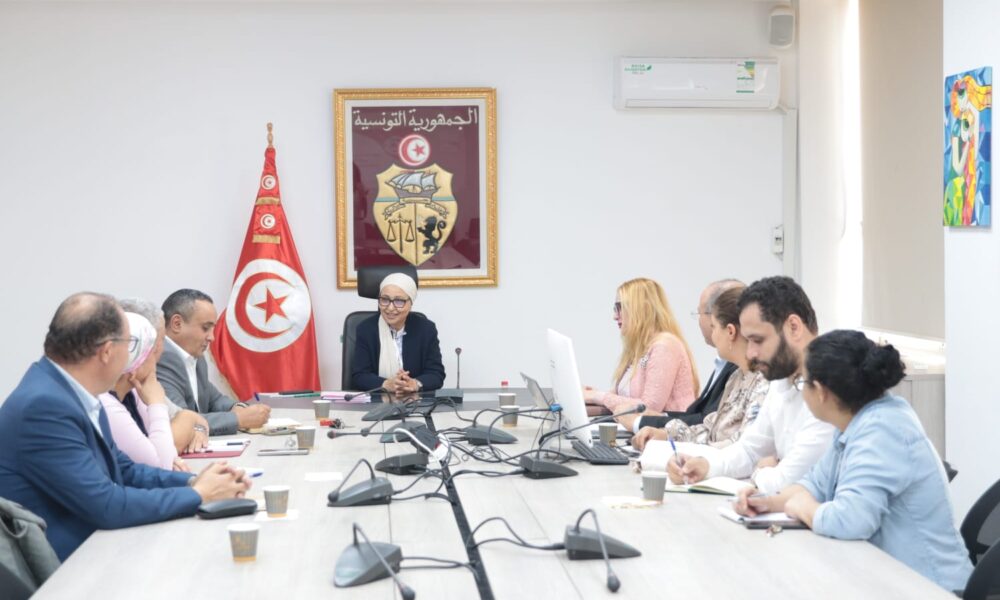
The Minister of Industry, Mines and Energy, Fatma Thabet Chiboub, carried out a field visit to the factory on February 19 to observe the completion of technical trials and confirm the launch of an industrial restructuring program incorporating the new environmental requirements.
Founded in 1962, the STS remains today one of the symbols of Tunisia’s public industrial heritage and a central player in the national strategy to strengthen the country’s food sovereignty.
A technical stoppage revealing the fragilities of the sector
The production halt that occurred in June 2024 resulted from a set of structural constraints accumulated over the years. The industrial installations, some dating back to the 1980s, suffered from advanced wear causing recurrent breakdowns and declining refining performance.
At the same time, the quality of locally available raw materials— notably beets and sugar cane— no longer consistently met the technical standards required by the transformation processes, aggravating the site’s operational difficulties.
This prolonged interruption highlighted Tunisia’s heavy dependence on imports to satisfy domestic demand. According to estimates, national sugar consumption totals about 420,000 tons per year, with nearly 70% imported in the form of raw or refined sugar.
In this context, the Béja plant holds a strategic position as the country’s only public refining site, traditionally ensuring around 40% of domestic supply, through the processing of imported raw sugar and the exploitation of regional agricultural resources.
The progressive restart of activity, with an initial capacity estimated at 600 tons per day, comes at a pivotal moment of demand, as Ramadan approaches, a period during which national sugar consumption experiences a significant rise.
A 56 million dinars investment plan
Beyond the immediate restart of the facilities, public authorities have launched a structuring investment program totaling 56 million dinars over three years aimed at deeply modernizing the industrial apparatus. The stated objective is to raise the plant’s production capacity to 1,000 tons per day by 2027, a rise of nearly 70% compared with the current level.
This plan includes the complete renovation of refining lines, the integration of automated technologies, and the optimization of energy efficiency in industrial processes, which should enable an estimated 25% reduction in operating costs.
The environmental transition is also a central component of this industrial strategy. The investments include the installation of wastewater treatment stations, the valorization of industrial by-products such as molasses and bagasse, as well as improvements in effluent recycling.
A lever to secure national supply
The Béja production restart fits into a broader strategy of regulating the domestic sugar market. Coordination between the STS and the Tunisian Trade Office (OCT) should enable the gradual injection of produced volumes into distribution circuits to stabilize supply and curb price tensions.
Ultimately, the company also aims to obtain international quality certifications such as ISO and HACCP, opening the door to potential presence on certain regional markets.
The industrial roadmap notably includes the acquisition of 12 automated refiners, the establishment of a wastewater treatment station with a capacity of 5 m³ per hour, the training of 150 specialized operators, and the strengthening of partnerships with beet producers in the Béja region.
Beyond the mere industrial dimension, the revival of the STS highlights the strategic importance of the sugar sector for the national economy. In a country where dependence on food imports remains high, every local processing capacity represents an essential lever of resilience in the face of fluctuations in international markets.
The restart of the Béja plant thus illustrates the public authorities’ intent to preserve historic industrial infrastructures while adapting them to contemporary requirements of competitiveness, sustainability, and food security.
If the modernization plan’s objectives are met, the STS could become again by mid-2027 a central pillar of Tunisia’s agri-food policy, contributing to reducing dependence on imports while reinforcing the stability of the domestic sugar market.