Global energy markets are following with growing concern the evolution of the war in the Middle East and its consequences on the world supply of oil and gas. A scenario particularly feared by investors and governments is beginning to take shape: the declaration of “force majeure” by energy companies of Gulf countries.
Several states have already taken this step. Qatar, Kuwait and Bahrain have announced force majeure-related measures in a context marked by intensifying hostilities in the region and by disruptions to maritime traffic in the Strait of Hormuz, one of the planet’s most important energy arteries.
A direct threat to global energy supply
Gulf countries represent a central pillar of the global energy system. They hold about 32.7% of the world’s oil reserves and collectively produce nearly 18 million barrels per day, or about 19% of global demand, estimated at nearly 99 million barrels per day.
Any disruption of these flows would therefore have immediate consequences on the markets. According to Saad Sherida Al-Kaabi, Qatari Minister of State for Energy and CEO of QatarEnergy, prolonging the war for several weeks could push Gulf exporters to invoke force majeure in their contracts.
In this scenario, oil prices could rise to around $150 per barrel, triggering major global economic turbulence.
Qatar, a key player in the global gas market
Qatar also holds a strategic position in liquefied natural gas (LNG) trade. The country is the second-largest LNG exporter in the world after the United States, with about 20% of global trade.
Thus, any disruption to its exports would have an immediate impact on international energy markets, especially in Europe and Asia, where Qatari gas is a vital source of supply.
The situation has already grown tense when QatarEnergy announced the suspension of LNG production after attacks targeting its industrial facilities in Ras Laffan and Mesaieed.
Force majeure, a legal mechanism with immediate effects
In international energy contracts, the force majeure clause is invoked when an external event — war, natural disaster, or major crisis — makes it impossible or highly risky to fulfill contractual obligations.
When activated, this clause allows producers to suspend or reduce energy deliveries without legal penalties until normal conditions return.
In the current context, this concretely means a halt or reduction of oil and gas exports for an indefinite period.
Worrisome signals already visible in the region
Several decisions taken in recent days suggest that the phenomenon could spread.
The Kuwait Petroleum Corporation announced force majeure on certain crude oil sales after a slowdown in maritime traffic in the Strait of Hormuz. At the same time, production was reduced by about 100,000 barrels per day as a precaution.
Meanwhile, Bapco Energies, Bahrain’s energy company, declared force majeure after an attack targeting its refining complex.
These measures could mark the beginning of a domino effect among Gulf producers if the security situation continues to deteriorate in the strategic sea routes.
A supply shortfall difficult to compensate
Widespread activation of force majeure in Gulf countries would trigger a temporary interruption of energy deliveries.
Gulf states export around 18 million barrels per day, and replacing these volumes on short notice would be extremely difficult.
According to him, some adjustments could come from the floating stocks of Russian or Iranian oil or a limited increase in production in other regions. But these solutions would probably not be sufficient to offset a massive halt of Gulf exports.
In this context, oil prices could quickly reach $100 per barrel in a matter of days, or even much higher if the Hormuz Strait closure is prolonged.
Explosion of transport and insurance costs
Tensions in the region have already started to reflect in logistical costs.
Chartering a Very Large Crude Carrier carrying Gulf crude to China now exceeds $240,000 per day, a very high level tied to rising security risks.
This rise in transport and insurance costs adds further pressure on energy markets.
Limited alternatives for importing countries
According to several economists, replacing the volumes exported by Gulf countries represents a major challenge.
Economists estimate that halting exports in the region could trigger a shortfall of between 20% and 30% of global supply.
Facing this situation, importing countries would be forced to turn to other producers such as Algeria, Libya, Russia or certain South American countries.
But these alternatives would be more costly, due to the sudden rise in demand, longer shipping routes, and insurance costs.
According to this expert, oil prices could reach almost $120 per barrel over the next six months if the crisis continues.
The Strait of Hormuz, a vital passageway for the world economy
Beyond energy markets, the potential impact also concerns global trade.
The Strait of Hormuz is one of the world’s most strategic maritime corridors. About 20% of global flows of oil and LNG pass through it daily.
A sustained disruption of navigation could affect not only energy but also the export of petrochemicals, fertilizers and industrial metals produced in Gulf countries.
A risk of global logistics paralysis
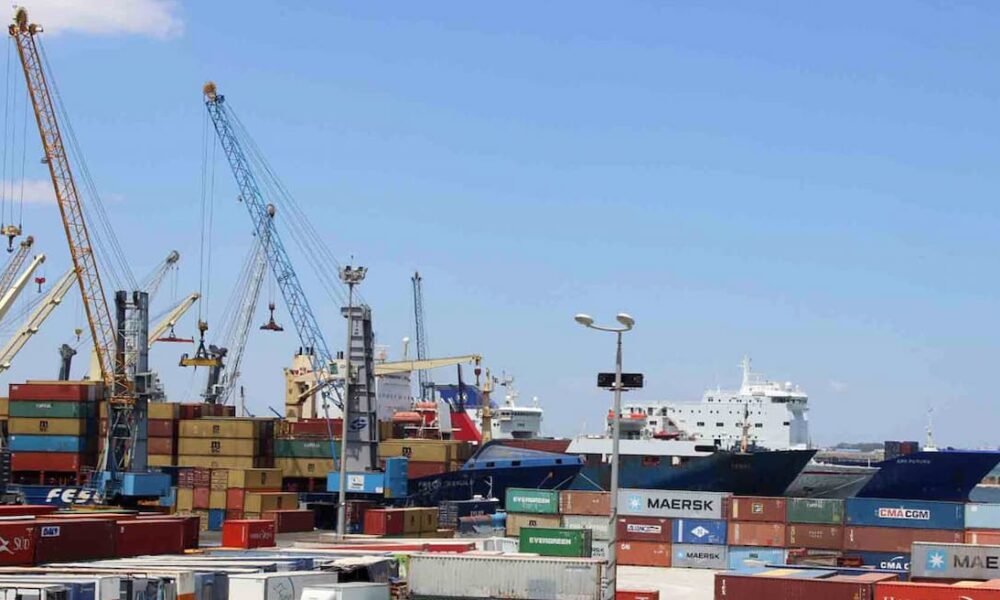
A generalized declaration of force majeure could trigger a near-blockade of maritime transport in the region.
Maritime companies could be compelled to reroute ships onto much longer routes, notably bypassing Africa via the Cape of Good Hope.
Such a situation could push transport costs up by 30% to 50%, while delaying global supply chains by several weeks.
A shockwave for the global economy
The repercussions would not be limited to energy markets. Higher oil and gas prices could rekindle global inflation and raise production costs in many industrial sectors.
According to analysts, if the war continues and the Hormuz Strait remains disrupted for an extended period, some economies could even slip into a phase of stagflation, characterized by weak growth and high inflation.
The situation would be particularly sensitive in Europe, where higher electricity and gas prices could strain energy-intensive industries such as chemicals, steelmaking, or fertilizer production.
A historic energy shock on the horizon
These developments show how much the global economy remains dependent on Gulf stability.
With the rise of new energy-intensive industries — notably data centers and AI-related technologies — markets’ sensitivity to energy disruptions is even stronger.
If the war prolongs and Gulf exports are interrupted for several weeks, the world could face one of the largest energy shocks in decades, marked by a surge in prices, trade disruptions, and elevated global inflation.