The war between the United States, Israel and Iran continues to disrupt global energy balances, with direct consequences for fuel prices and maritime transport. According to German geopolitical expert Clemens Fischer, the situation in the Hormuz Strait could keep fuel prices elevated for an extended period, particularly in Europe.
In an interview with the German press agency, Fischer argues that the prolonged closure of this strategic sea lane makes a rapid drop in energy prices unlikely. “Because of the persistent closure of the Hormuz Strait, one should not expect a decrease in fuel prices in Germany. On the contrary, you must prepare for a continued rise,” he said.
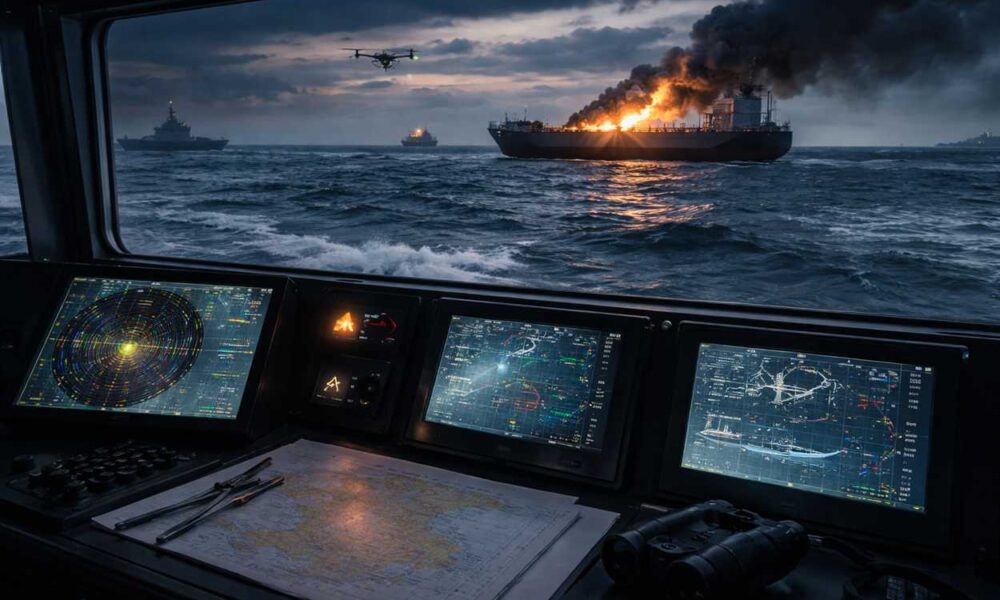
According to the analyst, Iran appears to have anticipated a prolonged blockage of the strait and would possess several military means to maintain pressure on this vital maritime corridor. He mentions in particular the potential use of naval mines, missile and drone attacks, as well as fast attack craft capable of operating in this strategic zone.
“We should expect that this strait remains closed for an extended period,” added Fischer.
A Strategic Route for Global Energy
The Hormuz Strait, about 55 kilometers wide between Iran and the Sultanate of Oman, is one of the nerve centers of the global energy trade. In normal times, nearly a fifth of the world’s crude oil and liquefied natural gas pass through this maritime corridor.
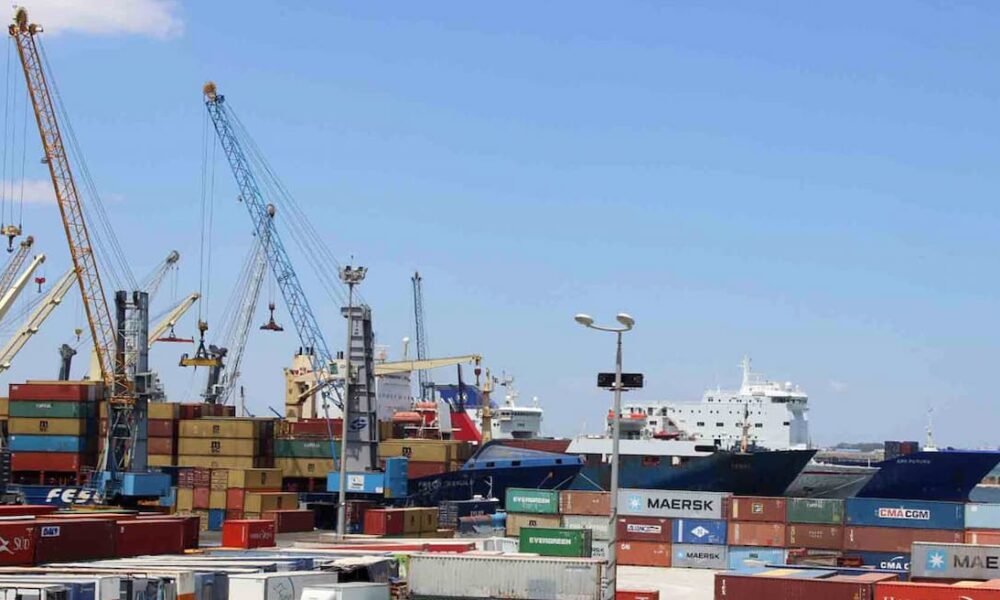
Since the start of the war, maritime traffic in the area has been almost completely paralyzed, disrupting global supply and fueling tensions on energy markets.
According to Fischer, offsetting the volumes of hydrocarbons currently blocked in the region proves extremely difficult in the short term. Even if some countries can release part of their strategic reserves or raise production, the arrival of new quantities on the market could take several days, or even weeks.
The expert also puts forward a figure which he describes as a “shock.” To secure navigation in the Hormuz Strait, a military escort operation would be particularly costly in resources.
According to his estimates, nearly 50 warships would be needed to escort at most three tankers per week through the strait. A plan that illustrates the scale of the security challenge in this strategic zone.
Washington Calls for an International Naval Coalition
Facing the paralysis of navigation, the American president Donald Trump called on Saturday for several countries to participate in securing the Hormuz Strait.
In a message posted on his Truth Social platform, he stated that “several countries will send warships, in cooperation with the United States, to keep the strait open and secure.”
The American president notably urged China, France, Japan, South Korea, the United Kingdom and other countries to deploy military vessels in the region.
“Countries around the world that receive oil via the Hormuz Strait must take responsibility for protecting this passage. The United States will provide significant assistance,” he added.
On Friday already, Donald Trump had announced that the U.S. Navy would begin “very soon” escorting tankers through this strategic corridor. He also threatened to strike Iranian oil facilities if Tehran continued actions aimed at disrupting navigation.
Tehran Threatens American Companies
Iran’s reaction did not delay. Iranian Foreign Minister Abbas Araghchi warned that Tehran could target American companies present in the region if Iranian energy facilities were bombed.
This verbal escalation illustrates the level of tension surrounding the Hormuz Strait, whose security has become a major issue for the global economy and energy markets.
In this context, analysts believe that as long as the military situation remains uncertain in this strategic area, oil and fuel prices could stay under sustained pressure.