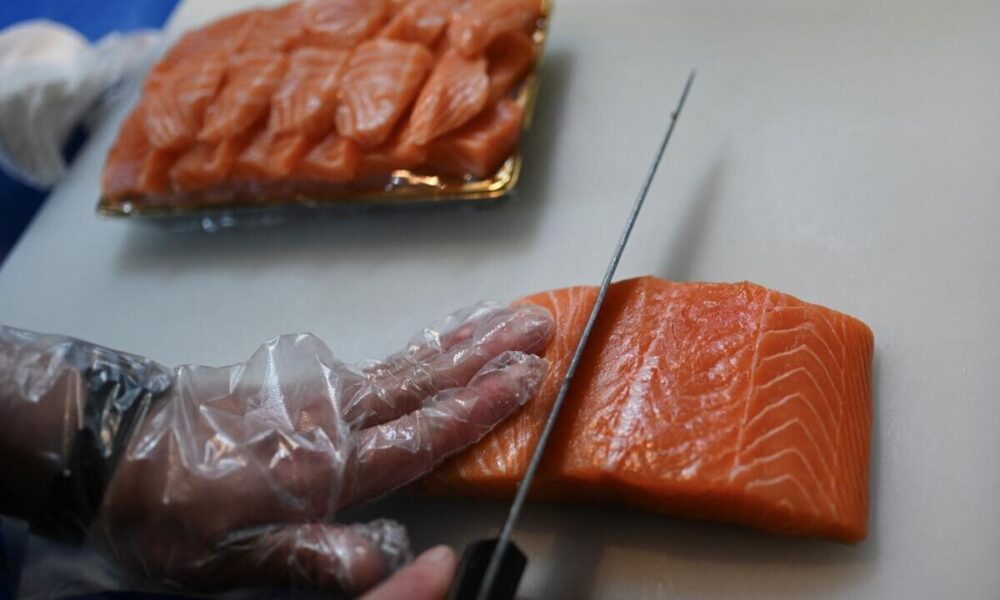
China: Xinjiang’s ‘Desert Salmon’ to Reduce Its Imports
In Xinjiang, thousands of kilometers from the sea, China is developing an unexpected fish farming sector.
As the Chinese aim to reduce their dependence on imports and bring about 100% local production, Xinjiang, best known for its cotton, is gradually establishing itself as a new production hub, with more than 10,000 tonnes expected and a sector in the process of structuring.
The Chinese government’s stake is strategic since imports amount to around 100,000 tonnes of salmon per year, mainly from Norway and Chile.
Even if per-capita consumption remains very low, they are counting on enormous growth potential, provided they democratize this product among an expanding middle class.
Indeed, the taste, considered less fatty, and above all the mistrust of a freshwater fish eaten raw still deter some buyers, and blind taste tests show little difference.
In this regard, the development of a domestically produced eggs supply chain could lower costs and accelerate the growth of this ‘Desert Salmon’.
As a reminder, China has allowed rainbow trout to be marketed as ‘salmon’ since 2018, blurring the boundaries for consumers.