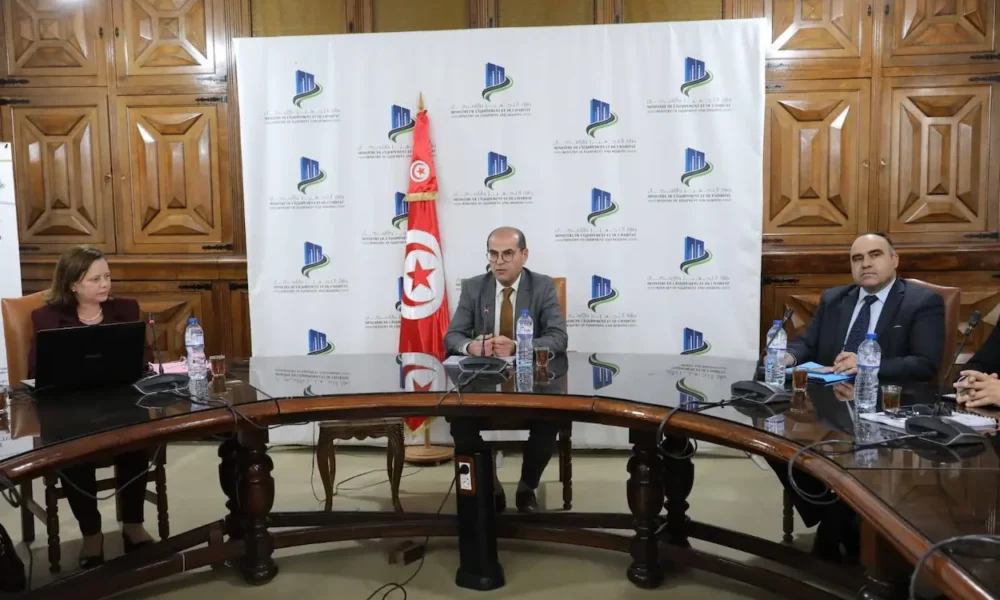
The Minister of Equipment and Housing, Slah Zouari, who is also in charge of the interim management of the Ministry of Industry, Mines and Energy, chaired, on Wednesday, April 29, 2026, a meeting of the steering committee of the rehabilitation and integration program for housing neighborhoods.
This meeting is part of the follow-up on the program’s progress and the adherence to the deadlines set for the completion of its various components.
The second generation of the program at the heart of the proceedings
The meeting made it possible to examine the progress status of the second generation of the rehabilitation and integration program for housing neighborhoods, known as PRIQH2.
This program concerns the development of 160 neighborhoods, with an estimated cost of nearly 852 million dinars.
It aims to improve living conditions in the affected neighborhoods, strengthen basic infrastructures and promote better integration of these areas into the organized urban fabric.
Difficulties related to funding and coordination
Participants reviewed the main difficulties hampering the execution of certain components of the program.
Among the points raised are the requests made by municipalities for additional credits, as well as the need to strengthen coordination between the various actors at central and regional levels in order to avoid delays.
A call for tighter control of the execution schedule
Slah Zouari called for better management of the execution timetable of the different components of the second generation of the program.
He particularly emphasized projects related to the development of social plots intended for construction.
These plots aim to limit anarchic urban expansion by making available to low-income families serviced lands with basic facilities, allowing them to build decent housing within a legal framework.
Priority to projects with a direct impact on citizens
The minister also stressed the need to accelerate the resolution of land issues and to finalize the procedures for awarding contracts.
He urged giving special attention to the program’s priority components, notably those having a direct impact on the daily lives of citizens.
A strategy to strengthen territorial and social equity
Slah Zouari affirmed that the rehabilitation and integration program of housing neighborhoods constitutes one of the State’s main intervention mechanisms to promote territorial and social equity.
He also recalled the importance of the right to decent housing, highlighting the ministry’s commitment to ensuring precise on-the-ground monitoring of all components of the program, in coordination with financial and technical partners, as well as with regional and local authorities.
Evaluation of the first generation and preparation of future programs
The meeting was also devoted to evaluating the first generation of the program.
Recommendations were presented to avoid the shortcomings noted during the implementation of the second generation, whose implementation pace is progressing.
These lessons should also serve to prepare future programs that will be included within the 2026-2030 development plan.