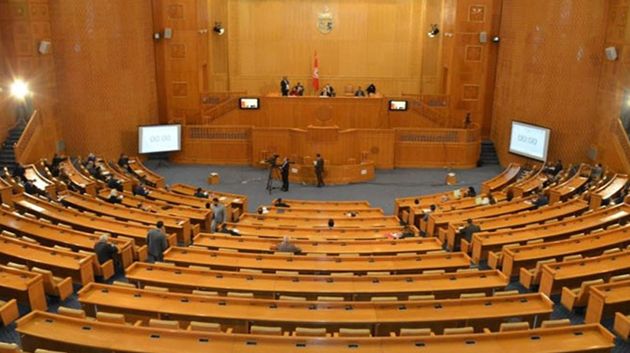
The legal and economic aspects of five major solar-powered electricity production projects were at the center of a hearing session held this Monday by the Investment and International Cooperation Commission of the National Council of Regions and Districts, under the supervision of Council President Imed Derbali, and in the presence of the Minister of Economy and Planning, Samir Abdelhafidh, as well as the Secretary of State for the Energy Transition, Wael Chouchane.
The session focused on the examination of five draft laws aimed at approving concession agreements for electricity production and site rental contracts intended for photovoltaic plants distributed across the governorates of Gafsa, Sidi Bouzid and Gabès. The Council President described this orientation as a “strategic, indispensable choice to enshrine energy sovereignty and steer investments toward vital sectors,” according to a Council press release published on Monday evening.
During the presentation, the Secretary of State for the Energy Transition unveiled quantified data illustrating the scale of Tunisia’s structural energy balance crisis. National resources in primary energy fell from 8.3 million tonnes of oil equivalent in 2010 to about 3.4 million tonnes in 2025, resulting in an energy dependency of around 65% and an energy trade deficit exceeding 11 billion dinars.
It was stressed that the shift to solar energy will enable electricity production at a competitive cost, ranging between 100 and 112 millimes per kilowatt-hour. This option is presented as a fundamental solution to reduce the pressure on public finances, which have borne energy subsidy charges exceeding 7 billion dinars.
These projects concern the Segdoud plants in Gafsa, for an investment of 305 million dinars, and the El Khabna plant in Sidi Bouzid, the largest among them, with a capacity of 198 megawatts and an investment close to 500 million dinars, as well as the Mezzouna, El Ksar and Menzel Habib plants.
According to the press release, the El Khabna power plant project is expected to significantly help reduce the cost of electricity production. It will also allow the Tunisian state to avoid importing about 98 thousand tonnes of oil equivalent per year and to save nearly 96 million dinars per year on gas-based production costs, while creating about 40 permanent jobs and over 600 jobs during the implementation phase.
Meanwhile, deputies of the Investment and International Cooperation Commission insisted in their interventions on the necessity of providing solid legal guarantees protecting the state’s interests. They expressed concerns about international arbitration clauses that these conventions might contain, as well as the risks they could pose for national sovereignty and public finances.
The deputies called for strengthening the role of the national judiciary in settling potential disputes, while stressing the importance of corporate social responsibility of investing companies to guarantee real development in the regions. They also argued for greater involvement of Tunisian institutions and companies in the energy transition process, with the aim of building a durable local industrial fabric.
Reacting to this question raised by several deputies during the debate, the Minister of Economy and Planning explained that the current legal framework places national courts as the first recourse for dispute resolution. International arbitration remains, in his view, limited to precise cases related to the nature of international project financing, affirming that Tunisia possesses the necessary capabilities to defend its interests.
Additionally, regarding the issue of electricity export, Samir Abdelhafidh and the accompanying delegation noted that the current contractual and legal framework does not permit investors to export production. The electricity produced is destined for the Tunisian Electricity and Gas Company (STEG), as the sole entity authorized for this purpose, while mentioning the possibility of future export orientation in the event of a production surplus.
In the same frame, emphasis was placed on the importance of rationalizing energy consumption, considered an essential complement to the energy transition process. It is not enough to develop production without controlling demand, which requires strengthening awareness policies and changing consumption patterns, according to the press release.
Regarding the role of national institutions, it was affirmed that the Tunisian Company of Electricity and Gas remains a central actor in the energy system. These projects are not meant to marginalize it, but to support it and ease the burdens it bears, particularly given the limitation of its resources relative to the volume of investments required.
Regarding the end of concession terms, the Minister of Economy and Planning and the accompanying delegation indicated that the conventions provide clear mechanisms ensuring either the transfer of equipment to the State when they are still operable, or the obligation for the investor to dismantle them and restore the site to its initial state, in order to preserve the State’s rights and guarantee the sustainability of exploitation.
It was also emphasized that these projects will help support the national economy through reducing energy dependence, improving the competitiveness of Tunisian products by lowering the carbon footprint, as well as attracting foreign investments and strengthening Tunisia’s position in the field of renewable energy.