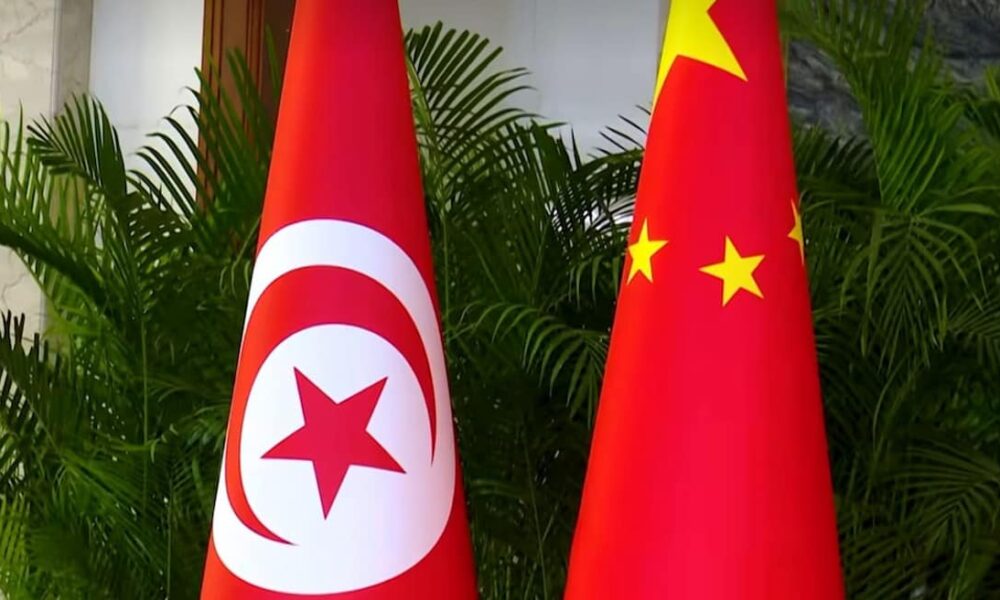
Since the beginning of May 2026, China has begun applying a total tariff exemption, i.e., zero customs duties, on all goods originating from 53 African countries with which it maintains diplomatic relations, including Tunisia. This measure aims to boost trade and consolidate economic cooperation with the countries of the continent.
This policy had entered into force on December 1, 2024 for 33 African countries classified among the least developed countries, with exemptions covering all product categories.
As part of broadening this orientation, China decided to generalize the measure to 20 additional African countries not qualifying for that category, including Tunisia, by granting them preferential treatment in the form of a total tariff exemption for two years.
This decision, announced by Chinese diplomatic sources, comes in application of a statement by President Xi Jinping, formulated in a congratulatory message on the occasion of the 39th session of the African Union Summit, held in February. He had stated that this move is part of a strategic orientation aimed at strengthening the economic partnership with African countries, alongside pursuing cooperation agreements that foster common development.
This initiative, which constitutes a unilateral measure by China, aims to support African exports to the Chinese market and to enable African countries to rapidly benefit from the available commercial opportunities, especially in a context marked by global economic challenges, including the repercussions of international conflicts and the rise of protectionist trends.
As for Tunisia, olive oil is among the main agricultural products destined for export. The Chinese Embassy in Tunisia has worked, during the recent period, to coordinate with Chinese customs authorities the organization of information sessions for the Tunisian side, during which inspection and quarantine procedures as well as import rules for food products were presented.
China has also given particular attention to non-tariff measures. The General Administration of Customs has thus revised the regulations concerning the registration of foreign exporters of food products, in order to facilitate these products’ access to the Chinese market.
In this context, a notable rise in the number of Tunisian olive oil producing companies registered with Chinese authorities has been observed.
To support this dynamic, the Chinese Embassy invited the Tunisian Export Promotion Center to propose a number of major companies operating in the sector, with a view to accompanying them on the ground and removing obstacles that might arise during registration and export procedures.
The next step should be marked by strengthened coordination between the two countries, with the aim of accelerating access of Tunisian agricultural and food products to the Chinese market, while encouraging diversification of exports to take advantage of the strong potential offered by this market.
It should be noted that this policy differs from traditional free-trade agreements to the extent that it rests on the principle of unilateral and gradual tariff exemption, without any requirement for reciprocal reductions.
Within this framework, the two sides are working toward concluding so-called “early harvest” arrangements and economic partnership agreements ensuring a durable and stable institutional framework.
China and Tunisia have already reached agreement on the text of the general framework of this partnership, whose signing is expected in the near future. This step should pave the way for detailed negotiations covering several areas, including trade facilitation, strengthening economic inclusion, support for supply chains, and engagement in new development domains.
This initiative reflects China’s orientation toward broadening its economic openness to the African continent and strengthening its trade relations with it, thereby helping to build a partnership based on common interests and mutual development.