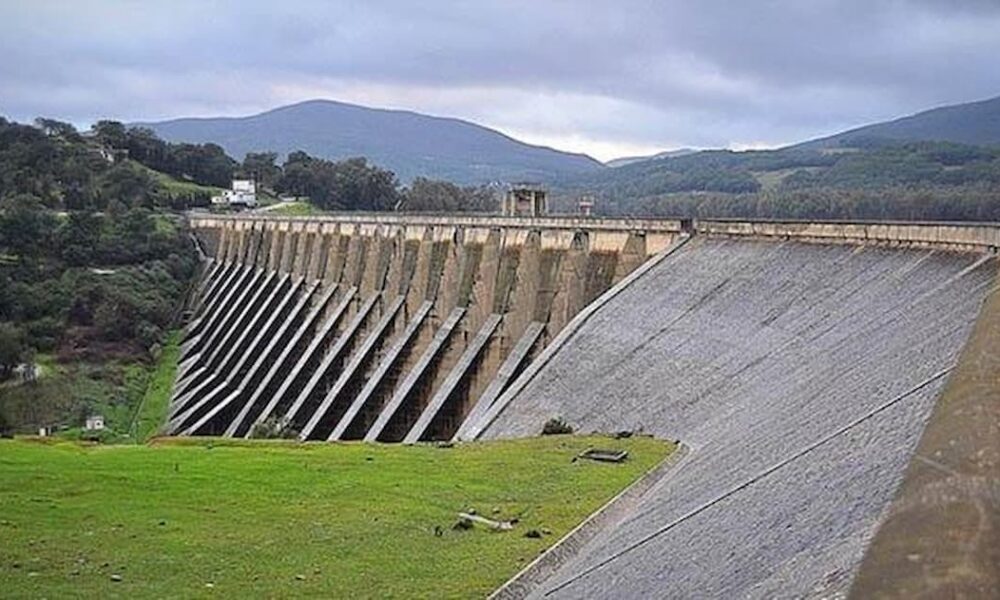
The development plan for the 2026-2030 period represents a decisive step in the process of consolidating water security in Tunisia. It relies on mobilizing conventional and non-conventional water resources, promoting equity between regions, and guaranteeing the availability of resources for the benefit of future generations.
In this framework, the policy on water resources occupies a central place in this plan, as a fundamental pillar to ensure water, food, and energy security. It relies in particular on the construction of dams, the development of supply and distribution networks, the adoption of innovative solutions that have proven their effectiveness, as well as on guaranteeing the structural safety of dams and combating silting at their basins.
Construction of new dams and strengthening strategic storage
The water policy for the 2026-2030 period aims to develop storage infrastructure, through the construction of new dams and the strengthening of strategic water reserves, to consolidate the national capacity to face periods of water stress.
The north of the country, in this regard, holds paramount importance, being the rainiest region and richest in surface resources. The large dams located there thus constitute the backbone of national strategic storage.
These works contribute to water supply for several inland and coastal regions, thanks to conveyance and transfer systems, thereby reinforcing water solidarity between regions and supporting equity in resource distribution.
Underground dams to support deep groundwater resources
The plan also provides for strengthening groundwater resources through the construction of 16 underground dams. These works aim to reduce evaporation, promote the recharge of aquifers, and increase storage capacity by 300 million cubic meters.
These projects are part of an orientation to diversify water sources and improve storage capabilities, especially in a context marked by the need for more effective and sustainable water solutions.
Major projects for mobilizing surface resources
Among the main projects planned or ongoing under this plan is the continuation of the Mellègue upper dam, with a capacity of 195 million cubic meters, during the 2016-2026 period.
The plan also includes the Douimis dam, with a capacity of 45 million cubic meters, during the same period, as well as the Khallad dam, with a capacity of 27 million cubic meters, whose construction extends from 2024 to 2029.
It also provides for the construction of the Tessa and Raghay dams during the 2026-2030 period. These projects aim to improve control of surface flows and reduce flood risks.
Flood protection and raising the Sidi Saâd dam
In addition to dam projects, works continue within the framework of the flood protection project, from the confluence of the Medjerda and Mellègue rivers to the Sidi Salem dam.
Another project concerns the protection of residential areas and infrastructure from the Algerian border to the confluence of the Medjerda and Mellègue rivers.
Moreover, the project to raise the Sidi Saâd dam will be completed, with the objective of increasing its storage capacity to 100 million cubic meters. This operation will strengthen its retention capacity and contribute to better control of water resources.
Towards a more resilient water system
These projects reflect a clear orientation toward strengthening Tunisia’s water infrastructures, through support for strategic storage, mobilization of surface and groundwater resources, as well as improving the structural safety of dams.
In its dam-related aspect, the 2026-2030 development plan constitutes a crucial step toward a more resilient water system, capable of guaranteeing water security, strengthening regional equity, and preserving resources for future generations.
Dams under construction with a storage capacity of 318 million m³
- Mellègue supérieur (Le Kef)
- Douimis (Bizerte)
- Kalaâ (Sousse)
- Essaïda (La Manouba)
4 planned dams with a storage capacity of 230 million m³
- Tessa (Siliana)
- Khallad (Béja)
- Raghay (Jendouba)
- El Maleh supérieur (Béja/Jendouba)
7 dams under study
- Mekides-Ghezala (Jendouba)
- Ouzafa (Siliana)
- Ed Dir (Jendouba)
- Chaâfro (La Manouba)
- Béja (Béja)
- Boulaâba (Kasserine)
- Hammam Zriba (Zaghouan)