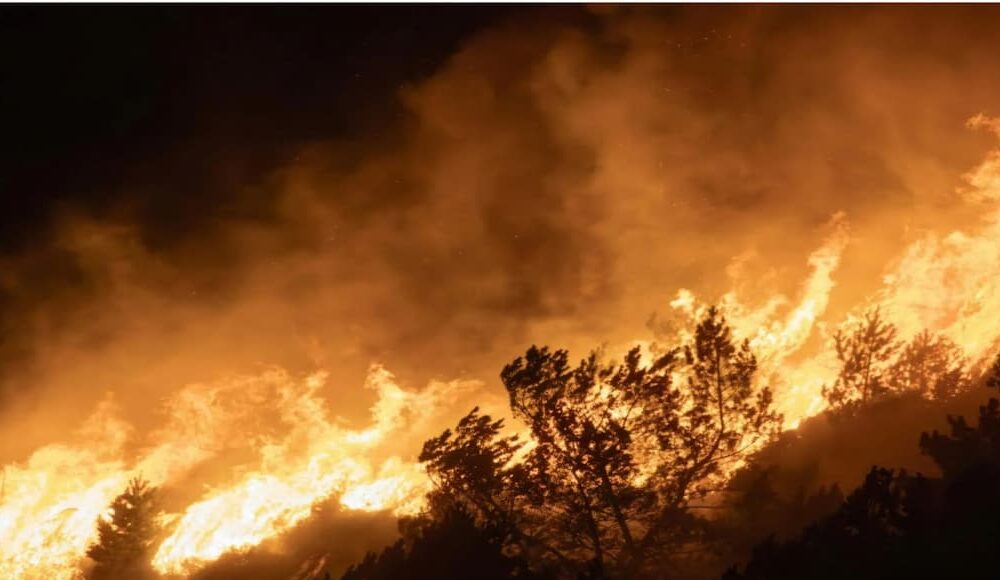
This Friday, the smoke from ongoing wildfires in Canada, pushed southward by the winds, plunged several American metropolises into a thick veil of pollution, raising concerns ahead of the World Cup final, scheduled this weekend near New York in an open-air stadium.
Organizers “are monitoring the situation closely,” said Andrew Giuliani, who heads the White House team charged with organizing the World Cup, at a press briefing in New York.
“There have been discussions about this; we have someone from the National Weather Service with FIFA,” he added.
In New Jersey, where Sunday’s final between Spain and Argentina will take place, air quality was still deemed “unhealthy” on Friday morning, though slightly improved from Thursday when the silhouette of Manhattan’s skyscrapers was barely visible from some areas.
Since Thursday, the official safety app for supporters has been sharing alerts about the smoke, urging people to stay indoors or wear a mask.
National Weather Service forecasters warned that “the smoke could thicken again tonight and Saturday morning,” but forecasts at this stage do not show conditions as degraded as for Sunday.
“We should see the return of northwesterly winds over the Great Lakes region, which could wrap some of this smoke and push it toward the Northeast,” Peter Mullinax, a meteorologist with the NWS, told AFP.
In several cities in the Midwest and Northeast, many residents were wearing masks outside on Friday to protect themselves.
Wrapped in a yellowish haze, Detroit and Chicago displayed air quality indices classified as “hazardous.” According to the specialized site IQAir, they were among the most polluted metropolises in the world on Friday.
Southerly winds also carried the smoke to Washington. The American capital recorded air quality deemed “very unhealthy,” a level at which authorities advise the entire population to avoid any nonessential outdoor activity.
Rain expected this weekend could help dissipate the densest smoke, according to Mark Parrington, a scientist at the European Copernicus Atmosphere Monitoring Service.
“But what happens next will depend on how the fires evolve and their intensity,” he cautioned AFP.
The NWS extended through Friday their air quality alert for Chicago, while noting that scattered thunderstorms and changes in wind direction could push the smoke toward the Northeast.
Nearly 2.8 million hectares have burned since the start of the year, according to the latest official government figures. Last Friday, this figure was about 1.6 million hectares.
Ontario wildfires have so far claimed no lives, but several isolated villages had to be evacuated.