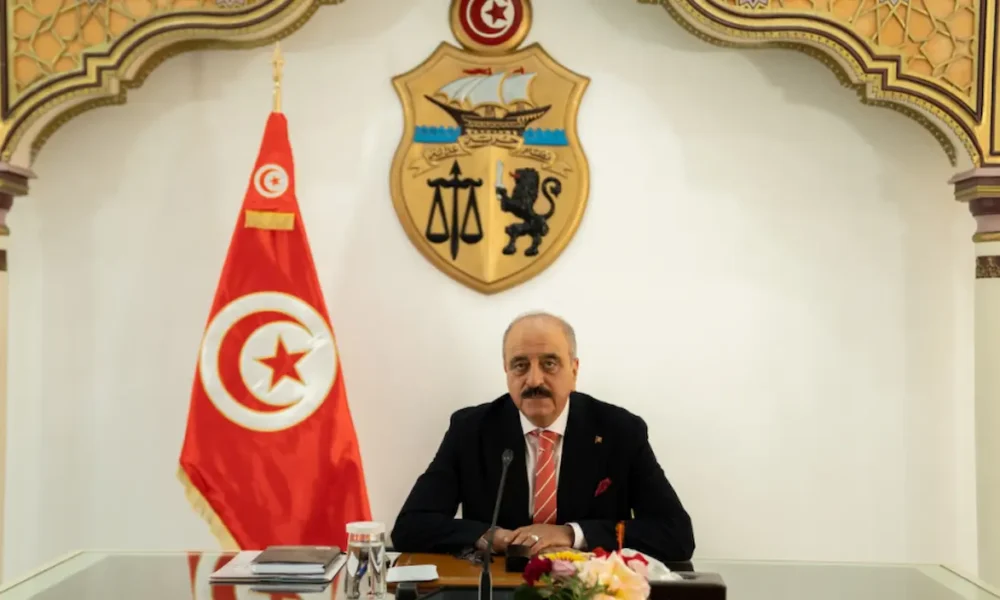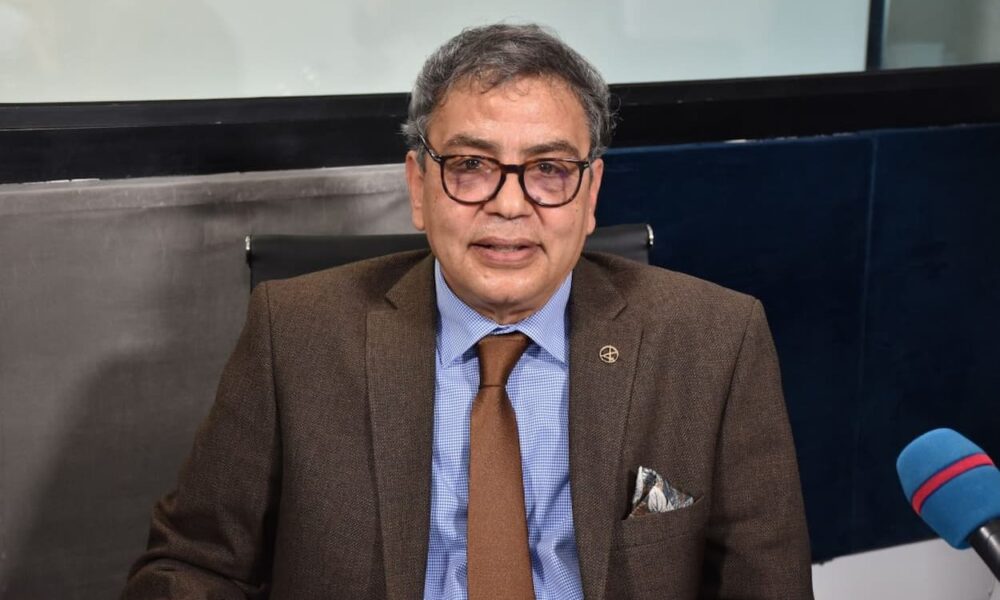
The governor of the Central Bank of Tunisia (BCT), Fethi Zouhair Nouri, called for turning monetary cooperation into a real tool for strengthening resilience, arguing that a new profile of central bank governors is now necessary.
This call was made on the occasion of his participation in the 8th meeting of the Forum of Central Banks of the Organisation of Islamic Cooperation (OIC)/COMCEC, held in Istanbul on 13 and 14 September 2026, and organized jointly by the Central Bank of Turkey and the Coordination Office of the Standing Committee for Economic and Commercial Cooperation (COMCEC) of the OIC.
This high-level meeting, which brought together central bank governors and their representatives from member states, was devoted to the theme: “Geopolitical Shocks and Macro-economic Resilience: Monetary Policy Responses to the Fragmentation of the Global Economy.”
The discussions focused in particular on emerging risks weighing on macroeconomic stability, the responses by central banks, and ways to strengthen cooperation in the face of increasingly frequent and tightly interconnected global shocks.
The governor of the BCT stressed that geopolitics was no longer an external variable, but now directly influenced the balance of payments, eroded foreign exchange reserves, altered inflation expectations and disrupted supply chains.
“For most of the economies represented at this meeting, these repercussions are transmitted through three main channels: energy, food and external financing,” he said.
According to him, a 10% rise in oil prices due to geopolitical factors is accompanied by a 7% rise in natural gas prices and a 5.4% rise in fertilizer prices, with consequences, a few months later, for electricity costs, the price of bread and the profitability of the next agricultural season.
The governor also stressed that shocks do not affect all countries with the same intensity. He cited IMF estimates that advanced economies would lose about 0.2 percentage points of growth in the current year, versus 0.5 percentage points for low-income commodity-importing countries.
The cost of the same global shock would thus be two and a half times higher for the most vulnerable economies.
Tunisia constitutes, in his view, a direct example. By the end of June 2026, the energy balance deficit reached nearly 7 billion dinars, up 35% from the previous year, while the price of a barrel of oil rose by $14 in twelve months, against a backdrop of tensions in the Middle East.
In 2022, 55% of Tunisia’s imported wheat came from Russia and Ukraine. In this regard, the governor of the BCT said: “Tunisia was not party to any conflict, but our food security was tied to it.”
He thus called for measuring exposure to geopolitical risks not in kilometers, but according to the number of economic channels linking an economy to the repercussions of crises.
The governor also stressed that crises now tend to overlay and accumulate. Energy and food shocks, geopolitical and climate risks, trade fragmentation and tightening financial conditions often occur before economies have been able to rebuild margins eroded by the previous crisis.
This situation, he said, calls for an evolution in the very nature of central banks’ work.
“It is no longer just about being able to absorb a shock. We must also be able to anticipate the next one,” he stated.
Fethi Zouhair Nouri also noted an evolution in market perception, with investors now giving attention to the evolution of oil prices, budget deficits and levels of public debt comparable to the attention given to the inflation rate.
He believes that this evolution requires a new generation of central bank governors, capable of mastering all dimensions of the macroeconomic economy, monetary and fiscal policies, energy and the financial sector, and whose voice in the economic debate could carry weight and authority comparable to that of Finance Ministers.
According to him, this requirement is not incompatible with the independence of central banks. It rather serves to strengthen it, as price stability cannot be ensured sustainably without taking into account the evolution of debt, energy and external financing conditions.
On the results achieved, the governor recalled Tunisia’s path, with inflation dropping by more than 10 percentage points at the beginning of 2023 to 5.1% currently, the policy rate kept at 7%, the stability of the exchange rate and foreign exchange reserves covering nearly 100 days of imports.
“Credibility is the most important asset of a central bank: it is built slowly, preserved every day and can be lost quickly. No liquidity line can compensate for lost credibility,” he said.
The governor also recalled that member states represent 57 countries, nearly a quarter of the world’s population, and hold reserves exceeding $1.8 trillion. Yet intra-OIC trade remains limited to about 20% of their total trade, a situation he regards more as untapped potential than a weakness.
In this context, Fethi Zouhair Nouri proposed four cooperation priorities: establishing early warning mechanisms and common resilience tests, accelerating the interoperability of payment systems, progressively developing settlements in local currencies based on bilateral corridors rooted in real trade, and working toward the creation of liquidity mechanisms among central banks.
He concluded his intervention by declaring: “In a world heading toward more fragmentation, our response should not be more fragmentation, but more cooperation.”