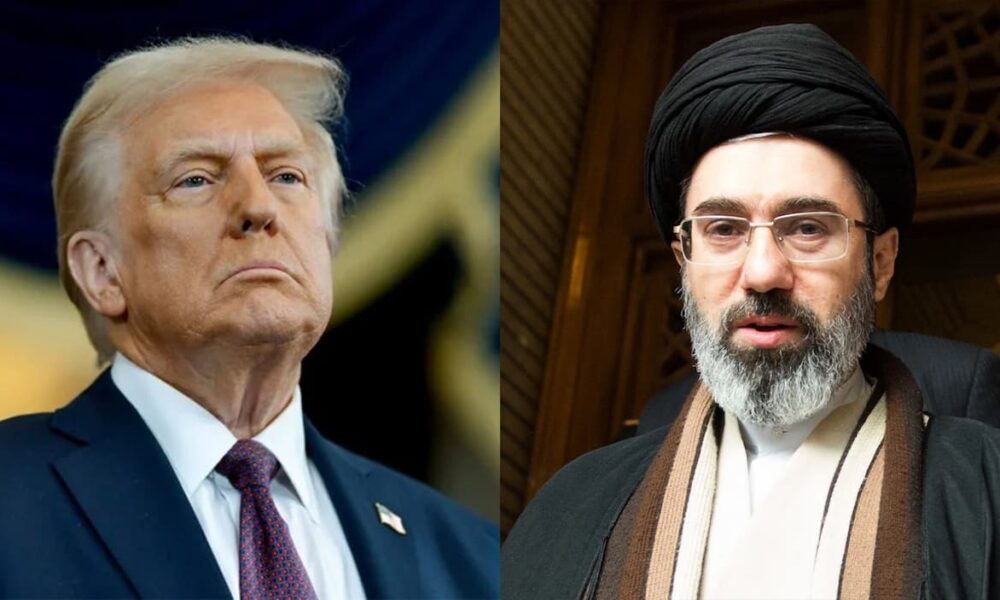
The Strait of Hormuz remains at the heart of the escalation between Iran and the United States. A tanker caught fire after being hit by a projectile, while Tehran cited a naval mine. In Washington, the Pentagon is drafting scenarios for new strikes, despite Donald Trump’s pledge not to attack Iran before the U.S. elections on November 3. The possibility of an Israeli initiative is also fueling conflicting reports.
The essentials on October 11, 2026
• A tanker was struck on October 10 in the Strait of Hormuz; the crew was reported safe according to UKMTO.
• The Pentagon now acknowledges 21 American military deaths and 865 wounded in operations related to the war against Iran.
• Washington is weighing military options; no new offensive against Iran has been announced.
• Reports of a solo Israeli strike were denied by American and Israeli officials.
Hormuz: a vessel struck, two narratives to distinguish
The British maritime traffic monitoring center UKMTO reported that a tanker leaving the Strait of Hormuz had been struck on the port side by an unknown-origin projectile, causing a fire. The alert, issued after the October 10 incident, states the crew has been declared safe. The extent of the damage and potential environmental impact were not yet determined.
Separately, the Islamic Revolutionary Guard Corps (IRGC) claims that a supertanker struck a naval mine while attempting to pass along a route they consider unauthorized. According to their account, the vessel, described as having a capacity of around 2 million barrels, would have disabled its navigation systems. These accusations do not constitute an independent conclusion about the cause of the incident; British authorities did not attribute the origin.
The tension extends into the Gulf of Oman: the American CENTCOM command announced on Saturday that it had halted the merchant vessel Ocean Molica, flying Panamanian flag, after claiming that it was attempting to breach the American blockade of Iranian ports. According to the American military account, a precision strike neutralized its propulsion without injuring the crew. This version has not been independently verified.
Trump rules out an attack before the elections, the Pentagon prepares options
On October 8, Donald Trump stated that the United States would not carry out new attacks against Iran before the midterm elections on November 3, 2026. He spoke of “productive” discussions with Tehran, while confirming the maintenance of the American blockade and reaffirming his intention to prevent Iran from acquiring a nuclear weapon.
This statement did not interrupt military planning. According to the New York Times, cited by Israeli press, the Pentagon has contemplated an intensive campaign scenario of about 72 hours, targeting stocks and launchers of missiles, drone facilities, Revolutionary Guard command centers, and energy infrastructure. Axios also reports American military preparations.
These are plans and options reported by the media, not a decision or operation launched. Their potential implementation would remain subject to a political decision.
Israel: discussions on strikes, but denial of a solo operation
The Israeli Channel 12 reported exchanges between Donald Trump and Prime Minister Benjamin Netanyahu about possible strikes against Iran, with no final decision made public. According to Maariv, Israel had been preparing during the week for various escalation scenarios, without its army being engaged in preparing an immediate preventive attack.
Another Maariv report claimed that Washington had urged Israel to act alone before the U.S. elections. Two American officials and one Israeli official, however, denied this claim to Channel 12 correspondent Barak Ravid. It would be inaccurate to present an American request for an Israeli strike as established fact.
The electoral calendar plays a particularly important role: Israeli parliamentary elections are scheduled for October 27, ahead of the U.S. vote on November 3. The possibility of a regional flare-up remains a topic of discussion, with no military decision confirmed at this stage.
21 dead and 865 wounded: the American tally revised upward
The Pentagon has updated its tally of American servicemembers linked to operations against Iran: 21 dead and 865 wounded, according to figures through October 9 and reported by the Washington Post. The death toll had previously been listed at 18; the wounded total is higher by 98 than that reported in August, according to the New York Times.
The new total includes two non-combat-related deaths reintegrated into the count. The victim categories and the administrative perimeters used by the Pentagon should therefore be distinguished from losses directly caused by enemy attacks.
Bloomberg: Iran retains missile manufacturing capabilities
Despite American and Israeli bombardments, Tehran would still be capable of producing missiles and drones, according to anonymous Western official assessments reported by Bloomberg on October 9. One official estimates that Iran retains a substantial stock of ballistic missiles and some anti-ship weapons, as well as a rapid-reconstitution capability.
The agency also reports, citing an official, deliveries of Russian missiles to Iran; the Russian Defense Ministry had not responded to its request for comment. These estimates do not allow for a precise determination of the volume of Iranian stocks still available.
Another topic of debate: a report by Al Jazeera on Iran’s anti-ship missile “Qassem Bassir” relies on a statement by Mohsen Rezaei from September 21 concerning a test near the American aircraft carrier George Washington. Iranian media attribute a range of at least 1,200 km, a warhead of 500 kg, and infrared electro-optical terminal guidance. These characteristics are Iranian claims not independently confirmed, and no successful strike against the aircraft carrier has been established. The scene shown in the report is a simulation, not footage of a real engagement.
Tehran denounces the strikes and American accusations
Iranian Foreign Minister Abbas Araghchi accuses the United States and Israel of creating serious environmental risks by striking Iranian oil, energy, and nuclear facilities. He says those responsible must answer for their actions and characterizes attacks on nuclear facilities as serious violations of international law. He also directly implicates Benjamin Netanyahu; these accusations reflect Iran’s official stance.
The United Nations Environment Programme had already warned, in March, about the health and ecological consequences of fires at oil depots in Iran, notably residents’ exposure to toxic fumes.
In another verbal exchange, the spokesperson for Iran’s Foreign Ministry, Esmaeil Baqaei, denounced the creation of an “imaginary enemy” after Trump’s statements mentioning Los Angeles and San Diego. The American president says his remarks were misinterpreted: he said he was referring to the danger that a nuclear-armed Iranian power could pose, not wishing an attack on those cities.
Iranian President Massoud Pezeshkian says that his country does not fear threats and that negotiations cannot succeed under military or economic pressure.
In Lebanon, a call to accelerate illegal disarmament
Lebanese Justice Minister Adel Nassar stated that disarming groups holding illegal arms, fighting terrorism, and prosecuting lawless individuals constitutes an irreversible policy, which he said should be accelerated. He also announced the continuation of the investigation into explosives seized in the Dahr al-Baydar region. This statement comes amid a regional context marked by persistent tensions.
A persistent risk for oil and global trade
The war, started on February 28, 2026, has entered its 225th day on October 11. The ceasefire protocol signed in Islamabad on June 17, i.e., 116 days ago, has not resolved disagreements over the Strait of Hormuz and the conditions for a durable halt to hostilities.
For energy-importing economies, including Tunisia, the issue is the evolution of oil prices, maritime insurance costs, and transportation. However, the extent of an impact on Tunisian domestic prices would depend on the duration of disruptions and national price-setting mechanisms; it is not possible to quantify at this stage.