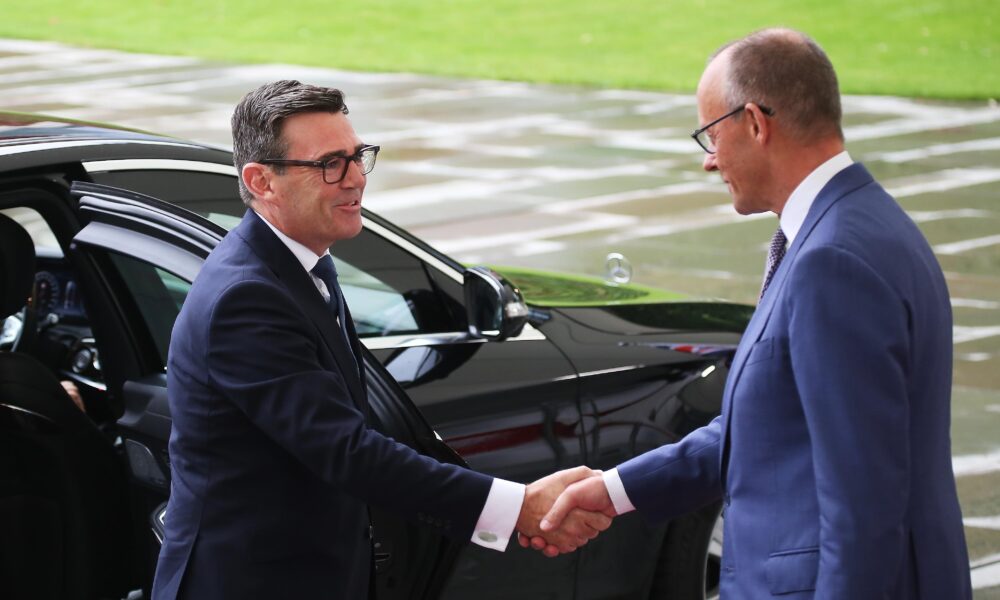
The Libyan Central Bank announced that its governor Naji Mohamed Issa has begun, this Monday, a series of official meetings and discussions on the sidelines of his participation in the IMF and World Bank annual meetings, held in Bangkok, Thailand.
He spoke with Kenji Okamura, IMF Deputy Managing Director, in the presence of several senior IMF officials and members of the delegation accompanying the governor.
The economic and financial challenges at the heart of the discussions
The meeting focused on the latest developments in the Libyan economic and financial situation, as well as the challenges facing the national economy.
The discussions also reviewed the efforts undertaken by the Libyan Central Bank to preserve monetary and financial stability, strengthen the sustainability of public finances, and maintain a balance between preserving foreign exchange reserves and the stability of the exchange rate of the national currency.
The two parties also discussed initiatives aimed at supporting economic reforms, in coordination with the relevant institutions.
Strengthening cooperation with the IMF
According to the Libyan Central Bank, the discussions also touched on prospects for strengthening cooperation and partnership with the IMF, notably through leveraging its expertise, its technical assistance programs, and its capacity-building facilities.
This cooperation aims to support the Libyan Central Bank’s efforts in developing the banking sector, modernizing payment systems, promoting financial inclusion, and improving monetary policy instruments and banking supervision, in a context marked by persistent institutional and financial divisions.
“On his side, Kenji Okamura praised the exceptional efforts continued by the Governor of the Central Bank to pursue economic reforms, despite the persistent difficulties facing the institution and hindering the implementation of its reform projects,” reads a Libyan Central Bank press release.
The governor, for his part, stressed the importance of maintaining coordination and regular consultations with the IMF, in order to support initiatives aimed at ensuring economic and financial stability, strengthening confidence in the Libyan economy, and creating favorable conditions for sustainable economic growth.
Several training and technical assistance programs planned
Following this meeting, the two parties agreed to launch, during the fourth quarter of the current year, a bundle of training and technical assistance programs aimed at Libyan Central Bank executives.
These programs will notably cover:
- The development of monetary statistics.
- The establishment of the balance of payments and the management of foreign exchange reserves.
- Strengthening financial stability.
- The conduct of a self-assessment under the implementation of the Central Bank Transparency Code (CBT), starting this month, accompanied by intensive training for the specialized team.
- The development of a risk-based banking supervision framework.
It was also agreed to proceed with a review of several legislative texts by specialized experts, notably the law related to combating money laundering and the financing of terrorism, as well as the updated version of the banking law.
A series of meetings with international financial institutions
This meeting marks the beginning of a series of bilateral talks that the Governor of the Libyan Central Bank is set to hold with senior IMF and World Bank officials, central bank governors, and representatives of international financial institutions.
These exchanges are aimed at examining issues of common interest and strengthening financial and banking cooperation relations at the international level.