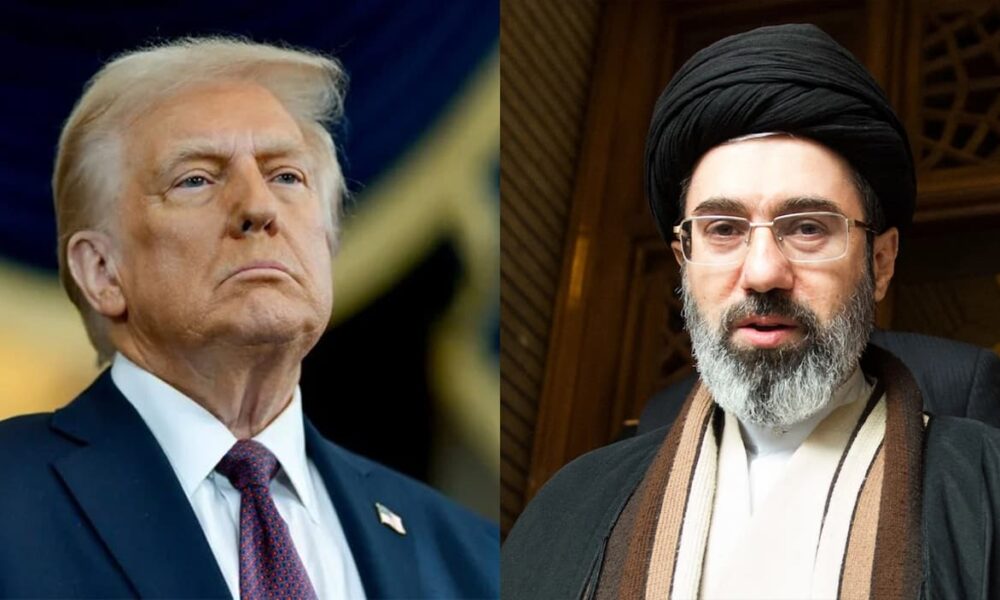
The U.S. military leadership has several strike scenarios against Iran that could be carried out under an order from the White House, according to The Hill. Donald Trump keeps doubt about a new intervention while maintaining the possibility of a deal.
Tehran warns that an attack, even a limited one, would trigger a stronger retaliation. Amid naval preparations, threats to Gulf internet cables, and oil above $116 a barrel, tensions mount on Sunday, October 25, 2026.
The Essentials
Plans for strikes exist, but without announced authorization.
More than 24 American ships could be present after the reinforcement arrives.
Brent closed Friday at $116.72 per barrel, amid ongoing tensions in Hormuz.
Plans Ready at CENTCOM, but No Strike Order
According to The Hill, the leadership of U.S. Central Command (CENTCOM), responsible for U.S. forces in the Middle East, has prepared several options targeting sites inside Iran. Sources close to these preparations indicate that operations could be carried out if the White House gave its authorization. The scenarios were also presented to Defense Secretary Pete Hegseth.
This operational preparation does not mean that a decision to attack has been made. The Wall Street Journal, citing American officials, reports that Donald Trump would be favorable to resuming operations, while noting that he has not given his definitive green light. The distinction between military planning, political stance, and actual launching of an operation remains essential.
Trump Speaks of an Attack “Perhaps Tomorrow,” Without Setting a Date
Asked on Saturday, October 24, by the press, Donald Trump said that Washington was considering new strikes against Iran and that they could occur “perhaps tomorrow.” He immediately refused to disclose the intentions or the timetable of the American forces. The president also contemplated concluding an agreement that he deemed important, while maintaining his demands on the Iranian nuclear program.
These remarks contrast with earlier White House statements that ruled out a new attack before the midterm elections on November 3. They do not constitute an official announcement of bombardment this Sunday nor proof of a formal change in operational orders.
Nuclear Sites and Islands Among Studied Options
According to information from the Wall Street Journal relayed by several media outlets, the options presented to the president include strikes against nuclear facilities, certain infrastructures, and Iranian-controlled islands. These potential targets are not targets whose attack has been decided. The American press speaks of possible operations in the coming weeks, rather than a confirmed attack program.
The regional military posture is strengthening. Two U.S. carrier strike groups are already in the area and a third is en route, accompanied by other naval assets and Marines. According to projections cited by the Wall Street Journal, the arrival of these reinforcements would bring the U.S. Navy presence to more than 24 ships: this is an anticipated total, not a real-time count. The paper also noted ammunition replenishment operations on American ships.
Iran Promises Enhanced Retaliation, Even for a Limited Strike
The spokesman for the Iranian Revolutionary Guards warned, according to statements reported on Sunday, that Tehran’s reaction would be stronger than in previous clashes if the country were struck again, including by a limited-scale operation. Iranian officials say their retaliatory capability extends to American military assets and various strategic interests in the region.
The Iranian Chief of Staff, General Ali Abdollahi, for his part claimed to have kept the American forces 700 kilometers from the Iranian coast. This is an Iranian military claim that has not been independently corroborated and does not allow for locating all U.S. ships.
Iranian Foreign Minister, Abbas Araghchi, says that the Strait of Hormuz will not return to the functioning that prevailed before the war. He calls for a regional security system without foreign military forces and holds Washington responsible for blocking negotiations.
Allegations of Attack Plans Against American Diplomats
The alert level also affects diplomatic representations. An American intelligence brief dated October 23, addressed to Secretary of State Marco Rubio by the Director of National Intelligence Jay Clayton, reports alleged Iranian plots against American citizens and personnel, some of which may have reached an advanced stage.
These claims rely on assessments by U.S. agencies; publicly released intelligence does not allow independently establishing targets or the imminence of attacks. Washington has reduced the staffing of diplomatic missions in several Middle Eastern countries, notably Jordan, Lebanon, Qatar and the United Arab Emirates, and taken additional measures in Saudi Arabia. These adjustments do not mean that all embassies have closed.
Undersea Cables: A Threat to the Gulf’s Digital Economy
Two senior Iranian security officials said Tehran had drafted plans to target the Gulf’s submarine telecommunications cables in case of new U.S. or Israeli strikes. A Revolutionary Guards official had previously mentioned seven major cables in the Hormuz area.
Undersea cables carry about 99% of international data traffic, but less than 1% of global bandwidth passes through the Hormuz Strait, according to data cited by the agency. Damaging them could disrupt regional services—banking, e-commerce, cloud, and data centers—without implying a global Internet outage. At this stage, it is a conditional threat, not a confirmed attack on these links.
Do not confuse: a threat against cables, bombing scenarios, and an intelligence warning do not constitute three attacks already carried out. Each item has a different status.
Hormuz, Oil: Measurable Economic Risks Already
Energy Information Agency data show that oil flows transiting the Strait of Hormuz reached 10.9 million barrels per day in September 2026, compared with around 20 million before the war. Bypass routes accounted for 5.6 million barrels per day. These are September figures, not a measurement of October 25 traffic.
The tensions are also reflected in prices. Brent finished the Friday session of October 23 at $116.72 per barrel, up 3.14% on the day and 6.2% for the week. Regular oil markets are closed over the weekend: this price should not be presented as a quote on Sunday morning.
Tunisia: Risk to the 2027 Budget and the Energy Bill
For Tunisia, a net energy importer, a continuation of maritime disruptions could raise costs for fuel, raw materials, and transportation. According to the National Institute of Statistics, the energy trade deficit stood at 10.480 billion dinars from January to September 2026, versus 8.1064 billion in the first nine months of 2025, i.e., an increase of 29.3%.
The state budget proposal for 2027 foresees 7.09 billion dinars in subsidies for hydrocarbons and electricity, based notably on an average Brent of $80 per barrel. The Friday price, at $116.72, is $36.72 higher, or 45.9%, than that assumption. This comparison measures a gap between a spot price and an annual average assumption: it does not directly allow calculating a budget overrun for 2027.
In the absence of a new confirmed military decision, the immediate issue is therefore the persistence of risks to navigation, energy, and maritime insurance. The real effects on Tunisia’s economy will depend on the duration of the disruptions, the exchange rate, imported volumes, and public policy decisions.