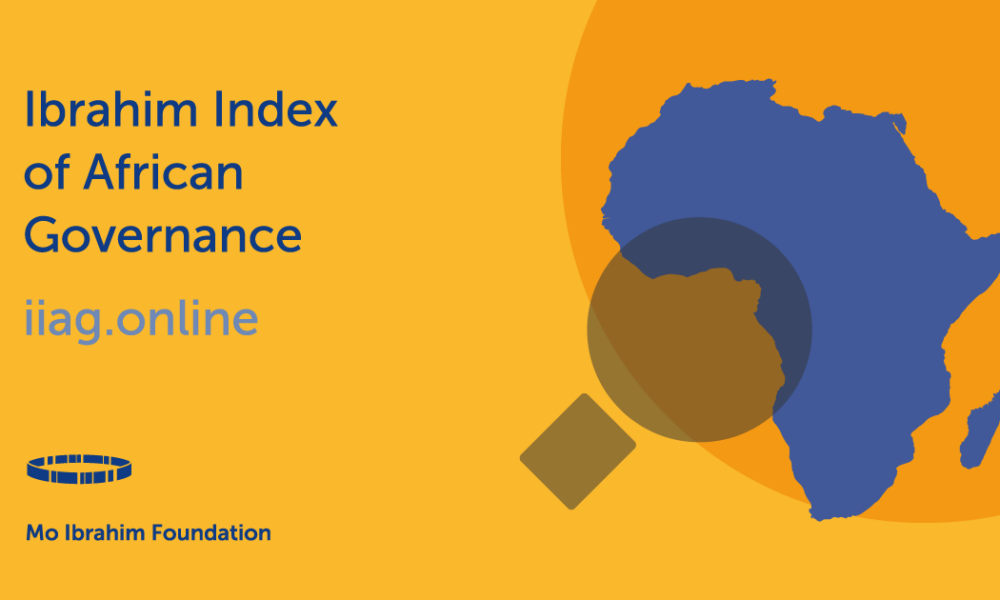
This Saturday, October 31, the Mo Ibrahim Foundation published the new edition of the Ibrahim Index of African Governance (IIAG). This edition covers the period 2016-2025 and analyzes the performance of the 54 African countries. It allows us to measure the progress made over the past decade and to identify the challenges that persist on the continent.
The ranking yields a few lessons. Seychelles remains in first place, while Morocco enters the top ten, replacing Tunisia.
In 25 African countries, economic progress contrasts with the deterioration of security and the rule of law.
In total, 31 African countries improved their governance level between 2016 and 2025, against 23 that regressed. But the latter account for more than half of the continent’s population.
“There are many countries, 25 in fact, that are progressing quite remarkably in terms of economic development and human development, even though they continue to deteriorate in terms of security, the rule of law, and participation,” explains Nathalie Delapalme to RFI, the executive director of the Mo Ibrahim Foundation.
These progresses are notably led by infrastructure development, internet access, and mobile telecommunications. But for Nathalie Delapalme, this situation presents a major risk. “It is not sustainable in the long term. There is no possible compromise between improvement merely in economic terms and in terms of human development if this does not also rest on real progress in democratic participation, security, and the rule of law.”
The index results seem to validate her view. Countries progressing in these various areas are making faster strides. Twenty-two countries follow this trajectory, including Côte d’Ivoire, Morocco, Rwanda, and Senegal.
For Nathalie Delapalme, one should not stop at the ranking: “We must look at both the final performance and the rank, but also the trajectory over the decade, because that is what provides a complete picture of what is happening.”
South Africa is illustrative. The country remains fifth, but its governance is deteriorating more and more quickly. Conversely, Angola and the Republic of the Congo move out of the bottom ten ranks. “Each trajectory is different. There is no miracle solution,” she insists.
An instrument to help governments act
Beyond rankings, the Ibrahim Index aims to help governments identify the areas where progress is needed.
Nathalie Delapalme specifically cites the persistent difficulties in registering births and deaths, which complicate the implementation of public policies tailored to the needs of the population.
She also highlights the progress achieved thanks to the digitization of public services, which notably enables greater transparency in the awarding of public contracts.
But each country must find its own answers. “There is not a one-size-fits-all recipe,” she notes. “But there are many different recipes that can be combined and used together to lead to governance improvement.”
Therefore, the Mo Ibrahim Foundation does not pretend to dictate to states which policies to follow. “The Mo Ibrahim Foundation does not give public policy advice,” concludes Nathalie Delapalme. “It simply provides the tools to be able to improve the public decisions made by governments, which are solely responsible for the policies they pursue.”