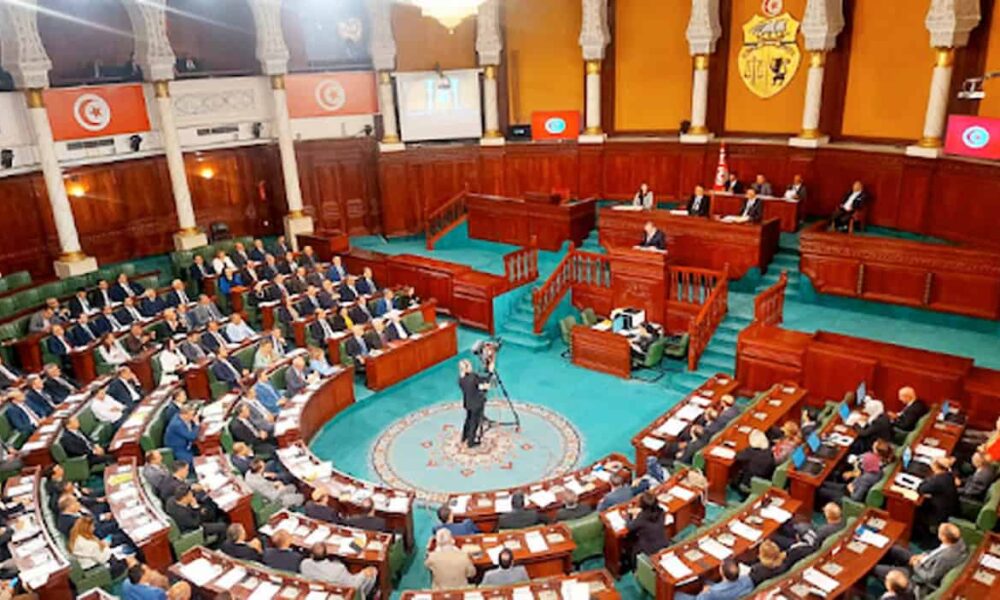
The Assembly of the People’s Representatives (ARP) participated in the World Conference on Human Rights, organized by the Inter-Parliamentary Union (IPU) in Geneva, under the theme: “Parliamentary accountability in protecting human rights in the era of turbulence”.
This meeting brought together parliamentarians from all corners of the world, as well as experts and representatives of the United Nations, national human rights institutions, and civil society.
Organized on November 12 and 13, 2026, the conference was marked by the participation of a delegation from the Assembly of the People’s Representatives, composed of deputies Houssem Mahjoub, Dhafer Sghiri and Fatma Mseddi. It provided an opportunity to exchange experiences and share best practices regarding the role of parliaments within the United Nations system dedicated to human rights, in a context marked by current changes related to artificial intelligence as well as the rights of children, migrants and people with disabilities.
In his speech dedicated to freedom of expression, Deputy Houssem Mahjoub stressed the commitment of the Assembly of the People’s Representatives to the principles of human rights in their broad sense. He recalled that their protection constitutes a shared responsibility between the institutions of the State and the components of civil society, insisting on the full awareness of the parliamentary institution about the importance of this responsibility, which stems from the mandate entrusted by the citizens.
He also recalled that freedom of expression is a right guaranteed by the Tunisian Constitution and that it is inseparable from freedom of thought, which implies its protection both in the digital space and beyond it.
The deputy also mentioned the revision of provisions of Decree-Law No. 54 relating to the fight against offenses related to information and communication systems, through the removal of prison terms and their replacement by financial penalties.
Regarding the rights of the child, Houssem Mahjoub highlighted the pioneering role of the Tunisian legislator in establishing an integrated legal framework based on a rights- and prevention-based approach. This framework aims to protect children from various forms of violence and exploitation, as well as to instill in new generations the values of citizenship.
In this regard, he recalled several major legislative milestones, notably the Personal Status Code of 1956, the Labor Code of 1966, the Child Protection Code of 1995, and the 2024 law relating to maternity and paternity leave in the public service.