Pensions, social security funds, health cards, and family assistance: several initiatives announced for 2027.
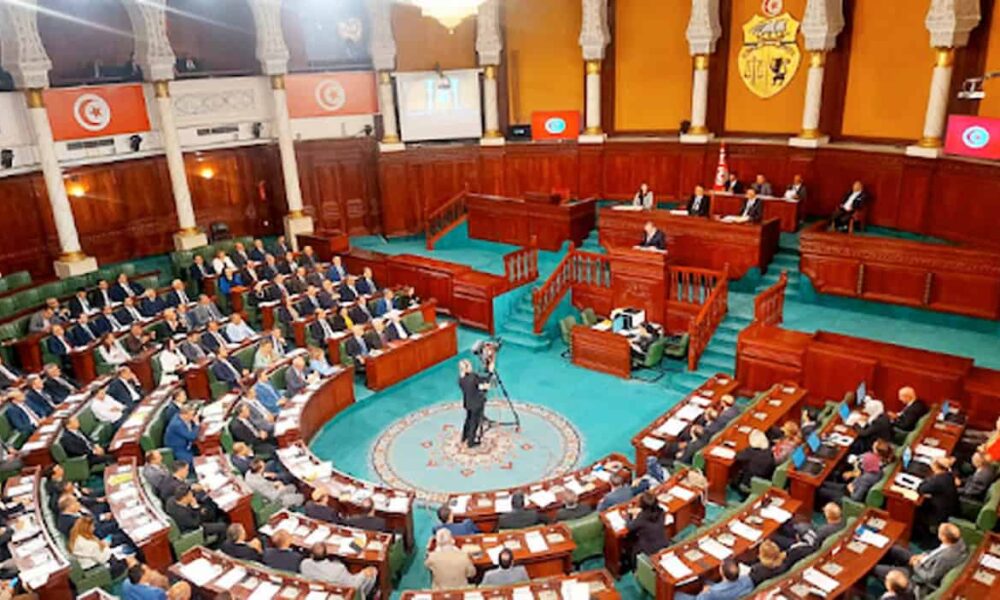
The Ministry of Social Affairs is preparing a reform of the social security system and the rules governing the protection of vulnerable people, according to parliamentary debates on November 5 and 14, 2026. But a government orientation or a bill does not mean that rights and contributions change immediately.
This dossier distinguishes what is envisaged, the difficulties already reported by the deputies, and the useful steps for people whose health card or social aid has been suspended.
The Essentials
A framework law for social security reform is being drafted. A regime adapted for workers with low or irregular incomes is envisaged, with more flexible contributions. For disputed health cards, the minister announces a review of the claims.
No new statutory retirement age, nor new contribution rates, have been set in the announcements examined.
Pensions and social funds: a structural reform, but no new rules yet
The ministry is working on a framework bill related to social security. The stated objective is to improve the financial viability of a system facing imbalances between resources and benefits. The text is to rely on actuarial studies intended to assess the consequences of the different options before parliamentary scrutiny.
The discussions concern in particular the National Pension and Social Welfare Fund (CNRPS), the National Social Security Fund (CNSS), and, for health coverage, the National Health Insurance Fund (CNAM). Deputies have called for an improvement in the collection of contributions, action against under-reporting, and the handling of debts owed to hospitals, the Central Pharmacy, and health care providers.
What does not change to date: none of the texts examined announces the entry into force of a new uniform retirement age, a precise increase in employees’ or employers’ contributions, or a modification already adopted of pension calculation formulas. The implementation timetable will depend on the texts finally filed, debated, and enacted.
A more flexible regime for informal sector workers?
One of the most concrete avenues concerns the creation of an intermediate social protection regime for people with irregular or modest incomes, particularly in the informal economy and precarious activities. The proposed principle rests on easier enrollment, contributions adapted to the beneficiary’s means, and services deliverable remotely.
According to the presented project, this device would seek to combine health coverage with a minimum level of protection in retirement or in case of disability. A mechanism to protect the system against economic, health, or catastrophe shocks is also envisaged. Neither the contribution amounts, nor the exact rights, nor the opening date are fixed in the available announcements.
Suspended health cards: what does the ministry say?
The November 14 debates were marked by testimonies reported by deputies regarding families who had lost access to aid or to free or discounted health cards. In his response, Minister Issam Lahmar stated that the ministry was not seeking to reduce the number of beneficiaries, but that the computer cross-checking of files had led to suspensions and disputes.
The minister noted that about 50% of the health cards involved in the withdrawals mentioned were linked to deceased holders, some of whom were still used by their widow. This situation calls for an update of the file and an examination of the survivor’s rights: the statistic does not allow concluding that all affected individuals were without entitlement to coverage.
The November 5 ministry press release states that the challenges are reviewed daily and that the administration is working to regularize situations within a maximum one-month timeframe, with retroactive restoration of rights for beneficiaries who are entitled. This is a ministerial commitment and not a guarantee that every case will be automatically resolved.
Suspended health card or aid: useful steps
1. Ask the local or regional social service that handles the file for the precise reason of the suspension.
2. File a dated complaint and keep proof of filing.
3. Attach the relevant documents according to the situation (identity, resources, family composition, death of the initial holder, widowhood or disability).
4. Request an individualized reassessment and restoration of rights when conditions are met. The exact list of documents and the avenues for appeal must be confirmed with the competent service.
Disability: a revision of the 2005 law and better care
The ministry is also preparing a modification of the 2005 Orientation Law concerning people with disabilities. Before the deputies, the minister acknowledged the difficulties linked to the resource criteria applied to certain health rights and indicated that revising them is among the pursued objectives.
The discussions also cover better coordination between administrations, on the beneficiary cards and supporting documents, and on non-profit structures for the care of disabled people. These reforms still need to be specified in applicable texts. In parallel, the ministry mentioned a project for a unified magnetic card to replace the so-called white and yellow health cards.
Aids and employment: measures announced for 2027
The ministry aims to strengthen the support of poor or low-income families toward income-generating activities. Its November 5 press release mentions 18 million dinars in the 2027 budget proposal for the economic empowerment program; the modalities of access to funding are not detailed in this communication. Social aid should, according to ministerial orientations, remain accessible to those who cannot meet their needs.
On employment, the ministry notes having contributed to the regularization of more than 100,000 professional situations under the application of Law No. 9 of 2025, including around 80,000 fixed-term contracts. The minister specifies that this count covers cases processed with intervention from its services, and not necessarily all regularizations carried out nationwide.
The department is also working on texts concerning telework in the private sector, work via digital platforms, and the mediation of labor inspectors in conflicts. Again, the effective modalities will depend on the adoption and publication of the texts.