The Transport mission included in the 2027 budget proposal is to be examined in a joint plenary session this Thursday, November 19. The proposed credits reach about 1.321 billion dinars, up 4.3% from 2026. Rail rehabilitation, the Tunis network, support for public enterprises and renewal of buses are among the priority dossiers. One question remains for users: how quickly will these resources translate into more regular journeys and a more reliable service?
Key points
- 1,321 billion dinars in credits proposed for the Transport mission in 2027.
- 1,208.951 million dinars for the Ground Transport programme, compared with 1,179.074 million in 2026.
- 687 million dinars allocated to support ground transport, and 513.127 million to development interventions related to this programme.
- The announced projects do not constitute a guaranteed implementation timetable.
A rising budget, but largely absorbed by ground transport
According to data presented by the Minister of Transport, Rachid Amri, before the parliamentary commissions on November 4, the budget for the Transport mission would reach 1,321 million dinars, compared with around 1,267 million in 2026. The proposed credits would thus rise by about 4.3%.
Ground transport accounts for almost 92% of the envelope. For this programme, the indicated expenditures amount to precisely 1,208.951 million dinars, compared with 1,179.074 million in 2026, i.e., a difference of 29.877 million dinars (+2.53%).
| Budget item | Amount or change |
| Transport Mission 2027 | 1 321 millions of dinars proposed |
| Ground Transport Programme 2027 | 1 208,951 millions of dinars |
| Ground Transport 2026 | 1 179,074 millions of dinars |
| Support for Ground Transport 2027 | 687 millions of dinars |
| Development Interventions for Ground 2027 | 513,127 millions of dinars |
| Support to Tunisair Express 2027 | 13 millions of dinars, versus 11 millions in 2026 |
The 687 million planned for ground transport support represent about 56.8% of this programme, while development interventions total 513.127 million, i.e. about 42.4%. These are internal budget categories within the ground transport programme and should not be added again to the mission’s overall budget.
Bus : expected fleets, not yet a guaranteed service
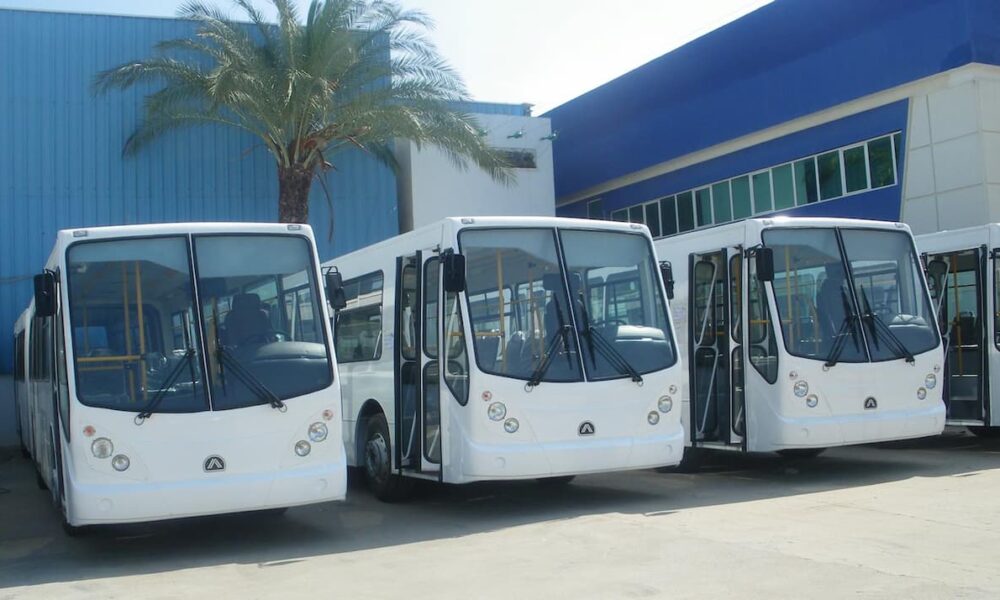
The minister also announced that the public bus fleet ready for operation could reach 3 312 vehicles by December 12, 2026, compared with 2 416 in 2025. This would represent an increase of 896 buses, or just over 37% over the period.
This figure relates to an operational fleet target for the end of 2026, and not to additional buses ordered for 2027. Actual availability on each line will then depend on drivers, maintenance, spare parts, rotation planning, and depot capacity.
SNCFT : three rail axes in the priorities
Planned investments for the National Tunisian Railways Company (SNCFT) include the rehabilitation of line No. 6 linking Tunis to Kasserine, the doubling of the Moknine–Mahdia section, and the renewal of the network used for phosphate transport. The ministry also mentions upgrading rolling stock.
For travellers, improvements will depend on the execution schedule of these works and the rolling stock actually returned to service. For the economy, modernizing rail freight, notably linked to phosphate, could help make certain transport chains more regular if the works and equipment proceed on schedule.
Transtu : works on the TGM and the infrastructures
For the Tunis Transport Company (Transtu), the cited projects include strengthening the civil engineering works of the Tunis–La Goulette–La Marsa line (TGM), track interventions and maintenance, and the development of depots. These operations are essential to network reliability, but do not correspond to the announcement of an immediate opening of new lines.
Upgrading infrastructure, less visible than vehicle deliveries, remains decisive in limiting service interruptions and extending the network’s lifespan. The outcome will be measurable through actual frequencies operated, waiting times, and the number of breakdowns.
Aviation, ports and borders: targeted credits and projects
The civil aviation programme foresees an envelope of around 17.170 million dinars, including a 13 million dinars aid to Tunisair Express, compared with 11 million in 2026. The announced files include internal airports, maintenance operations in maritime transport, and studies for the Enfidha port.
The plan for the development of land border posts cites Melloula, Bouchebka and Ras Jedir. The works are presented as development projects; the sources consulted do not provide a definitive delivery timetable for each.
The true test will be service quality in 2027
Comparing budgets shows an increase in resources, but a substantial portion of credits remains devoted to supporting operators. The improvement felt by users will depend as much on budget execution and day-to-day maintenance as on announcements of major projects.
The parliamentary debate on November 19 should therefore enable the pursuit of verifiable commitments: the number of vehicles actually available by region, the regularity rate of trains and metros, the progress level of the works, the time to bring services back into operation, and the expenditure of credits. Without these indicators, a budget increase alone is not enough to declare the crisis over.
Sources: Parliament calendar for November 19, 2026; minister’s hearing; TAP figures cited by WMC; Radio Kef, projects presented on November 4; La Presse, announced bus fleet; TN, initial announcement of projects on November 6.