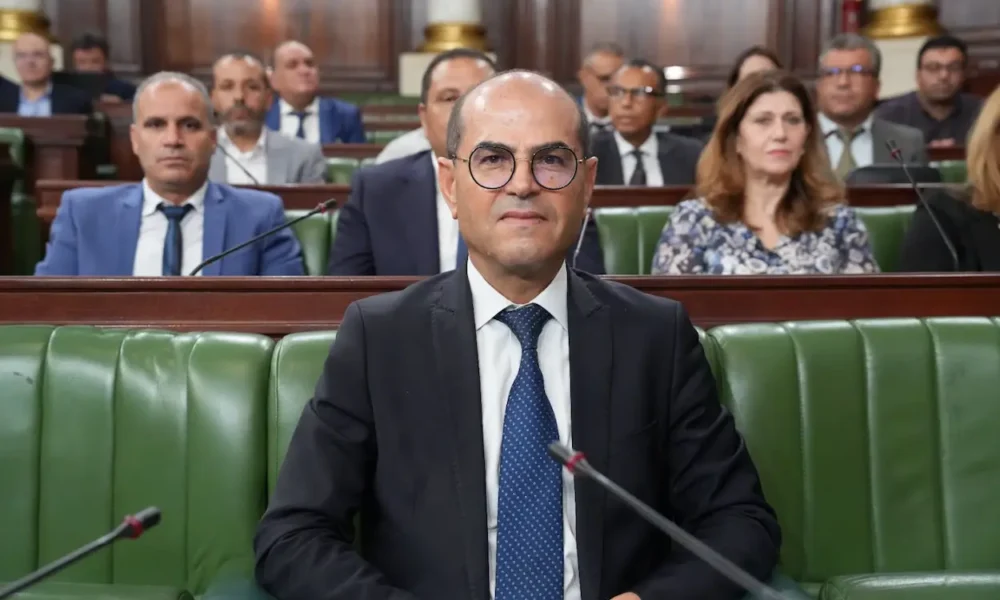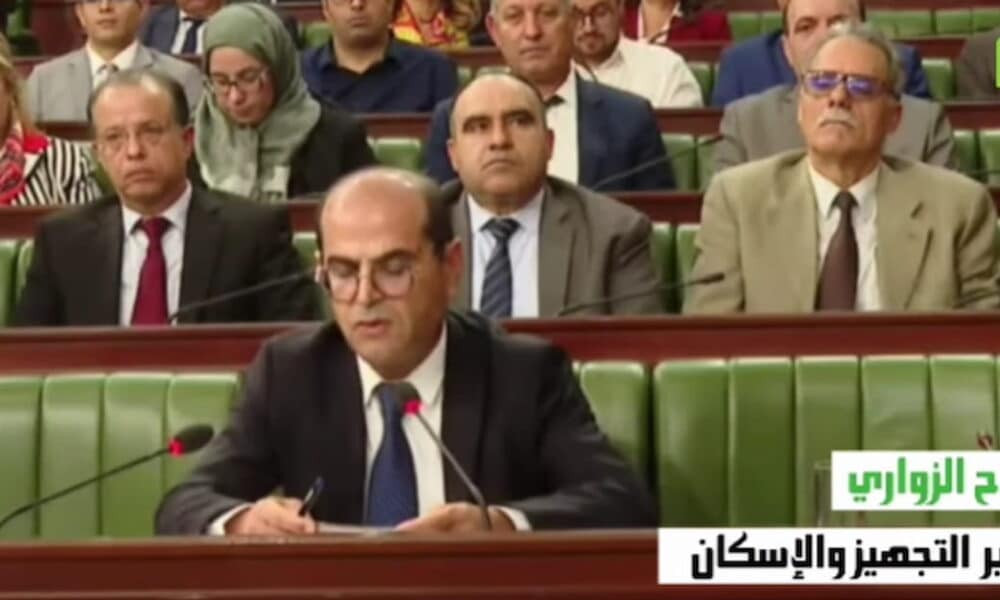
The minister responsible for managing the affairs of the Ministry of Industry, Mines and Energy, Slah Zouari, indicated, this Sunday at the Bardo Palace, that his department intends to accelerate the procedures for exploiting several hydrocarbon deposits and concessions already authorized. The goal is to bring into production new resources in natural gas and oil during the year 2027, in order to reduce the energy deficit and dependence on imports settled in foreign currency.
In response to questions from deputies, during the joint plenary session of the Assembly of the Representatives of the People and the National Council of Regions and Districts devoted to examining the ministry’s budget for 2027, Slah Zouari stressed that Tunisia has potential natural resources in the hydrocarbons sector that could be better exploited. According to him, speeding up procedures related to existing concessions and authorizations would help improve national production and mitigate the deficit recorded in the energy sector.
The minister clarified that all natural gas currently extracted from wells and operating concessions in Tunisia is directly destined for the Tunisian Electricity and Gas Company (STEG) and is not marketed abroad. At the same time, the country is compelled to import additional quantities of gas to cover its needs, paying for them in foreign currency.
He estimated that accelerating the exploitation of national gas resources would reduce imported volumes and, consequently, ease the cost of gas supply as well as the burden of subsidies allocated to hydrocarbons and electricity.
Regarding oil, Slah Zouari reported a decline in national production, from about 80,000 barrels per day to around 20,000 barrels, or slightly more. He nonetheless estimated that the available potential could allow for a revival of production, notably through accelerating the exploitation of existing concessions and resources.
In this context, he stressed the need to base decisions relating to oil dossiers on a thorough study of each file and verification of legal, technical and economic data. This approach should speed up the realization of projects without departing from the procedures and regulations in force.
The minister also noted that “the fear of making decisions in certain dossiers, due to the corruption allegations mentioned, risks paralyzing the exploitation of national riches and delaying the realization of projects.” He thus urged distinguishing the dossiers that need to be transmitted to the competent authorities from those that meet the legal and technical conditions required to be the subject of a decision.
He also indicated that several decisions still need to be taken regarding different dossiers and concessions, notably the Ashtart oil field. He clarified that, when resources permit, the priority in investment will be given to the Tunisian Company of Petroleum Activities (ETAP), in which participation stands at 50%, without excluding the possibility of opening the way to national investments.
Finally, Slah Zouari emphasized that the improvement of national gas and oil production is part of a strategy aimed at curbing the worsening energy deficit, reducing the import bill and strengthening the country’s ability to benefit from its natural resources.