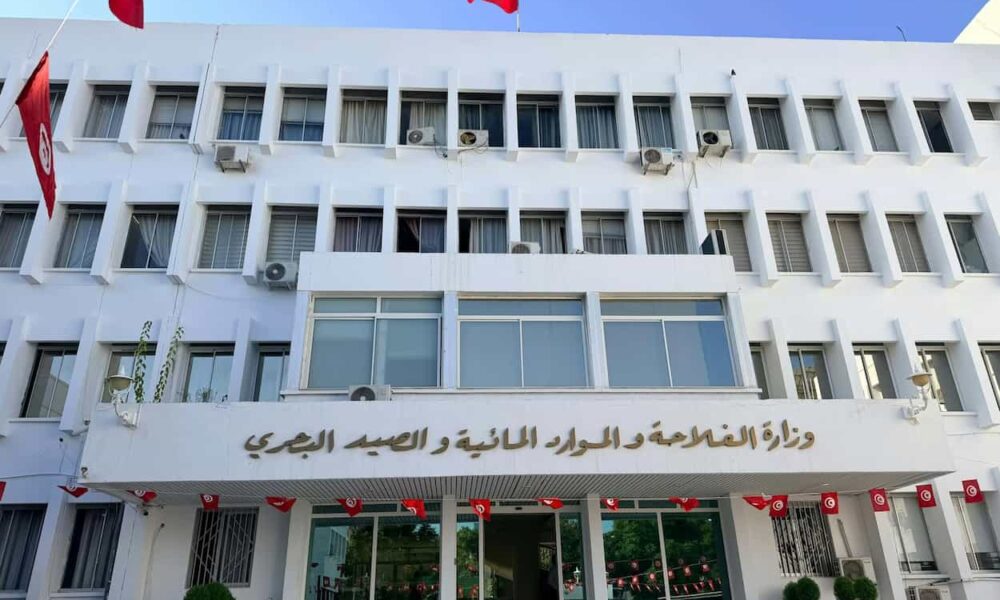
The Minister of Agriculture, Water Resources and Maritime Fisheries, Ezzeddine Ben Cheikh, carried out this Tuesday a working visit to the Nabeul Governorate, accompanied by the regional governor, Hanaa Chouchani. This visit was devoted to monitoring several hydraulic projects and infrastructures, examining the progress of maintenance works and programmed interventions, as well as studying ways to strengthen the supply of drinking water and irrigation water.
According to a statement from the Ministry of Agriculture, this visit forms part of efforts to optimize the management and valorization of water resources, to strengthen operational capacity and the efficiency of hydraulic infrastructures, as well as to preserve water resources and soils and to support agricultural activity and sustainable development in the region.
The minister began his visit with an inspection of the Eddouadi river, in the locality of Sidi Jdidi, within the Hammamet delegation. He learned about the difficulties related to the condition of this river, notably during heavy rainfall, which causes floods hindering residents’ movement and endangering their safety.
On this occasion, he listened to the concerns of local residents and their calls for timely intervention, notably through raising the bridge, dredging the river, and removing the accumulated soils and sediments, in order to improve water flow and reduce flood risks.
Ezzeddine Ben Cheikh emphasized that his department would coordinate its efforts with the various structures and stakeholders involved in order to study this issue, define the necessary technical interventions, and find appropriate solutions to guarantee residents’ safety and protect their property, particularly during episodes of climatic disturbances and heavy rains.
The minister then traveled to the town of El Mziraâ, within the Hammamet delegation, where he inspected the hill dam on the El Gattar river. He learned about the interventions necessary to preserve its storage capacity and its role in collecting rainwater. In this regard, he issued instructions to speed up maintenance works on the flood evacuation canal, to ensure the optimal operation of this facility, to improve its performance in mobilizing water resources, to protect agricultural lands, and to limit soil erosion.
The visit also covered the North Water Pumping Station, located in Belli, in the Bou Argoub delegation. The minister inquired about the operating conditions of the station, its equipment, and its role in supplying irrigation water to the region’s agricultural zones, particularly the citrus orchards, which constitute one of the main components of agricultural activity in the Nabeul Governorate.
Discussions notably focused on feasible technical solutions to accelerate maintenance and rehabilitation of the station’s equipment, in order to ensure the continuity of its operation, the effectiveness of its interventions, and the satisfaction of farmers’ needs for irrigation water.
The minister also stressed the need to mobilize additional volumes of irrigation water for the benefit of potato crops, in order to support national production, improve market supply, and ease tensions on supply. He also called to encourage leafy vegetables cultivation and to develop large irrigated crops, notably cereals, with the aim of expanding irrigated areas, strengthening agricultural production, and consolidating food security.
At the closing of his visit, the minister and the accompanying delegation inspected the water intake located on the Medjerda-Cap Bon canal, intended to supply the El Turki irrigation perimeter with water for irrigation. They learned about its role in mobilizing water resources for agricultural activity, the regularity of supply, and supporting farmers in meeting the water needs of their crops.
The visit also examined the situation of several hydraulic groups as well as the difficulties they face in managing hydraulic systems and ensuring the continuity of potable water supply. Discussions also focused on feasible solutions to strengthen water resources, notably through increasing volumes mobilized from wells.
The envisaged interventions aim, according to the points discussed during this visit, to improve potable water supply conditions and to guarantee the needs of about 4,000 residents benefiting from this service. Emphasis was placed on the importance of finding technical and operational solutions to overcome the difficulties encountered, to improve the efficiency of hydraulic systems, and to ensure the sustainability of services provided to residents.