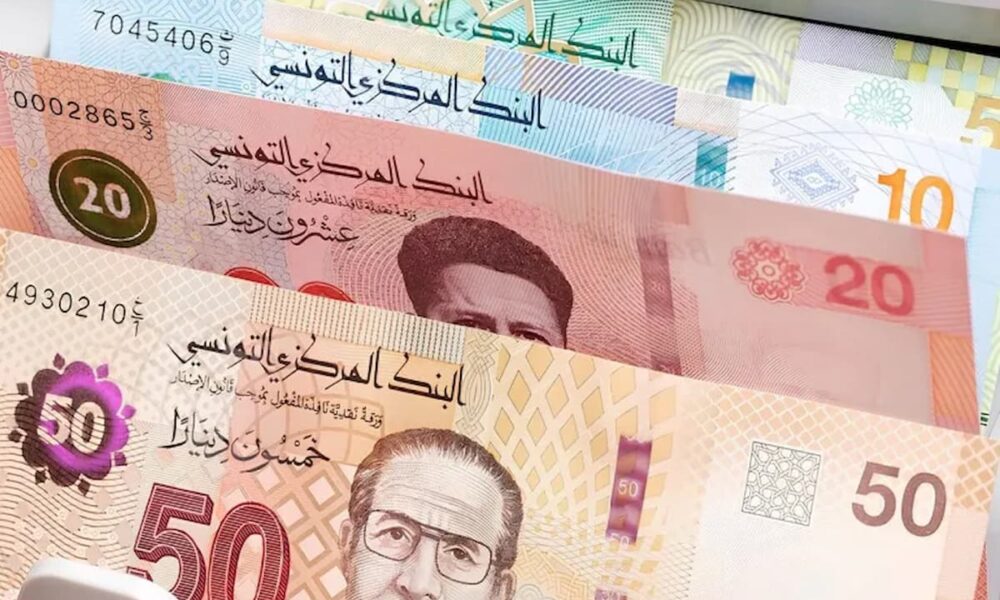
The Central Bank of Tunisia (BCT) decided, at its board meeting on November 25, 2026, to keep its policy rate at 7%.
A decision that does not automatically translate into lower monthly loan repayments, as food price inflation remains high and growth slows.
The Essentials
- Policy rate: 7%, unchanged.
- October 2026 TMM: 7%.
- Minimum savings remuneration in November: 6%.
- Inflation in October: 5.6% year on year.
- Third-quarter growth: 1.9% year on year.
Why the BCT Is Not Cutting Its Rate
In its statement of November 25, the BCT notes the persistence of price pressures and the deterioration of external balances. Overall inflation rose from 4.9% in October 2025 to 5.6% in October 2026. Prices of fresh food products rose by 13.2% over the year, compared with 13% in September.
The BCT also measures a core inflation rate of 5.1% for the fourth consecutive month, according to its indicator excluding fresh food and administrated prices. The INS publishes, for its part, a different indicator, excluding food and energy, at 4.8% in October. These two figures are not contradictory: their scopes differ.
According to the INS, GDP grew 1.9% year-on-year in the third quarter, compared with 2.3% in the second quarter. The BCT reports net foreign exchange assets of 23.2 billion dinars as of November 24, i.e., 88 days of imports, versus 106 a year earlier.
Mortgage and Consumer Credit: Why Monthly Payments Do Not Automatically Fall
The policy rate steers the cost of bank liquidity. It does not correspond to the rate charged to the customer. A variable-rate loan may be indexed to the TMM, to which the bank adds a contractual margin. A fixed-rate loan does not change simply due to a monetary policy decision.
A bank can also adjust its offers according to the loan’s term, the risk, the guarantees, and the borrower’s financial situation. The maintenance of the policy rate therefore does not mean that all credit rates are locked at 7%, nor that all monthly payments remain unchanged.
Simulation: 100,000 Dinars Borrowed Over Ten Years
| Nominal annual rate | Approximate monthly payment |
| 9% | 1,266.76 DT |
| 10% | 1,321.51 DT |
In this purely illustrative example, a one-point difference in the rate translates to about 54.75 dinars per month, or 6,570 dinars over 120 monthly payments.
Assumptions: amortizing repayment, constant installments, fixed nominal rate, excluding insurance, commissions, and other charges. These are not observed bank prices.
Savings and Companies: Different Effects
The BCT’s rate table shows, as of November 26, a day-to-day money market rate of 6.99%, an October TMM of 7%, and a minimum savings remuneration of 6% in November.
Comparing this latest annual rate with October inflation (5.6% year on year) yields a nominal gap of 0.4 percentage point, not guaranteeing a future real return after tax.
For businesses, the cost of financing inventories and investments remains an important variable. The decision does not immediately reduce financial charges; credit terms remain tied to contracts and liquidity.
What to Check Before Signing a Loan
- Fixed or variable rate and reference index.
- Bank margin and frequency of revisions.
- Total cost, insurance, fees, and possibilities of early repayment.
Also read: the BCT board’s decision.