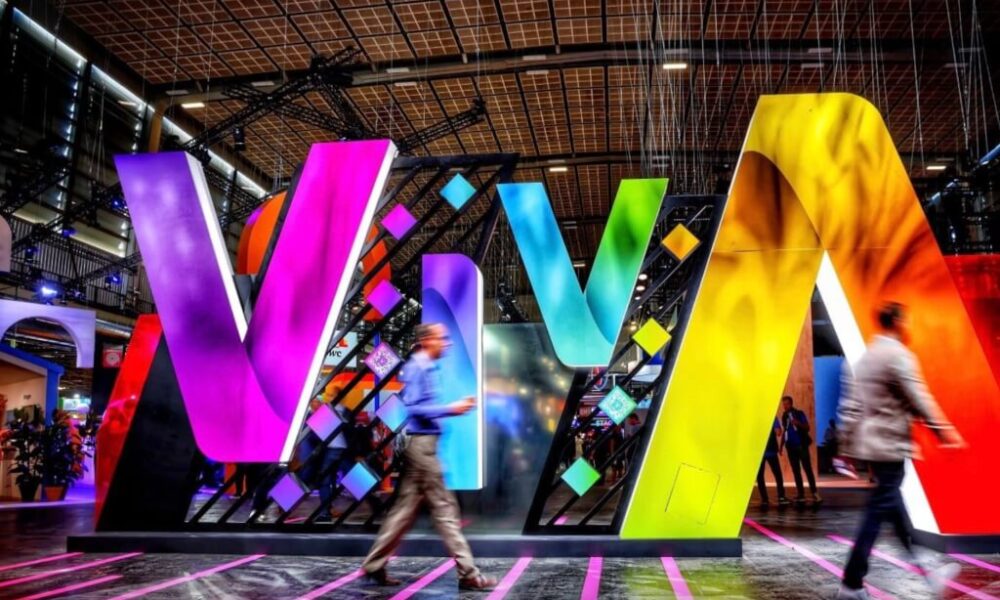
Just as patches that analyze athletes’ sweat alongside 3D-printed artificial bone implants, here is a selection of the most astonishing innovations seen among the roughly 15,000 startups present through Saturday at VivaTech in Paris.
– 3D-Printed Implants –
The Berlin-based company Blueprint Biomed has developed an artificial substitute for bone implants used every year in millions of patients to promote bone consolidation.
“With this, we no longer need to add an autologous bone implant (from the patient’s own body, ed. note),” said Aaron Herrera, the company’s chief executive, to AFP.
Bone implants harvested from the patient themselves can fail, requiring additional surgery, or lead to complications, the executive highlighted.
Blueprint Biomed’s artificial implants are, themselves, designed from a resorbable biopolymer (called polycaprolactone) printed in 3D and collagen.
These two substances are eliminated by the body within three months (collagen) to two years (polycaprolactone).
The company aims to raise $2.5 million to prepare human clinical trials, hoping to implant its products in patients by 2028, Mr. Herrera said.
– Drone Motors –
Used both in air shows and on battlefields, quad-motor drones have a reputation for being highly maneuverable.
But the Austrian startup CycloTech believes it can make this type of device even more agile with its futuristic-looking motors, in the shape of an open cylinder whose sides are made up of several wing-shaped blades.
“It can hover like a helicopter, move forward like an airplane, but also brake in mid-flight or fly backward,” explained Andrea Marchsteiner, the company’s marketing head.
A gain in maneuverability that could prove particularly useful for urban deliveries or passenger transport, CycloTech boasts.
The company, which has 65 employees and has already raised €40 million, is seeking additional funding and partners who could integrate its motors into their devices.
– Deepfake Voice Detector –
Facing the rise of audio “deepfakes” – voices generated via AI by scammers to trick victims into believing a loved one is on the other end of the line – the French startup Whispeak says it has developed a system capable of detecting and filtering potentially fraudulent calls.
For, “with less than ten seconds of voice recording, you can imitate anyone, often for free,” Florent van Calster, the CEO of this voice recognition specialist, told AFP.
According to him, the company thus possesses “the best audio deepfake detector in the world,” the result of three years of development.
Still in the testing phase, Whispeak is collaborating with the French operator Bouygues Telecom to filter potentially fraudulent calls and send alerts to users when detected.
Based on the available training data, “our average error rate is below 1%,” Van Calster reassures, even though he concedes that with the ongoing development of generative AIs, chasing fake voices resembles “an endless cat-and-mouse chase” between cops and crooks.
– High-tech Sweat –
To help elite athletes monitor certain health parameters, the Hong Kong-based startup PointFit has developed an adhesive patch with a sensor capable of measuring glucose and cortisol levels from sweat on the skin.
Its CEO, Kenny Oktavius, told AFP that he has been working on this technology since 2019, when he was still a student.
The company is developing for its users a “personal sweat index” using AI, which adjusts results according to various factors such as ambient temperature.
PointFit, which already collaborates with brands like Red Bull and Puma, now plans to approach mass-market retailers, naming potential partners such as Decathlon and eyewear maker EssilorLuxottica.