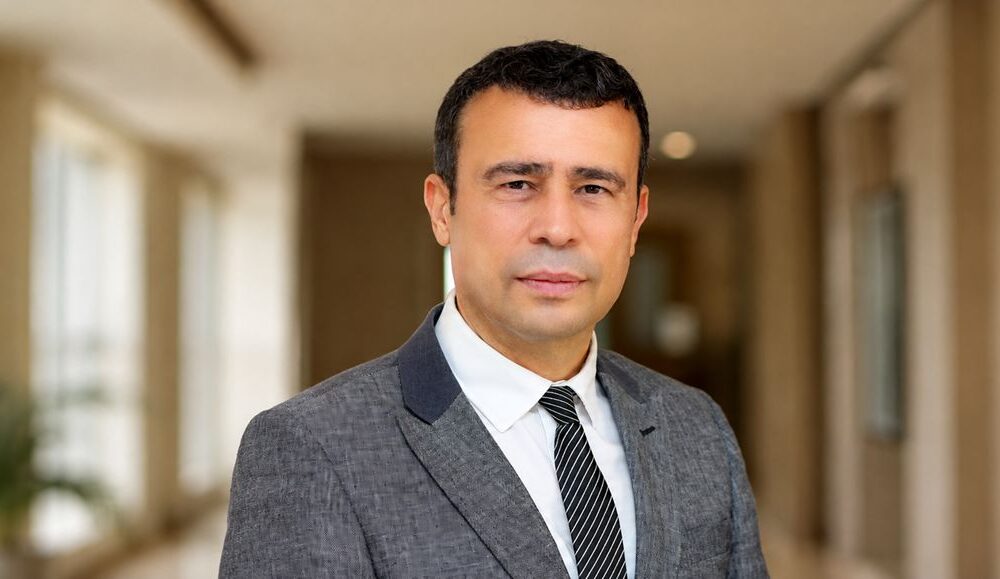
As AI reconfigures our lives faster than our guardrails, Professor Adel Bouhoula, one of Tunisia’s leading figures in digital security, signs a reflection that shifts the debate from “what technology can do” to “what it should do, and where its limits should lie.”
In a world where digital transformation accelerates, a question arises: how to preserve one’s values and identity in the face of technologies that redraw daily life? This is the thread of a recent research by Professor Adel Bouhoula, published in August 2026 in the journal of the Faculty of Sharia and Islamic Studies at Qatar University. Far from a theoretical exercise, the work links artificial intelligence and cybersecurity to a series of concrete requirements — justice, privacy, transparency, accountability — and proposes a framework to bring them together.
A Tunisian researcher of international standing
The voice behind these statements is not that of a mere opportunist commentator. Adel Bouhoula is a university professor and researcher specializing in computer science, cybersecurity, and artificial intelligence, with more than thirty years of academic and institutional career. A computer engineer trained at the Faculty of Sciences of Tunis, holder of a PhD and a habilitation to supervise research obtained in France, he has been a research fellow at INRIA, a visiting researcher at SRI International in California and at Mitsubishi Research Institute in Tokyo, and a visiting professor at the University of Tsukuba in Japan for over ten years.
In Tunisia, he has held several leadership roles in the field of computing, including general director of the National Center for Informatics, and he is the founder of the “Digital Security” research laboratory at the University of Carthage. Author of more than 200 scientific articles and holder of three patents, he has been honored with the University of Carthage’s Prize for Excellence in Scientific Research and decorated with the Order of the Republic and the National Order of Merit. It is this anchoring, at the crossroads of cutting-edge research and public responsibility, that gives his reflection its particular weight.
Four ethical flaws at the heart of AI
The work refuses to treat artificial intelligence and cybersecurity as purely technical fields. It identifies four major ethical challenges. First, data bias, which directly threatens the demand for justice when a system reproduces or amplifies discrimination. Next, the opacity of decisions in so-called “black box” systems, which limits transparency and the possibility of accountability. Then, the hallucination of generative models, which clashes with the imperatives of reliability and truthfulness. Finally, the delegation of consequential decisions to autonomous systems in sensitive domains, which raises a fundamental question about human responsibility.
For the author, these problems are not mere technical errors to fix: they touch on cardinal values. Bias affects justice, opacity erodes transparency and accountability, hallucination contradicts the requirement of truth, and the automation of crucial decisions questions the place of humans. This is the shift—from performance to end-goals—that structures the entire approach.
Digital sovereignty as a strategic challenge
The second pillar of the research is digital dependence: the excessive reliance on external systems, technologies, and infrastructures. This dependence, the author notes, increases societies’ vulnerability to digital crises or decisions made outside their control.
Hence the concept of “digital sovereignty” that he advocates, taking care to distinguish it from retreat. It is not about rejecting global technology, but about having the capacity to understand, develop, protect, and decide autonomously in vital digital areas. An important nuance at a time when many countries, including Tunisia, are questioning their technological autonomy.
A framework of interpretation by aims
This is where the originality—and the distinctiveness—of the approach resides. To prioritize these challenges, the author mobilizes an interpretation based on the maqasid, the higher purposes of the Sharia, which he proposes as an analytical framework. In this approach, protecting health and vital infrastructures is linked to the preservation of life; protecting the economy and resources to the protection of property; controlling the circulation of information and the formation of knowledge to the preservation of reason. Added to these are the growing challenges that the digital environment imposes on privacy, dignity, and identity.
One must read it for what it is: the analytical framework the author chooses to ground his ethical priorities. Its practical scope, however, is universal — justice by design to reduce biases upstream, data protection as responsibility rather than a mere consent formality, transparency through explainable AI techniques, risk assessment before they occur, and a priority on preventing harm when it clashes with the pursuit of benefit.
From principles to proposals
The research does not stop at diagnosis; it advances suggestions at several levels. In education, it argues for the integration of digital ethics into computer science curricula and for training profiles that combine technical competence with ethical awareness. In public policy, it stresses national strategies for AI and cybersecurity and laws protecting privacy and strengthening transparency and accountability. In industry, it encourages the development of local solutions and investment in cybersecurity research, trustworthy AI, and advanced cryptography. At the regional level, it calls for broader cooperation to build capabilities and safer, more autonomous digital infrastructures.
The image that gives the work its title—the “digital deluge” and the “ship of values”—is not merely a metaphor. It sums up the thesis: the tide is vast and rapid, but you do not face it by turning away. You respond by building a ship capable of navigating it, equipped with knowledge, technology, and ethics, and guided by a compass. The challenge, the author writes, is not to stop technology or to resist the digital, but to possess the knowledge and the ability to steer them toward what serves humanity, protects society, and preserves dignity.
The full research is available in the Journal of the Faculty of Sharia and Islamic Studies at Qatar University: https://journals.qu.edu.qa/index.php/sharia/article/view/6756