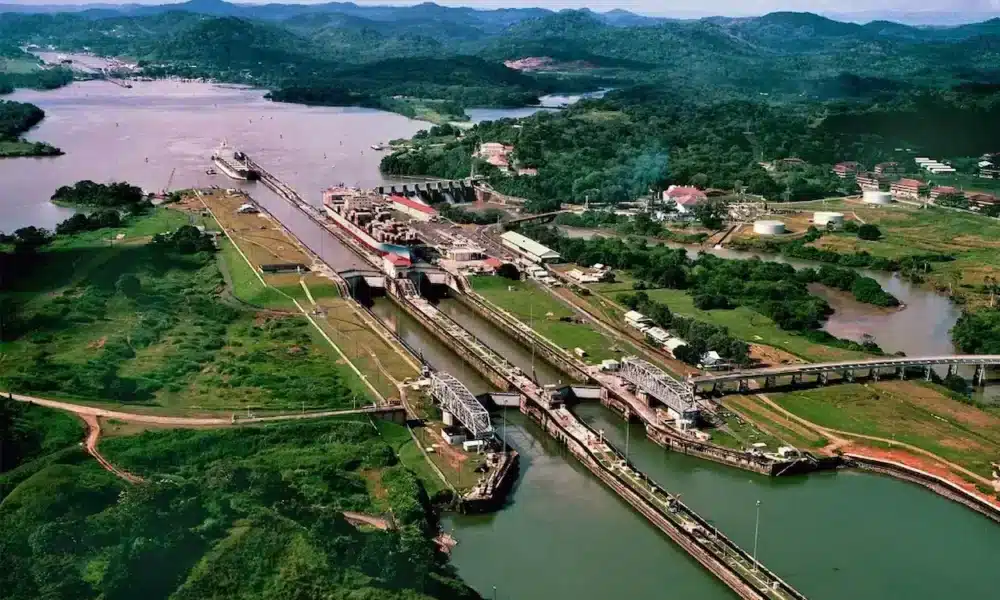
An 80-kilometer ribbon of water connects the Atlantic and the Pacific across the narrow Isthmus of Panama.
Inaugurated in 1914 after decades of titanic work, this canal revolutionized maritime transport by avoiding the perilous detour around Cape Horn, shortening journeys by thousands of kilometers.
For budding economists, it illustrates how strategic infrastructure boosts global trade, multiplying the wealth of user nations and transforming Panama into an indispensable hub for international freight.
From French ambition to tragic failure
The idea was born in the 19th century with Ferdinand de Lesseps, hero of the Suez Canal, who launched the works in 1881 under the Compagnie universelle du canal interocéanique. Tens of thousands of workers, mainly from the Caribbean, dug in a jungle infested with malaria and yellow fever, losing more than 20,000 lives in hellish conditions.
The project collapsed in a financial scandal in 1889, ruined by exorbitant costs and technical errors such as the choice of a sea-level canal. This wreck exposed the limits of engineering in the face of hostile nature and the traps of stock market speculation.
The American era and the rise of the modern economy
The United States bought back the rights in 1903, supporting Panama’s independence from Colombia to secure the zone. Under Theodore Roosevelt, engineers designed an ingenious system of locks and artificial lakes, such as Gatún, raising ships by 26 meters.
The first official passage of the SS Ancon in August 1914 marks the triumph, with 15,000 ships annually today carrying 300 million tons of goods. Managed by Panama since 1999, the 2016 widening doubles its capacity, boosting Asia–America trade and generating billions for the local economy.
The Panama Canal remains a model of human ingenuity in the service of commerce, linking continents and fortunes in an unceasing flow.