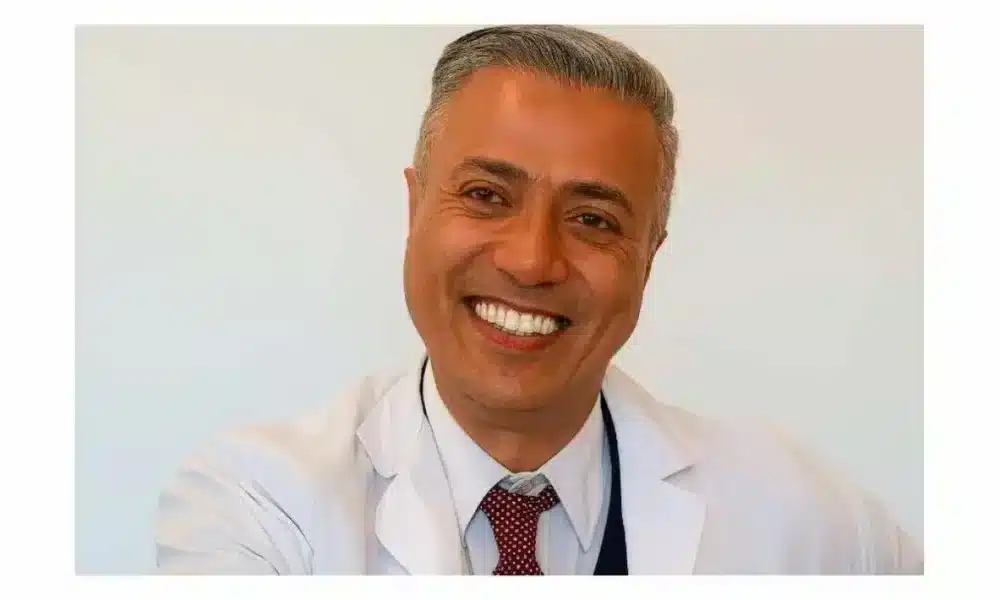
Dr Moez Ben Ali, a world leader in oncology
Trained within the Tunisian public school system, Dr Moez Ben Ali has established himself as one of the most influential figures in oncology worldwide. Expert in precision medicine, he has contributed to the development of protocols and innovative cancer treatments, while occupying strategic positions within large international biopharmaceutical companies.
Renowned for his scientific leadership, he is also a visiting professor at several prestigious universities and regularly speaks at international conferences, bringing a Southern voice to global debates on cutting-edge medical research. His work combines clinical expertise, translational research and technological innovation, notably in integrating artificial intelligence into diagnostics and the personalization of treatments.
Project CancerZero: A vision for Tunisia and Africa
Digital Tunisia interviewed Dr Moez Ben Ali to explore the latest advances in oncology, focusing on innovations in cancer diagnosis and treatment, the growing use of artificial intelligence, and the major impact of precision medicine on personalization and the effectiveness of patient care.
Doctor, on World Cancer Day, what is your assessment today?
The first finding is clear: the incidence of cancer is steadily increasing worldwide. We diagnose more cancers every year. This is explained by aging populations, increasing demographics, but also the evolution of our lifestyles: tobacco, alcohol, sedentary behavior, obesity, processed foods, pollution and environmental exposures.
In France, for example, the number of new cases annually has almost doubled since the 1990s to exceed 430,000 new cases in 2025. This rise is largely linked to aging and improved screening.
But one thing is essential to say: more diagnoses do not necessarily mean more deaths.
Precisely, what about cancer mortality?
There is a major message of hope.
In several Western countries, cancer mortality is decreasing despite the rise in cases. In France, mortality has fallen on average by about 2% per year in men and about 0.5% per year in women in recent years. This means that we are treating better, earlier and more effectively.
This decline is due to several factors:
- earlier screening,
- surgical advances,
- precision radiotherapy,
- targeted therapies,
- immunotherapy,
- personalized care protocols
- better overall management.
However, this progress is not universal. In Africa, mortality remains high, largely due to late diagnoses, limited access to innovative treatments and inadequate infrastructure.
What has really changed in the treatments?
We have lived through a therapeutic revolution.
For decades, conventional cytotoxic chemotherapy dominated. It attacked cancer cells but also healthy cells, with significant side effects.
Today, we have several major classes:
• Targeted therapies, which block specific molecular abnormalities.
• Immunotherapy, which stimulates the immune system against the tumor.
• Antibody-drug conjugates (ADCs), which combine the precision of an antibody targeting the tumor cell with the power of chemotherapy delivered directly inside the cancer cell.
• Cellular therapies (CAR-T).
• Therapeutic vaccines.
In some cancers, these approaches have transformed deadly diseases into chronic, even curable, illnesses.
Epigenetics is also a frequent topic. What is its role?
Epigenetics is a fascinating field. It studies changes that regulate gene expression without altering the DNA sequence itself, such as DNA methylation or histone modifications.
In cancer, certain epigenetic alterations activate or deactivate key genes. Put more simply, when one carries a mutation likely linked to the appearance of cancer, an interaction with the environment (anxiety, stress, lifestyle…) is possible to decide the onset or not of the disease; that is why in all my academic lectures I call it divine justice.
The future probably lies in the combination: genetics + epigenetics + immunology + systems biology.
Has diagnosis also evolved?
Yes, and in a spectacular way. Cancer diagnosis no longer rests on a single pillar. It is now multidimensional and integrated.
There is first the biological diagnosis : tumor markers, molecular biology, advanced blood analyses, sometimes liquid biopsies allowing the detection of circulating tumor DNA.
Next, the histopathological diagnosis, which remains fundamental. The microscopic analysis of tumor tissues not only confirms the cancer type, but also determines grade, aggressiveness and now some molecular profiles thanks to immunohistochemistry and integrated molecular biology techniques.
The third pillar is radiologic diagnosis, which has also undergone a revolution. We now have high-precision CT scanners, functional MRI, PET-CT, and in breast imaging, 3D mammography (tomosynthesis) which greatly improves early detection.
And there too, artificial intelligence is involved.
Algorithms can now assist in reading mammograms, X-rays and CT scans by detecting anomalies sometimes invisible to the human eye or by reducing false positives. But make no mistake: these tools are decision aids; they do not replace the radiologist.
Finally, we have entered the era of genomic diagnosis.
It is worth clarifying a common confusion:
• A genetic test searches for a hereditary transmissible mutation (such as BRCA).
• A genomic test analyzes the acquired alterations in the tumor to guide treatment.
Many professionals still confuse these two notions. Precision medicine requires rigorous training. You do not become an expert in oncogenomics after a few Internet readings. It is essential to practice, to train, and to understand the clinical implications before prescribing or interpreting these tests; I was the first to raise the genomics question for Tunisia, and today I am concerned about how the subject is being addressed.
Today, cancer diagnosis is therefore a convergence: biology, histopathology, advanced imaging, artificial intelligence and genomics. This convergence enables earlier, more precise, and above all more personalized diagnosis.
Precisely, what role does artificial intelligence play in this transformation?
Artificial intelligence is a powerful tool, but it requires important clarification.
Its application domains include :
- radiology and imaging,
- analysis of large health data,
- omics (genomics, transcriptomics, RNA methylation, proteomics),
- prediction of therapeutic response,
- assistance in choosing therapeutic alternatives,
- optimization of clinical trial design,
- identification of therapeutic targets.
But two levels must be distinguished:
1/ An algorithm aimed at streamlining the patient-caregiver relationship or administrative management.
2/ A medical decision-support AI capable of assisting in diagnosis, treatment choice or prediction of response.
The second level requires rigorous clinical studies and regulatory approval as a medical device.
In Tunisia, I see that the first aspect is progressing. However, the second still requires specific expertise and structured knowledge transfer. We must train experts in AI applied to health, design the necessary studies and prepare registration dossiers.
Confusion between the approaches of these two levels can be dangerous.
You launched the CancerZero project. Could you tell us a bit about it?
CancerZero is an initiative aimed at strengthening access to innovation in Africa, creating hubs for research, clinical development and drug manufacturing starting with Tunisia.
The idea is simple: innovation is truly innovative only if it is universal.
What is your message for Tunisia and Africa?
I am deeply optimistic.
Tunisia has exceptional human capital. Africa has a young, dynamic population. If we invest in education, research and health sovereignty, we can not only catch up but become major players in global innovation.
Innovation will accelerate when all continents are fully integrated.
Health is global or it isn’t.
And I say this with conviction: the dream of a humanity living longer, healthier and with dignity, is no longer a myth; it is a scientific trajectory.