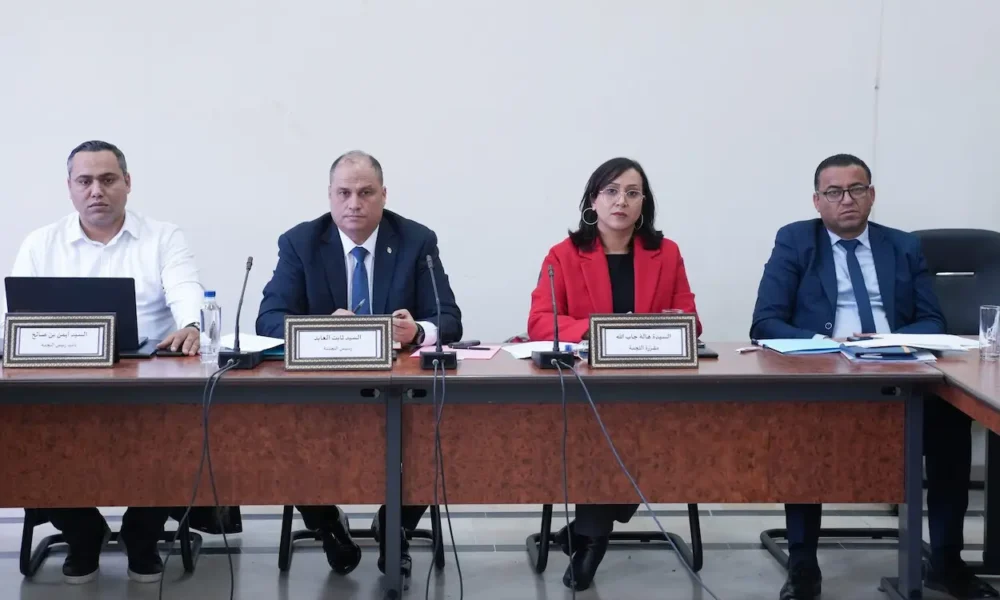
The Commission on Rights and Freedoms at the Assembly of the Representatives of the People (ARP) held, the day before yesterday, on Tuesday, February 17, 2026, a session devoted to hearing representatives from the initiators of the legislative proposal concerning the organic law on the protection of personal data.
A text presented as essential to privacy
The chair of the Commission on Rights and Freedoms, Thabet Al Abed, underscored the central role of this project in protecting privacy and personal data. He noted that the submitted text includes elements regarded as advanced, notably :
The regulation of the use of artificial intelligence
The enshrinement of the right not to be subjected to a decision that is exclusively automated
The establishment of a data protection impact assessment for high-risk processing
The framing of health data processing
The regulation of visual surveillance (cameras)
According to him, these provisions reflect consideration of current digital challenges.
132 articles and 6 chapters: the content of the proposal
The representatives of the legislative initiative presented the proposal, specifying that it comprises 132 articles spread over 6 chapters, covering :
General provisions
The general principles of processing personal data and the rights of the data subject
The regimes for processing personal data
The Personal Data Protection Authority
Sanctions
Final and transitional provisions
A reform aligned with international standards
The initiators explained that the proposal aims to introduce a new and modern legislative framework, in line with the legal rules applied worldwide and in accordance with Tunisia’s international commitments on data protection and human rights.
The limits of the 2004 law and the “institutional vacuum”
The speakers also detailed the reasons for this revision, citing in particular :
The shortcomings of the current Law No. 63 of 2004 regulating the protection of personal data
The institutional vacuum linked to the absence of an effective role for the Personal Data Protection Authority
The absence of a precise legal framework for data processing in sensitive sectors such as the press and media, surveillance cameras, and processing based on artificial intelligence
The weakness of safeguards when transferring data abroad
New obligations: Data Protection Officer and authorizations
Among the main measures envisaged, the representatives indicated that the proposal provides :
The creation of the position of the Data Protection Officer
The obligation, for public bodies, to use notification procedures and authorization requests for any data processing operation
Sanctions: a focus on fines and the creation of a dedicated structure
Regarding the punitive aspect, the initiators highlighted a greater emphasis on financial sanctions, with increases in certain fines. The text also provides :
The creation of a specific structure within the body responsible for pronouncing financial sanctions
Specific provisions governing the processing of personal data in relation to the press
Opening to amendments and call to broaden the hearings
In conclusion, the representatives of the initiative expressed openness to amendment proposals from deputies, while recommending broadening the series of hearings around this proposal to all stakeholders.