Tunisia aims to strengthen its electricity system by combining new production capacity, upgrading power plants, battery storage, and a reduction in demand during peak hours.
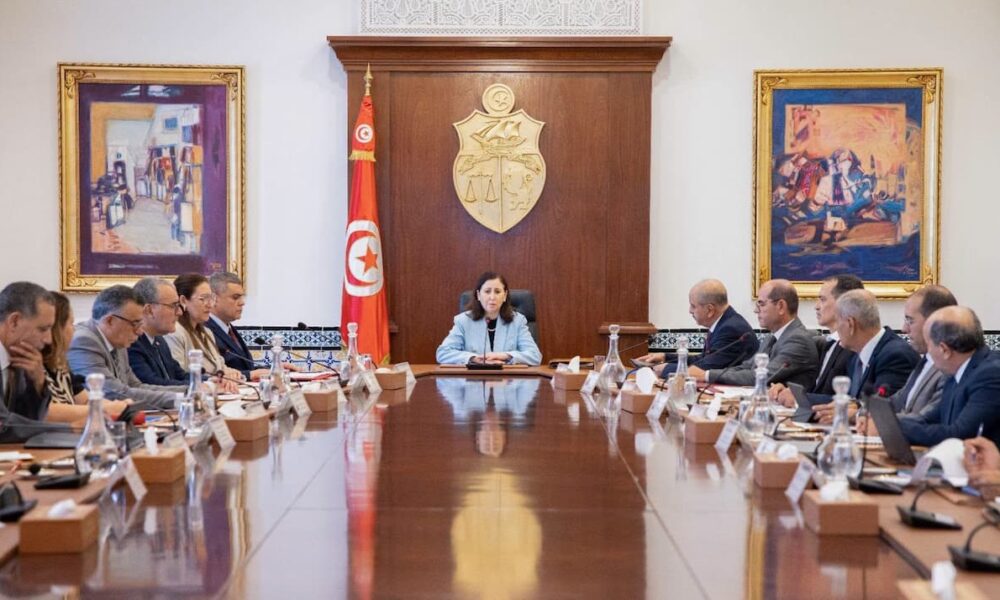
Held on Friday, October 9, 2026, a restricted cabinet meeting examined 11 measures presented by STEG, with an initial objective of deploying renewable energy before the summer of 2027.
Chaired by the Prime Minister, Sarra Zaafrani Zenzri, the meeting was dedicated to the short-, medium- and long-term energy action plan. According to the government Presidency’s communiqué, the priority is to secure electricity supply while reducing the energy deficit and production costs.
Essentials
• 250 MW additional expected through cooling of existing turbines.
• 300 MW / 600 MWh for a central battery storage system.
• 300 MW of renewables to be integrated before summer 2027, plus 40 MW under an authorization cycle.
• 300 MW of targeted demand reduction during peak periods.
• 35 % of electricity produced from renewables: national target for 2030.
Existing plants and new turbines: four levers to increase supply
The plan presented by the Minister of Equipment and Housing, also tasked with overseeing the Ministry of Industry, Mines and Energy, Salah Zouari, first aims to consolidate conventional production:
- 1. Cool the air at the inlet of existing turbines to improve their performance and gain an additional capacity of around 250 MW.
- 2. Install gas-fired engines, with an announced capacity of 200 MW.
- 3. Add a third gas turbine at Borj El Amri, with a capacity of 300 MW.
- 4. Restore full capacity of the Kchabta and Metline plants, estimated at around 190 MW. This involves recovering existing capacity, not building 190 MW anew.
The strengthening of Borj El Amri had already been listed among strategic projects during a government meeting on August 10, 2026. On that occasion, the Government Presidency indicated that the national peak consumption reached 6,400 MW in July 2026, up from 5,175 MW in 2025.
Storage: 300 MW of power and 600 MWh of energy
5. Deploy a battery system capable of delivering a power of 300 MW, for an energy storage of 600 MWh. These two units are not the same: megawatts (MW) measure instantaneous power, while megawatt-hours (MWh) measure the amount of energy that can be redeployed.
For illustration, 600 MWh theoretically corresponds to two hours of supply at 300 MW, excluding losses and technical constraints. The storage is intended in particular to mobilize electricity during periods of high network demand.
Solar and wind: four other projects and programs announced
The roadmap also includes several actions aimed at developing renewable production:
- 6. Integrate around 300 MW of renewables before summer 2027, as well as an additional capacity close to 40 MW within the fifth authorization session.
- 7. Expand the Sidi Daoud wind farm to add around 30 MW.
- 8. Build a photovoltaic plant at Beni Mhira, with a capacity of 50 MW, paired with a storage of 20 MWh.
- 9. Build a photovoltaic plant at Tataouine, with a capacity of 200 MW, accompanied by 100 MWh of storage.
Important clarification: the communiqué does not specify whether the detailed solar and wind projects are all included in the 300 MW announced before summer 2027. It would therefore be incorrect to automatically sum all these capacities to present a guaranteed total of new capacities.
Peak demand: reducing pressure by 300 MW
The plan does not rely solely on building additional capacity. It also includes:
- 10. Control demand to reduce by about 300 MW the power drawn during peak hours. This is a target, not a reduction already achieved.
- 11. Improve the shedding mechanism, designed to manage situations of grid overload.
The Prime Minister also called for the development of the grid, the deployment of smart meters, the strengthening of storage capacity, and greater participation by households and businesses in demand-management programs.
What schedule and what target for 2030?
The most precise date in the communiqué concerns integrating around 300 MW of renewable projects before summer 2027. For the other measures, the Government Presidency calls for accelerating their implementation and ensuring on-the-ground monitoring, without publishing in this text a detailed timetable for each project.
In the longer term, the official target remains to raise the share of renewables in electricity production to 35% by 2030. This refers to the actual portion of electricity produced, not merely the installed capacity share.
The government is counting on self-production, the authorization regime, and concessions. The realization of the announced projects will depend on their actual execution and connection to the grid.