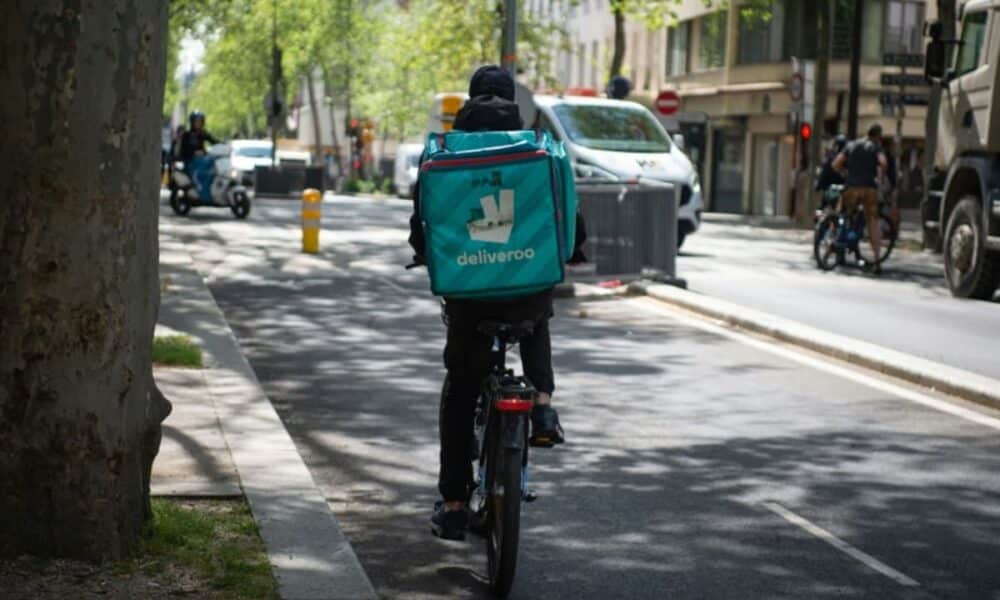
According to the annual report from the French regulator of delivery platforms, the hourly earnings of independent couriers were still under pressure in 2025, down across all platforms analyzed except Uber Eats.
This overall downward trend in hourly pay over the past five years is explained in particular by a continual lengthening of the time taken for each trip.
First, it is the British brand Deliveroo that sees the gross hourly earnings of its couriers fall by 2.4% year on year to €25.7, while Stuart’s couriers’ earnings drop by 5% to reach €22.7.
Turning to the Delicity meal courier, hourly earnings have fallen by 0.7% in 2025 to €35.4 per hour, the highest level of the ARPE’s panel of the Authority for Social Relations of Employment Platforms (ARPE).
According to ARPE’s figures, an inflection in Uber Eats’ share, which in 2025 records a 4.7% increase in its gross hourly earnings per ride, has reached €21.5. This marks its first rise in hourly earnings since the ARPE began observations in 2021.
Moreover, longer trips are only rarely compensated by an increase in the unit rate paid to the courier, ARPE explains.
Figures for the 2021-2025 period indicate that the deterioration remains notable for all the major platforms in the sector. The gross hourly earnings thus fell by 22.4% for Uber Eats, 21.5% for Stuart and 15.0% for Deliveroo over the five-year period.
These declines are even more pronounced when inflation is taken into account: -31.7% for Uber Eats since 2021 and -25.2% for Deliveroo.
Note that a survey conducted in 2025 by Médecins du Monde (MdM) and several research centers among about a thousand couriers found that 98% were born abroad and 64% lack a residence permit. They work on average 63 hours per week for €1,480 gross per month, according to this study.