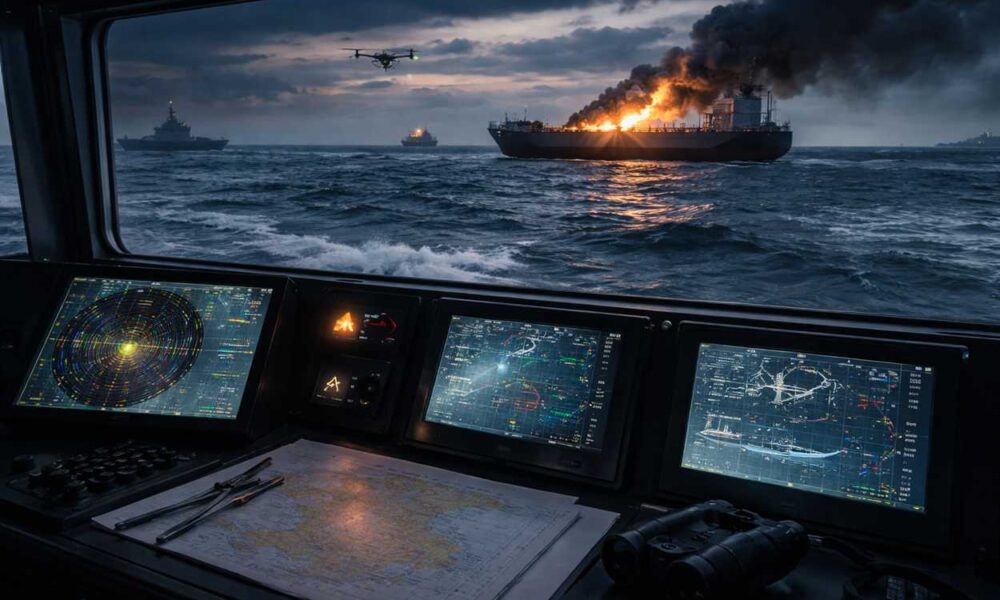
The Hormuz Strait crisis, blocked by Iran since February 28, 2026, opens up to Egypt a strategic role as an oil hub for Gulf countries.
Egyptian Minister of Petroleum Karim Badawy announced the country’s capacity to convey Saudi crude from the Red Sea to the Mediterranean via the Sumed pipeline, thereby bypassing the Persian bottleneck.
This corridor, 320 km long and with a capacity of 2.34 million barrels per day, connects Ain Sokhna to Sidi Kerir, already serving 7 to 8% of global oil. Riyadh, which already imports Saudi crude via Yanbu in the Red Sea, sees in this option a vital means to maintain its exports despite tensions.
Storage offer and logistical diversification
Cairo proposes leasing ten offshore storage terminals in the Red Sea – Ain Sokhna and Ras Badran – totaling 29 million barrels available, for monthly or yearly contracts. This initiative targets traders, shippers and oil majors, capitalizing on surplus capacity in the face of Gulf paralysis.
Saudi Aramco is already redirecting its shipments to Yanbu to avoid Hormuz, where 85% of Iraqi exports and 100% of those of Kuwait, Oman and Qatar transit. Egypt, diversified with its two FSRU units in the Mediterranean and a third undergoing maintenance, ensures its own energy security while monetizing its infrastructure.
Global and regional stakes of significant size
The Hormuz blockage, which carried 17 million barrels per day in 2025, threatens 20% of world oil and 25% of LNG, pushing Brent above $100 a barrel. The Suez Canal, under Egyptian control, becomes more attractive for shippers bypassing Africa via the Cape of Good Hope, lengthening journeys by 40% but bringing risks.
This location benefits Egypt, whose canal revenues jumped to $9.4 billion in 2025, and reinforces ties with Riyad. Accelerated negotiations with Aramco could generate billions more in transit and storage fees.
The Hormuz crisis turns Egypt into an indispensable energy pivot. The Sumed pipeline and the Red Sea terminals offer a lifeline to the Gulf, boosting Cairo’s revenues. As long as tensions persist, Cairo capitalizes on its geopolitical neutrality.

Adel Khelifi