Geopolitical shock is turning into a logistical shock. Following the military strikes carried out by the United States and Israel against Iran, an increasing number of players in maritime transport, but also oil and gas groups, suspend or limit the passage of their ships through the Strait of Hormuz, a vital artery of global energy trade.
Japanese companies halt transit, for lack of alternatives
According to reports, several major Japanese shipowners have ceased transiting their ships through the Strait of Hormuz. The company Nippon Yusen said it had instructed its ships to no longer pass through the area since Saturday.
Similarly, Mitsui O.S.K. Lines says it will refrain from navigating in the strait and asks its concerned ships to stay in waters deemed safe, recalling that crew and cargo safety is the priority.
For its part, Kawasaki Kisen (K Line) explains that some ships present in the Gulf are on alert. Most notably, the company highlights a key point: unlike other sea routes, there is no real detour possible once cargoes are engaged in this area, and it will not send additional ships until stabilization.
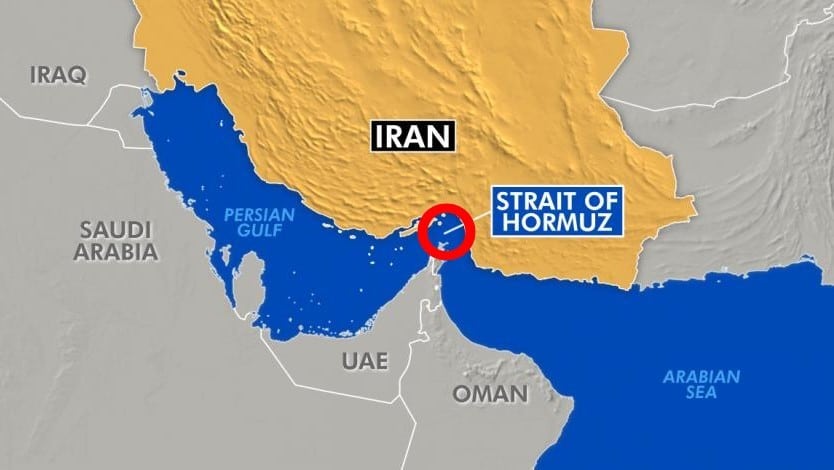
The Strait of Hormuz is a narrow maritime corridor between Iran and the Sultanate of Oman, described as one of the world’s most frequented oil passages. About 20% of world oil passes there, as well as substantial quantities of liquefied natural gas (LNG).
That figure underscores the scale of the risk: in 2024, nearly 20 million barrels of crude oil per day would have transited there, according to the cited U.S. Energy Information Administration.
A bottleneck visible by satellite near key ports
The slowdown is not limited to announcements. Commercial sources indicate that tanker owners, major oil companies, and trading firms have suspended shipments of crude, fuels and LNG, following Tehran’s announcement of navigation closure. A leader of a major trading company summarizes: ships “will stay in place for several days.”
Satellite images and tanker-tracking tools would show a concentration of ships near major ports, notably Fujairah in the United Arab Emirates, with vessels idle rather than taking the Strait.
An official of the European Union’s Maritime Security Mission (Aspides) indicates that many ships received a shortwave radio message attributed to the Guardians of the Revolution, stating that “no vessel” would be allowed to pass through the Strait of Hormuz.
In the meantime, Hapag-Lloyd, described as the 5th largest global shipping line, announces the suspension of all transits via the Strait of Hormuz “until further notice” and warns that Gulf calls could experience delays, diversions and schedule adjustments.
Western navies urge caution, without offering full reassurance
The Royal Navy says that Iranian orders are “not legally binding,” while advising ships to pass the area with prudence.
Maritime broker Poten & Partners estimates that traffic has not stopped entirely, but disruptions are rising rapidly.
Meanwhile, the industry association Intertanko reports a warning from the American navy about an “operational zone” spanning the Gulf, the Gulf of Oman, the northern Arabian Sea and Hormuz, with a troubling message: the safety of neutral and commercial navigation cannot be guaranteed.
Greece, via its Ministry of Maritime Affairs, would also have advised ships to avoid the Gulf, the Gulf of Oman and Hormuz.
Maersk and CMA CGM adjust their safeguards
In an undated update cited, Maersk says it is coordinating with its security partners for operations in the Red Sea and in the Gulf of Aden, while noting that acceptance of shipments to the Middle East continues.
Meanwhile, CMA CGM (described as the third-largest group in the world for container transport) says it has asked its ships in the Gulf, or on their way to the area, to head toward safe locations.
LNG already affected: 14 LNG carriers slow or divert
The latest indicator closely watched: gas. According to Laura Page, head of LNG analysis at Kpler, 14 LNG vessels without cargo already showed signs of slowdown, rerouting, or stoppage in the Strait or nearby. She expects this number to rise in the coming days.
The closure or partial blockage of Hormuz acts as a risk multiplier, with potential cascading effects: delivery delays, higher insurance costs, strain on the availability of crude, fuels and LNG, and increased volatility in the markets.