The tug-of-war over the Strait of Hormuz continues between Washington and Tehran, against a backdrop of disagreement about both the conditions for reopening the passage and the volumes of oil that actually manage to pass through it.
An Iranian deputy foreign minister said that Iran was ready to take the necessary steps regarding the strait as soon as the United States fulfills its commitments. Tehran, however, insists it is not rushing to restore normal navigational conditions until Washington, in its view, has fulfilled its obligations.
The Iranian official maintained that the strait remained closed and that no vessel could pass through without Iranian coordination and authorization.
The Essentials
Hormuz : Tehran says the strait will remain under its control as long as Washington has not fulfilled its commitments.
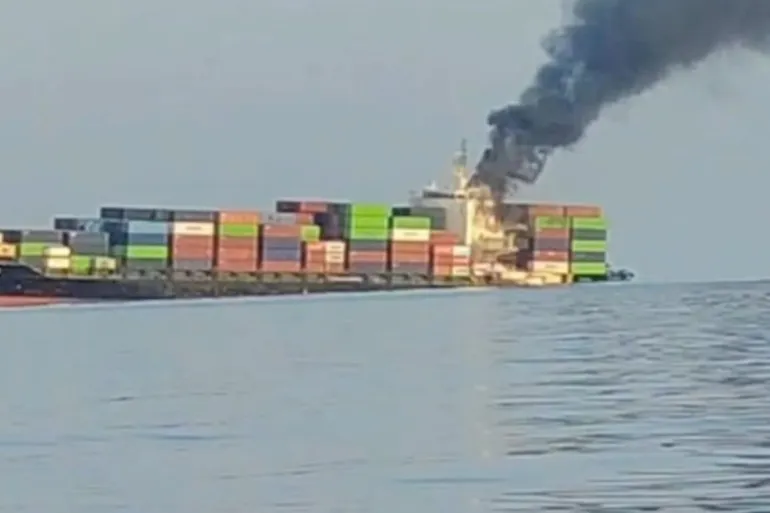
Maritime traffic : around 12 ships per day would currently pass through the strait, versus 130 before the war, with a low point of 5 ships on a recent day.
Oil : Washington claims that 130 million barrels passed through in 14 days, a figure disputed by the Iranian authorities.
Crews blocked : nearly 400 vessels carrying around 6,000 sailors remain affected in the Gulf.
United States : the average petrol price reaches about $4.09 per gallon, $1.10 higher than at the start of the war.
Iran : annual inflation is announced at 66% as Washington broadens sanctions to financial networks linked to Tehran.
An agreement with Oman contingent on American commitments
According to the Iranian official, Tehran has also reached an agreement with the Sultanate of Oman regarding the Strait of Hormuz.
However, this agreement would not be implemented until the United States has begun to implement its own commitments.
Iran also states that it will continue its defensive measures and says it is prepared for different scenarios in case of further escalation.
Qatar and Pakistan would also seek, according to Tehran, to explore possibilities for returning to the application of the memorandum of understanding. Iranian authorities say they have outlined the measures they now expect from Washington.
Around 12 ships per day, versus 130 before the war
Navigation remains far below the levels observed before the conflict.
According to data reported by the New York Times, the average number of ships passing through the strait would have fallen to around 12 per day, compared with 130 daily before the war.
The Washington Post, citing data from the analytics firm Kpler, indicates that traffic may have dropped to as low as only 5 ships on one day of the past week.
These figures illustrate the scale of disruptions that continue to affect one of the world’s main energy routes.
Disagreement over 130 million barrels of oil
Washington and Tehran also provide radically different accounts of oil flows.
The speaker of the Iranian Parliament, Mohammad Bagher Ghalibaf, challenged statements by U.S. Treasury Secretary Scott Bessent, according to which 130 million barrels of oil had been evacuated through the strait in the last 14 days.
An Iranian security official cited by Press TV also rejected claims of large volumes being carried through the southern passage of the strait.
According to him, Washington would seek to present this corridor as secure in order to reduce energy-price tensions. Iranian authorities, by contrast, say that restrictions remain in place and that tankers have been forced to alter their routes following warnings.
At this stage, the available elements thus present two contradictory narratives about the real extent of oil traffic.
Nearly 400 ships and 6,000 crews still affected
The consequences go far beyond the Washington–Tehran duel.
The International Maritime Organization warned that about 400 ships carrying nearly 6,000 crew members remained blocked in the Gulf due to disruptions related to the Strait of Hormuz.
The persistence of this situation continues to weigh on supply chains, energy supplies, and the cost of maritime transportation.
Gasoline reaches $4.09 per gallon in the United States
The crisis’s consequences are also starting to be felt directly by American consumers.
According to figures cited by the New York Times, the average price of gasoline in the United States has reached about $4.09 per gallon, or $1.10 higher than at the start of the war.
This rise increases pressure on the Donald Trump administration, as the conflict has entered its sixth month and negotiations remain stalled.
The Strait of Hormuz has thus become both a military, diplomatic, and economic issue for Washington: the United States seeks to secure maritime circulation without triggering an escalation that could require even larger military operations.
Washington broadens sanctions to networks tied to Iran
Alongside the maritime standoff, the American administration has intensified its economic campaign against Tehran.
The new sanctions target financing channels and intermediaries located outside Iran, which Washington describes as components of banking networks enabling Tehran to move funds and pursue certain commercial activities despite the restrictions.
Scott Bessent said these measures aimed to further reduce the Iranian economy’s funding capabilities.
Washington also warns that individuals or institutions facilitating certain transactions with Iran risk losing access to the dollar and the international financial system.
The measures specifically concern a person linked to Bank Melli Iran, a Hong Kong-based entity, as well as operations involving branches of Banque Misr in the United Arab Emirates, according to the information provided.
This extension illustrates a shift in American strategy: the pressure no longer targets only Iranian entities directly, but also intermediaries who could facilitate their international transactions.
Tehran says it is prepared for the new sanctions
The Iranian deputy foreign minister minimises the breadth of the new American mechanism, saying it is not truly a new policy and that Iran had already prepared to face such measures.
Tehran also asserts that it has not violated the memorandum of understanding and instead accuses Washington of breaking the diplomatic momentum several times over the last 16 months.
For Iranian authorities, the sequence is clear: the United States must begin to implement its commitments before Iran relaxes its measures on the Strait of Hormuz.
Annual inflation announced at 66%
The confrontation nonetheless puts increasing pressure on the Iranian economy.
According to the cited figures, the annual inflation rate reached 66% last month.
Iranian President Massoud Pezeshkian acknowledged that sanctions and trade restrictions were reducing export and import opportunities and complicating Iran’s economic relations with abroad.
The Iranian government now says that responding to the economic difficulties caused by the war and sanctions is a priority. Among the announced objectives are controlling inflation, managing markets, creating jobs, directing investments toward domestic production, and a gradual reduction of dependence on the dollar.
Six months after the start of the war, the Strait of Hormuz remains at the heart of the power struggle. Maritime traffic remains far below its pre-war level, Washington and Tehran contradict each other on the volumes of oil actually transported, and no durable way out of the crisis is yet emerging.