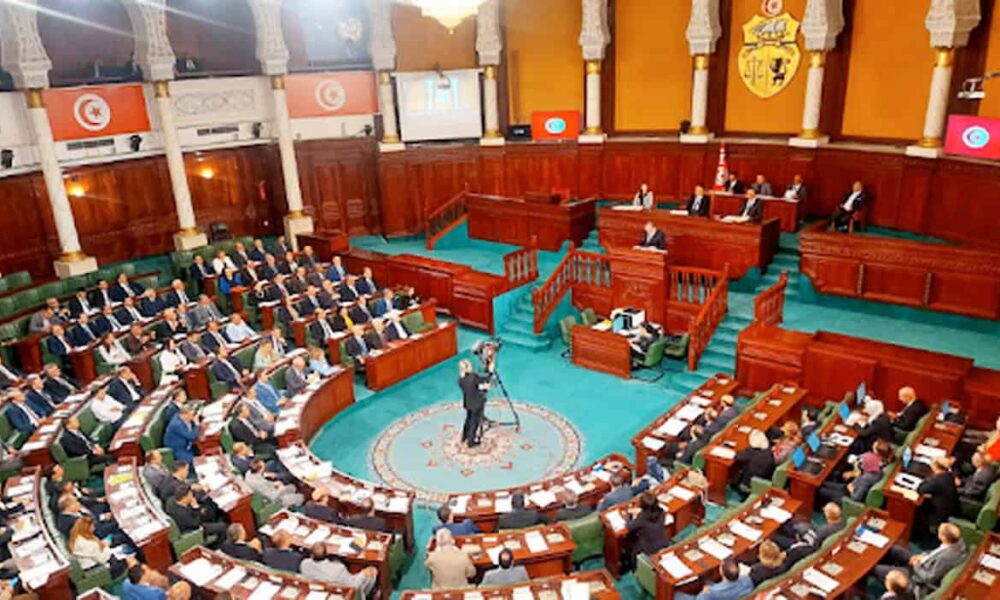
Several deputies have filed a bill concerning the revision and supplementation of certain provisions of the Tunisian Citizenship Code.
In the explanatory memorandum, the deputies explained that the Tunisian Citizenship Code has enshrined the mechanism of naturalization, regarded, in comparative experiences, as a political and legal tool used by states to integrate foreigners, in a way that reflects the security, economic and social orientations of the State. They argued that Tunisia cannot live apart from its regional and international environment, nor can it, in the future, assume potential negative consequences linked to irregular situations that worsen day by day.
They emphasized that the State is the sole legal person responsible for granting nationality and that, in this matter, it exercises its sovereignty over its territory. Naturalization, from this perspective, is a complex process that is not limited to a fixed period of residence or to certain other conditions, but also—and above all—depends on the sense of belonging and loyalty to the homeland. It must, first and foremost, take into account the higher interest of the country, prevent any potential threat to security and social peace, and preserve the national demographic balance.
The deputies also affirmed that it is not possible to remain on the margins of legislative evolution in this domain, in light of several comparative experiences aimed at attracting skills and exceptional talents, and at enshrining economic naturalization as well as other forms of granting nationality to distinguished individuals in various sought-after fields, expected to have a positive impact on multiple aspects of social, cultural, sporting, scientific, economic life, etc.
The proposal provides, in its first article, for the repeal of the provisions of Articles 8, 9, 10 and 20 of the Tunisian Citizenship Code, replaced as follows :
Article 8 (new) : Any person born in Tunisia to stateless parents residing in Tunisia for at least ten years is Tunisian.
Article 9 (new) : Any person born in Tunisia to unknown parents is Tunisian. However, if his or her filiation is subsequently established, by any means, he is considered to have never been Tunisian. It is also considered as never having been Tunisian any person whose foreign filiation is established and whose nationality becomes that of that foreigner under that foreigner’s national legislation.
Article 10 (new) : The newborn found in Tunisia is presumed to have been born there until proven otherwise.
Article 20 (new) : Tunisian nationality can only be granted to a foreigner by naturalization if he proves that he entered Tunisia legally and regularly and has resided there usually, in accordance with the laws and regulations in force, for seven consecutive years preceding the filing of his application, subject to the exceptions provided for in Article 21 of the Code.
Article 2 : A new fourth provision is added to Article 21 of the Tunisian Citizenship Code, and a new Article 38 bis is introduced, as follows :
Article 21, paragraph 4 (new) :
(4) The foreigner whose naturalization presents exceptional interest, and who possesses remarkable skills in one of the scientific, technological, artistic, cultural, sporting or economic fields, or who pursues a profession in demand by the country, or possesses rare specialties, or contributes to the prominence of Tunisia, to growth and to employment, according to criteria set by decree.
The aforementioned characteristics—or any one of them—are established on the basis of the qualifications and supporting documents provided by the applicant, or on the basis of information that may be communicated by the competent body concerning the profession, activity or specialty concerned.
Article 38 bis :
Notwithstanding the provisions of Articles 36, 37 and 38 of this Code, in all cases where the filiation of the person concerned is established, or when it is proven that the entry of their parents—or of one of them—into Tunisia occurred outside the legal and regular frameworks, they lose the Tunisian nationality acquired by virtue of Articles 8, 9 and 10 of this Code and are deemed never to have acquired it.