The Finance and Budget Committee in the Assembly of the People’s Representatives held a session as part of its weekly meetings for the year 2026, devoted to examining several questions related to its activities, as well as major files concerning public finances and the national economy, in a context of increasing economic pressures at both domestic and international levels.
A widened parliamentary presence and multidimensional debates
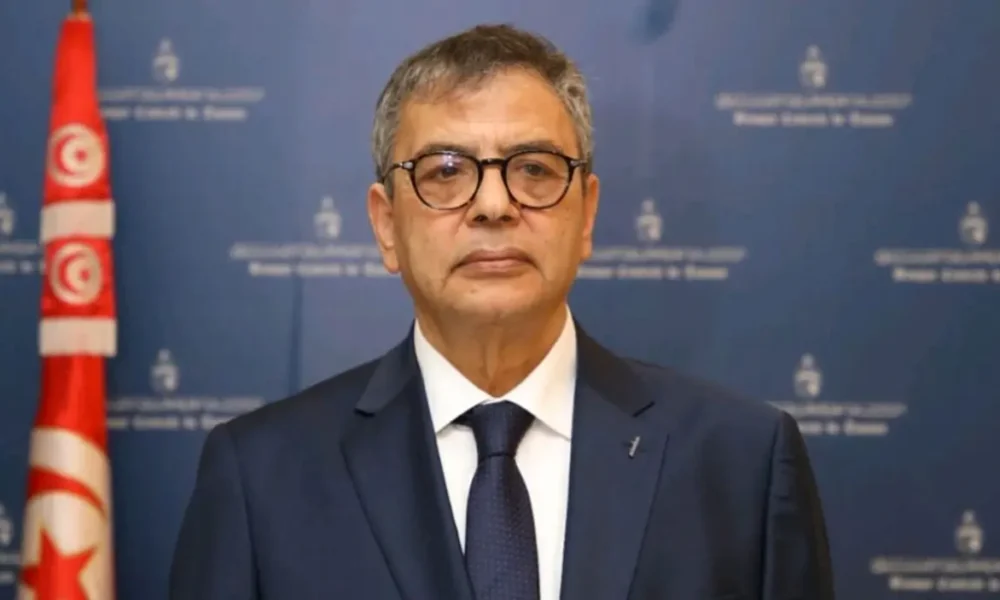
The session was chaired by the committee’s chair, Maher Ktari, in the presence of the vice-president Dhafer Sghiri and the rapporteur Zeina Jiballah, as well as several committee members and non-members, notably Amal Moaddab, Mohamed Amine Ouerghi, Issam Chouchane, Mustapha Boubakri, Massoud Grira and Ali Zaghdoud, underscoring the importance of the issues addressed.
A bill to reinforce compensation for accident victims
At the opening of the proceedings, it was announced that a proposed law would be transmitted aiming to revise certain provisions relating to the compensation of bodily injuries of road accident victims. These provisions had been integrated into the Insurance Code under Law No. 86 of 2005, in an effort to strengthen the protection of victims.
Questions about delays in modernizing the educational system
The commission also decided to send a letter to the Minister of Education regarding the funds allocated to the modernization of educational establishments, insisting on the need to accelerate the establishment of a goals-based management unit, in order to ensure the implementation of the second phase of the modernization program for the educational system.
Tax benefits still awaiting implementation
During the discussions, the MPs called for speeding up the publication of the joint decree between the Minister of Commerce and the Minister of Finance, relating to Article 55 of the Finance Law, which provides a tax advantage for resident families when purchasing or importing a vehicle. They reminded that the legal deadline for its entry into force should not exceed three months.
The Central Bank circular at the heart of controversy
Circular No. 4 of 2026 from the Central Bank, imposing restrictions on financing imports of products deemed “non-priority”, sparked wide debate within the committee.
Several MPs argued that this measure contradicts the orientations of the 2026 Finance Law aimed at supporting investment, encouraging economic initiative, and simplifying procedures for the benefit of businesses.
They also warned about its potential effects, notably the slowdown of business activity, particularly for SMEs, the deterioration of the business climate, and the risk of expanding the shadow economy.
The MPs proposed summoning the Governor of the Central Bank to illuminate the motivations behind this decision, while exploring alternatives to strengthen foreign exchange reserves, notably through incentive measures for Tunisian residents abroad.
Towards recourse to administrative justice and a time-bound framework for the measures
In this regard, the commission discussed the possibility of referring the matter to the Administrative Court to obtain an advisory opinion on the conformity of this circular with the national legal framework.
Conversely, some MPs defended this measure as a tool to protect foreign exchange reserves, currently estimated at about 105 days of imports, against a minimum threshold of 120 days, while calling for a limited duration for these restrictions.
Inflation, war and purchasing power at the heart of concerns
The discussions also focused on the repercussions of the war on the national economy, notably through the volatility of oil prices and its effects on financial balances. The MPs proposed summoning the Minister of Finance on this subject.
Moreover, the commission examined the rise in prices and the worsening inflation, as well as their impacts on citizens’ purchasing power, in addition to issues related to social aid programs.
A joint meeting with the Trade Commission was suggested to strengthen the control of distribution circuits and combat speculative and monopolistic practices.
A visit to Gafsa and a hearing on the reform of social security funds in perspective
At the conclusion of the proceedings, the MPs proposed organizing a field visit to the Governorate of Gafsa to monitor the situation in the region, particularly in the phosphate, transport and infrastructure sectors.
They also called for organizing a hearing with the Minister of Social Affairs to present a strategic vision for the reform of the social funds, recalling that this project was to be finalized during the first quarter of 2026.