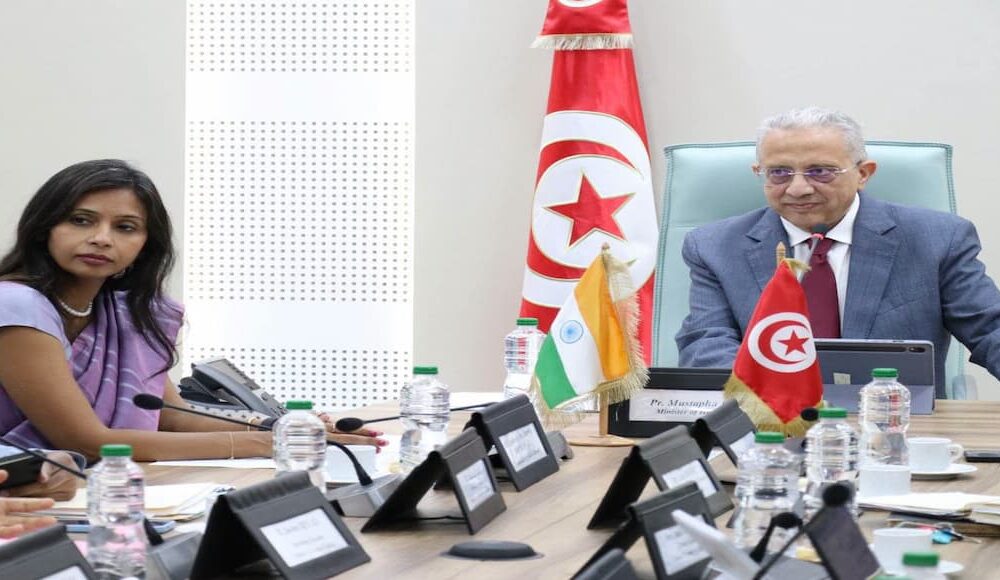
A new version of the 2027 finance bill has advanced in Parliament. On Wednesday, November 25, 2026, the finance and budget commissions of the two chambers approved the amended text.
Among the changes are the revision of the “one car for every family” scheme, a customs amnesty and measures in favor of businesses. But nothing has yet been definitively voted.
The Essentials
- The amended bill was adopted in committee on November 25.
- Fourteen additional articles are announced by the president of the finance committee; an initial tally had reported thirteen.
- The family car would be redirected toward the purchase of a new vehicle on the local market by a family that does not own a car.
- A postponement of penalties related to electronic invoicing to January 1, 2028 is proposed.
- Penalties relief for the National Register of Enterprises (RNE) and for customs is planned. The reduction of customs duties on tires, however, was rejected.
- The measures must still go before the plenary; they are not applicable at this stage.
The bill No. 063/2026 underwent two joint meetings on November 24 and 25. In the night of November 25–26, lawmakers completed the examination of amendments and approved the budget provisions of articles 1 to 12 before voting on the entire text.
The vice-president of the committee, Dhafer Sghaïri, had announced 13 additions in the morning of November 25. In the evening, President Maher Kettari announced 14. While awaiting the publication of the consolidated text, here are the fourteen measures identified in these summaries, grouped by theme.
Automobile: revisions to the family car conditions
1. A car for every family. The provision of Article 55 of Finance Law 2026 would be revised. The version chosen in committee provides a single purchase on the local market, for a new passenger car and reserved for a Tunisian family without a vehicle.
The announced conditions for the family car
Gasoline: maximum engine displacement of 1,300 cm³.
Diesel: maximum displacement of 1,500 cm³.
Net income: ceiling of 10 times the guaranteed minimum wage for a single person and 14 times for a couple.
Vehicle: new, purchased locally, benefit granted once only to a family without a car.
The initial scheme, listed in Article 55 of Law No. 2025-17 of December 12, 2025, opened the advantage to importation or local acquisition of new or used vehicles, with higher displacement thresholds. The new wording aims to facilitate the application of the measure. The final price of the vehicles, the access modalities and the possible retention of other regime conditions will need to be checked in the final text.
2. Local automobile industry. For Tunisian manufacturers and assemblers, imported inputs lacking a locally produced equivalent would benefit from zero customs duties and reduced VAT if they are exclusively intended for this activity. Vehicles manufactured and assembled in Tunisia would be exempt from the excise duty for five years. This exemption does not mean the removal of all taxes on these cars.
3. Road tractors. Customs duties on the import of road tractors under tariff heading 87.01 would be reduced to 0%. The estimated budgetary cost of the measure is around one million dinars. It targets traction vehicles used notably for road freight transport, and not all trucks nor agricultural tractors. A drop in transport costs does not automatically translate into lower sale prices.
Businesses: additional time and lighter penalties
4. National Register of Enterprises (RNE). Penalties for late filing would be exceptionally waived for formalities due by December 31, 2026 at the latest. Interested parties would need to regularize their registration or information, including financial statements and the beneficial owner declaration where required, within six months from the start of the month following the publication of the law. The main duties would remain due and penalties already paid would not be reimbursed.
5. Electronic invoicing. The application of sanctions related to violations of electronic invoicing obligations would be postponed to January 1, 2028, notably to take into account difficulties faced by small artisans and service providers. Electronic invoicing itself is not eliminated: the postponement concerns the sanctions.
6. Difficult enterprises. The exceptional tax mechanism encouraging investment companies and venture capital funds to participate in the capital of restructuring or divesting companies would be extended until December 31, 2029.
7. Public tenders and currencies. Tunisian enterprises and products could participate in state tenders denominated in foreign currencies without prior authorization from the Central Bank, provided that settlement is done in Tunisian dinars.
8. Small public works contractors. The mechanism for regularizing late penalties in the execution of contracts would be extended to December 31, 2027. Addenda would set new deadlines for the completion of works. Penalties could apply again if these deadlines are not respected.
Customs Amnesty: a regularization that could extend over five years
9. Customs offenses. An exceptional mechanism of exemption or reduction of fines would target customs offenses and crimes committed before December 1, 2026, under the conditions provided by the future text.
The announced modalities
Regularization through payment of due duties and taxes or, where applicable, a fine calculated on the value of the goods:
10 % in case of actual seizure.
20 % in case of fictitious seizure.
Installment: payment in one lump sum or according to a schedule not exceeding five years.
These modalities, set out in the commissions’ proceedings, do not constitute a general tax amnesty. Affected individuals will have to await the voted text to verify the precise eligibility criteria and the formalities.
Agriculture, vegetable oils and industry: new arbitrations
10. Farmers affected by drought. The deadlines for regularizing certain debts related to rental of agricultural land and waivers of penalties would be extended by one year, to December 31, 2027. The provision notably concerns young farmers, technicians with agricultural training, and certain categories stemming from dissolved old agricultural cooperatives. This is not a general wipeout of all agricultural debts.
11. Vegetable oils. A 20% customs duty would be applied to imports of vegetable oils, with the exception of those from the National Oil Office (ONH). Revenues would be allocated to the olive oil sector account. At this stage, it cannot be inferred a uniform price increase for all oils sold to households.
12. Marble and granite. The consumption tax would be revised: 15% for marble and granite, 20% for worked stones and building stones. Raw or minimally worked materials would benefit from relief depending on the defined scope. A transitional provision provides for non-application of the tax to manufacturing companies for the period before January 1, 2027, with no restitution of amounts already paid.
Culture and public enterprises: two specific measures
13. Contractual culture agents. The regularization of certain professional situations is planned for cultural animation facilitators and teachers of cultural animation, music teachers and staff of relevant drama and performing arts centers. The conditions and procedures should be specified by regulatory texts within a maximum period of six months.
14. Gafsa Phosphate Company (CPG). The unpaid portion of profits owed to the State for 2022 could be converted into public shareholding in the CPG, without impact on corporate tax for this operation. This is not a cash payment announcement.
The rejected measures: tires, solar energy and batteries
Four articles of the initial project, which comprised 70 articles, were ruled out in committee, according to the available summaries:
The additional proposal to reduce customs duties on tires was also rejected, according to Mosaïque FM on November 24 and the parliamentary report relayed by the public radio. This proposal is separate from the four articles of the initial project that were dropped. The rates of 20%, 15% and 10% discussed for the different tire categories should therefore not be presented as adopted.
Also read: the reasons for rejecting provisions on biodegradable bags, batteries and solar energy.
A budget still awaiting final vote
The budget projections presented after the proceedings show revenues of 54.280 billion dinars and expenditures of 68.895 billion, i.e., an anticipated deficit of 14.615 billion dinars. These figures remain those of the bill.
Adoption in committee paves the way for examination in plenary. The rejected articles may be proposed again, and other amendments may be filed. The law’s adoption must occur no later than December 10, in accordance with Article 78 of the Constitution.
For households as well as businesses, it is therefore important to distinguish the announcements issued by the commissions from the provisions actually applicable. *
The final text published in the Official Journal and, where necessary, its implementing texts shall prevail.