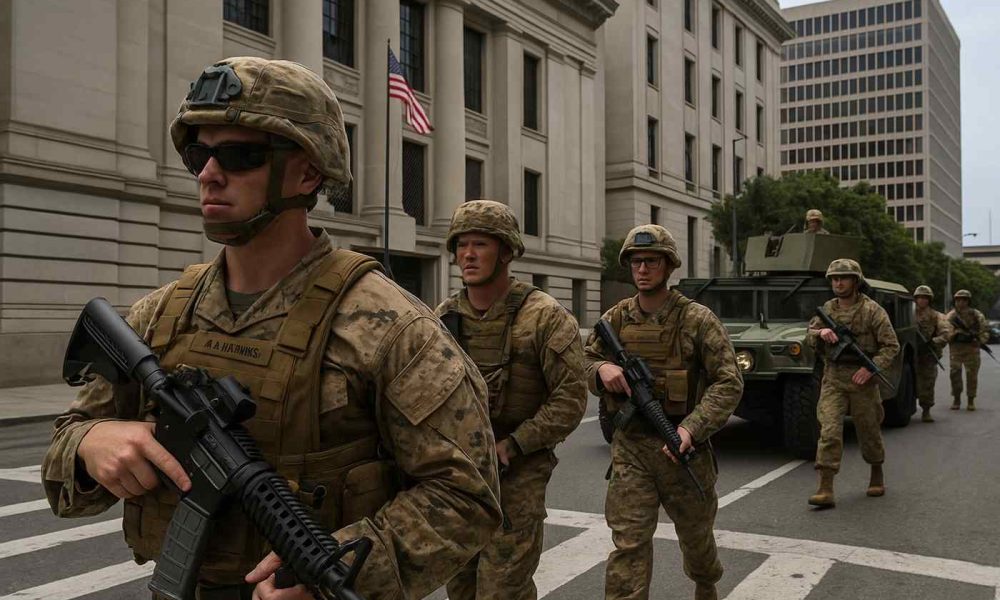
The message arrives on WhatsApp, unsigned. A few words, cold, almost mechanical: “You are being watched. Say your goodbyes to your families.” For several American Marines deployed in the Middle East, the war has abruptly changed its form. It no longer passes only through military bases or strategic straits, but through their personal phones.
According to several American media outlets, a group of hackers linked to Iran, known as Handala Hack Team, claims to have obtained and disseminated the personal data of 2,379 American Marines stationed in the Gulf region. The information published would include names and phone numbers, with broader allegations about habits or families — elements that remain, to some extent, not independently verified.
But beyond the leak itself, the method is worrying. According to Stars and Stripes, American service members based in Bahrain, where a significant U.S. naval presence is located, received direct threatening messages via WhatsApp. According to the messages received, some soldiers were explicitly invited to “say their goodbyes to their families,” while others spoke of possible drone or missile attacks.
This sequence goes beyond simple hacking. It resembles a psychological pressure operation: expose data, establish direct contact with the targets, then install a sense of personal insecurity. A way to move the confrontation from the battlefield to the individual.
The Handala group is already known to Western cybersecurity services. It is associated with several cyberattack campaigns and would be tracked under various names. American authorities suspect links to Iranian structures, notably in the intelligence sector, without formal acknowledgment of involvement by the Iranian state.
This cyber offensive takes place in a context of high tensions between Washington and Tehran, marked by threats around the Strait of Hormuz, a standoff over the Iranian nuclear program, and military scenarios under study on the American side.
For the U.S. armed forces, the stakes are now double: protecting strategic infrastructure, but also safeguarding soldiers’ personal data. Because in this new form of conflict, the mobile phone becomes a front line in its own right.