On the occasion of Eid al-Adha, the World Health Organization’s office in Tunisia has urged citizens to observe several food safety rules, especially in a context marked by rising temperatures and increased meat consumption.
In a post published this Wednesday on its Facebook page, the WHO stressed the importance of these practices in preventing food poisoning and diseases transmitted by food.
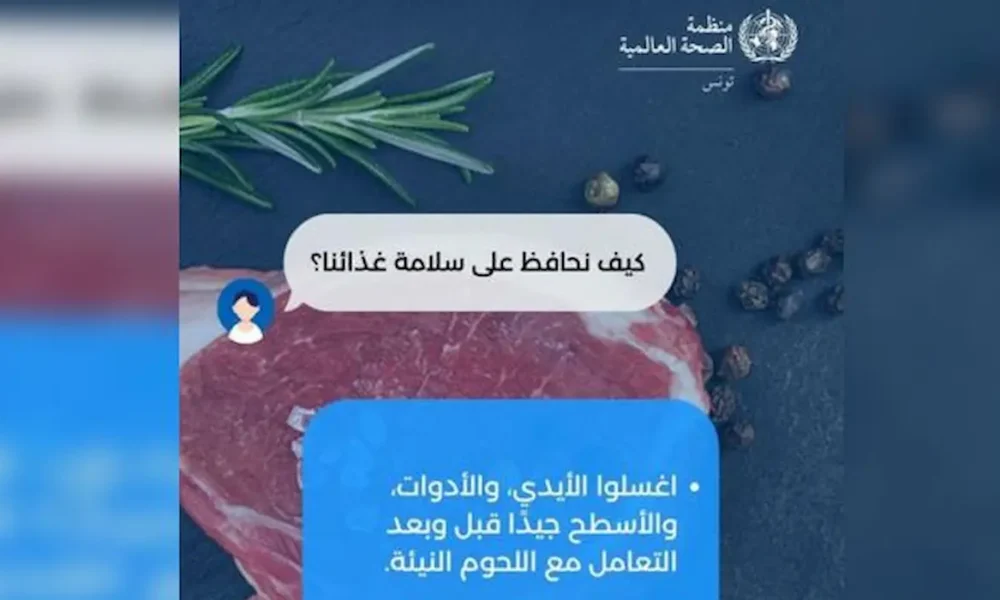
Strict hygiene before and after handling meat
The World Health Organization recommends washing hands thoroughly before and after handling raw meat.
It also emphasizes the need to clean utensils, work surfaces, and surfaces used during meat preparation, to limit the risk of contamination by bacteria or other pathogens.
Separating raw meats from cooked foods
The WHO also calls to separate raw meats from cooked foods, to prevent the transfer of germs to ready-to-eat foods.
It recommends, in this context, the use of separate utensils and cutting boards for each type of food, an essential measure to prevent cross-contamination.
Thorough cooking to eliminate bacteria
The WHO office in Tunisia also recalls the importance of cooking meat properly in all its parts.
Thorough cooking helps reduce health risks by eliminating harmful bacteria that can cause foodborne illnesses, especially during periods of high meat consumption like Eid al-Adha.
Store meat refrigerated within two hours after slaughter
Another important recommendation: meats should be placed in the refrigerator within two hours after slaughter, especially in hot weather.
This measure aims to prevent the proliferation of bacteria and preserve the sanitary quality of meats intended for consumption.
Heightened vigilance during Eid
These recommendations are part of a preventive approach aimed at protecting consumers’ health during Eid al-Adha.
The WHO thus reminds that adherence to hygiene, cooking, and storage rules for meats is a key factor in reducing the risks of food poisoning and ensuring safer consumption.