The Investment and International Cooperation Commission at the National Council of Regions and Districts held, on Wednesday, June 17, 2026, a hearing devoted to two draft laws concerning the exploration and exploitation of hydrocarbons.
Chaired by Deputy Bilel Saïdi, the meeting took place in the presence of executives from the Tunisian Oil Activities Company (ETAP). The first draft law concerns the approval of Annex No. 1 amending the special agreement related to the hydrocarbon exploration permit, known as the “Chaâl” permit.
The second concerns the approval of the special agreement and its annexes related to the hydrocarbon production concession known as the “Sersina” concession.
A step before the presentation of the final report
At the start of the session, it was recalled that this hearing forms part of the preparatory work preceding the preparation of the final report on the two draft laws. This report will then be submitted to the plenary session for examination and adoption.
The speakers stressed the particular importance of these two texts due to their link with the general interest and with the energy dossier, in a context marked by the need to support national hydrocarbon production and to contribute to reducing the energy deficit.
The Sersina concession at the center of the first presentation
ETAP executives presented, in the first part, the elements relating to the continuation of the exploitation of the “Sersina” concession, as well as the legal framework of the related convention.
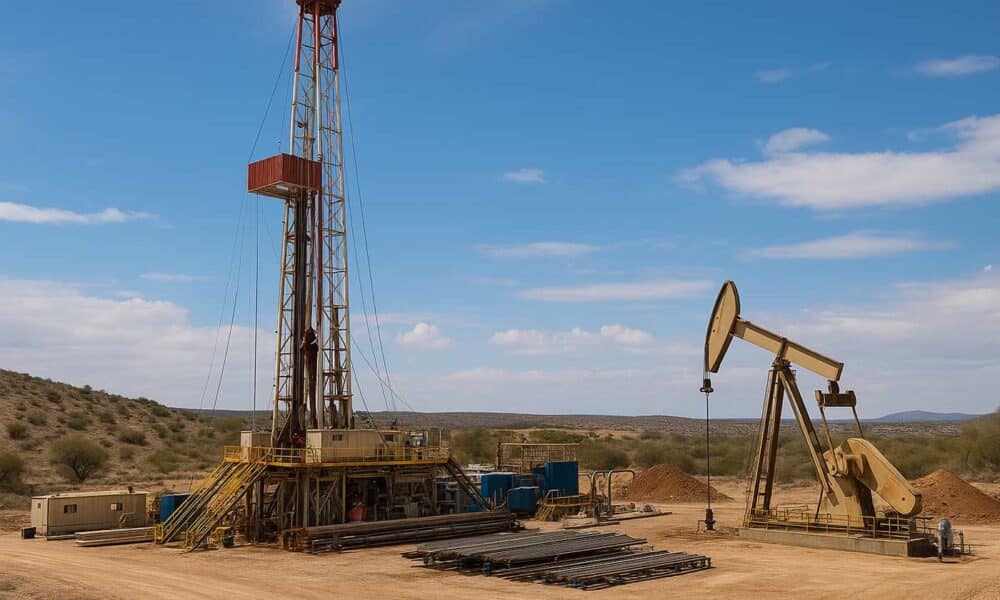
The presentation also covered the proposed development program. This aims to preserve production sustainability and improve the recovery of remaining reserves, through modernization of infrastructure, reevaluation of reservoirs, and the execution of new drilling and development operations.
According to the presented data, this program should enable optimal exploitation of the hydrocarbon resources still available in the field.
Positive economic profitability
The ETAP representatives indicated that the project relating to the “Sersina” concession shows positive long-term economic profitability, based on the technical and economic assumptions adopted for its development.
At the end of this first presentation, it was emphasized that the results presented confirm the economic feasibility of the project, as well as its importance for preserving national hydrocarbon production, improving the recovery of remaining reserves, and ensuring the continuity of exploitation of existing infrastructures and facilities during the proposed concession term.
Parliamentarians insist on data transparency
During the debate, several deputies highlighted the strategic importance of these projects, including their potential contribution to covering part of the country’s energy deficit.
The discussions also addressed the wells discovered in the Tataouine governorate and the reasons why some of them have not yet entered the exploitation phase.
In this context, several speakers called for clear and up-to-date data on production levels and their geographic distribution. They argued that making these data available would enlighten public opinion and limit the spread of rumors and misinformation surrounding the hydrocarbons sector.
ETAP recalls that statistics are updated daily
In response to the deputies’ questions, ETAP executives assured that figures and statistics relating to the sector are published and updated daily. They noted that these data are available on the official site of the Ministry of Industry.
Regarding wells discovered but not yet exploited, they explained that the exploration phase does not necessarily lead to commercial exploitation. They also recalled that exploration costs are high and involve numerous technical and financial risks, making it difficult for a single public company to cover them.
Call to strengthen corporate social responsibility
In conclusion of the exchanges devoted to the Sersina concession, the deputies reaffirmed the importance of the conventions under review and their support for these projects, given their potential positive impact on strengthening national production.
They did, however, insist on the need to enshrine corporate social responsibility by the companies investing in this sector, in order to guarantee their effective contribution to the development of the regions affected by the oil projects.
The Chaâl permit examined in a second part
The second part of the session was devoted to the draft law concerning the Chaâl exploration permit, allocated to ETAP pursuant to a decree of the Minister of Industry and Technology dated November 22, 2011.
The presentation covered the work carried out during the first phase of implicit renewal, whose objective was to assess the petroleum potential of the area concerned.
This phase was notably marked by the effective start of drilling operations on the “Chaâl B” well on October 25, 2023. The drilling works were then completed during 2024, despite certain technical difficulties addressed in accordance with the standards currently in force in the oil and gas industry.
Production tests before the final decision
The works also included production tests and technical tests aimed at evaluating the oil characteristics of the reservoirs, as well as their capacity to yield commercial production.
The well was subsequently put into temporary abandonment, awaiting the completion of the technical and geological studies necessary to analyze the results of the drilling and the tests carried out. These studies will help determine the next steps of the project.
These operations are part of efforts to finalize the evaluation of the hydrocarbon potential of the exploration permit and to determine the feasibility of continuing exploration and development work in the region.