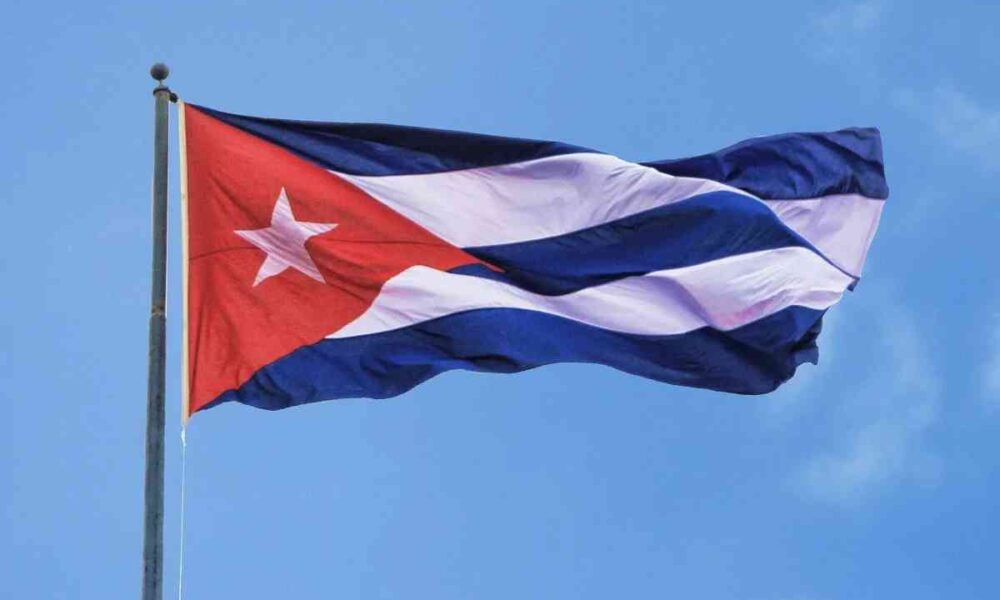
This Sunday evening, the Cuban president, Miguel Diaz-Canel, denounced Washington’s “genocidal policy” toward Cuba, accusing the United States of wanting to “take over the country”.
Since January, the Donald Trump administration has been applying a maximum-pressure policy on the communist island, located 150 km off the coast of Florida. In addition to the embargo in force since 1962, a petroleum blockade and a long list of sanctions against Cuban companies and leaders have been added.
These measures have led to a drastic drop in tourism, the departure of many foreign companies, and a drying up of currency inflows.
The most recent sanctions, announced on Thursday, concern the program of Cuban medical missions abroad, one of the country’s main sources of revenue.
“Cuba today is waging a historic battle” against “a genocidal policy that has set itself the objective of suffocating an entire people in order to appropriate the country,” denounced the head of state from the province of Pinar del Rio (west).
Miguel Diaz-Canel participated in the celebration of the 73rd anniversary of the Moncada Barracks attack carried out in 1953 by Fidel Castro (1926-2016) in the east of the island, considered the beginning of the revolutionary struggle.
“The blockade is a weapon of war and it causes deaths,” the head of state charged, estimating that Washington sought to provoke, in Cuba as in other countries, a “social explosion with the sole aim of imposing governments aligned with its imperial interests.”
On the island of 9.4 million inhabitants, the energy crisis is causing power outages of 30 hours in the capital and several consecutive days in the provinces. It weakens social services and fuels social discontent. The country has also experienced three general power outages in July.
Protests regularly take place in the capital, particularly in the evening. Residents beat on pots and pans and set piles of garbage on fire to express their discontent with the incessant power and water outages, and food shortages.
The Cuban president called for “unity” and for the “implementation of economic and social transformations,” announced in mid-June in the form of a 176-measure program that foresees a major economic shift toward a market economy.
President Donald Trump states that Cuba represents “an extraordinary threat” to the national security of the United States. He has several times threatened to “take control” of it.