Tunisia should no longer resort to load shedding during the remaining period of the summer, according to information reported by the specialized platform Attaqa.net, based in Washington. Citing official sources, the outlet states that the periodic load-shedding operations have ended.
Over the past three weeks, Tunisia had to implement a load shedding program spread across several regions of the country, due to the sharp rise in electricity consumption caused by an exceptional heat wave.
Load shedding should not resume
An informed source at the Ministry of Industry, Mines and Energy indicated, on Sunday, August 2, 2026, that the department could now confirm the end of load shedding for the upcoming period.
According to this source, the weather forecasts through the end of the month do not indicate temperatures above seasonal norms, generally between 32 and 38 degrees Celsius.
This development, coupled with the summer maintenance program and periodic inspections carried out by the Tunisian Electricity and Gas Company (STEG), should help stabilize the electricity supply.
The source also noted that STEG’s technical teams remain mobilized 24 hours a day to carry out the necessary maintenance and repair operations.
It was thus intended to be reassuring, stating that the electricity supply should remain stable during the upcoming period, with no new recourse to load shedding.
A 600-megawatt interconnection with Algeria
The capacity of the electrical interconnection between Tunisia and Algeria reaches about 600 megawatts, in accordance with the annual agreement concluded between the two countries.
The volume of electricity exchanged can vary depending on Tunisia’s needs, national demand, and weather conditions.
Questioned about Algeria’s role during the recent period of load shedding, the ministry’s source said that the neighboring country remained a “cooperative and supportive” partner.
She clarified that the exchange capacity had not exceeded the 600 megawatts planned.
During the recent fires recorded in Algeria, Tunisia’s electricity supply was temporarily interrupted for several days, due to network security and electricity transmission under those circumstances.
Supply then resumed normally and no particular difficulties are currently reported.
Renewables reach 9% of the electricity mix
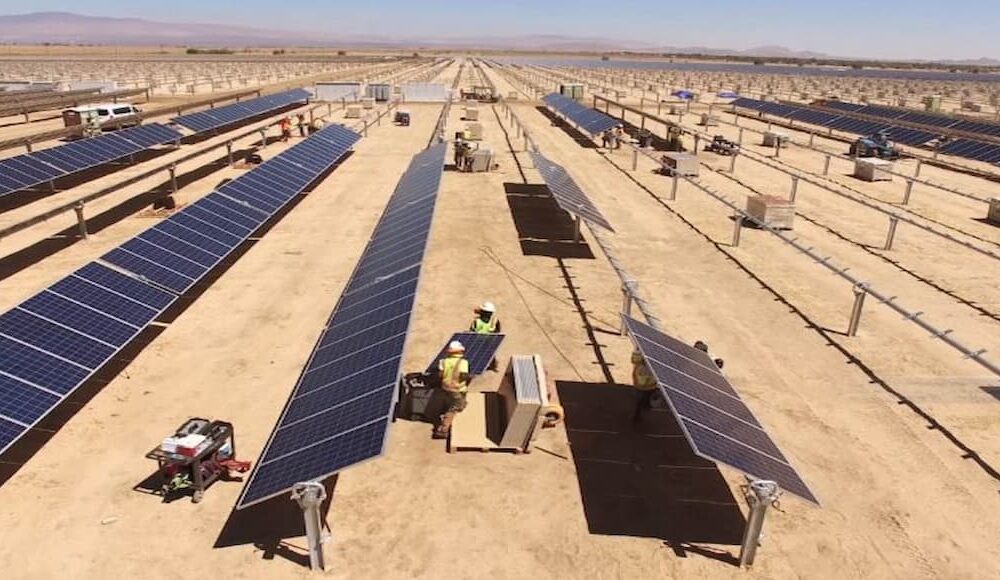
Renewable energies have recorded significant growth in Tunisia during the first half of 2026.
Their share of the national electricity production mix has reached around 9%, equal to nearly 200 megawatts per day.
For comparison, renewable energies represented 4.03% of the electricity mix in 2025.
This progression comes after the commissioning of several projects, as part of the national strategy to raise the share of renewable energy to 35% by 2035, then 50% by 2050.
The share of natural gas declines
According to the data cited by Attaqa.net, the share of natural gas in Tunisia’s electricity production fell to around 90% between the start of 2026 and the end of July.
Algerian gas would account for nearly 65% of this consumption, while the remainder comes from domestic production.
In 2025, natural gas accounted for 94.90% of the Tunisian electricity mix, versus 94.50% in 2024.
This evolution confirms the growth of renewable energies, even though the Tunisian electricity system remains largely dependent on natural gas and energy imports.