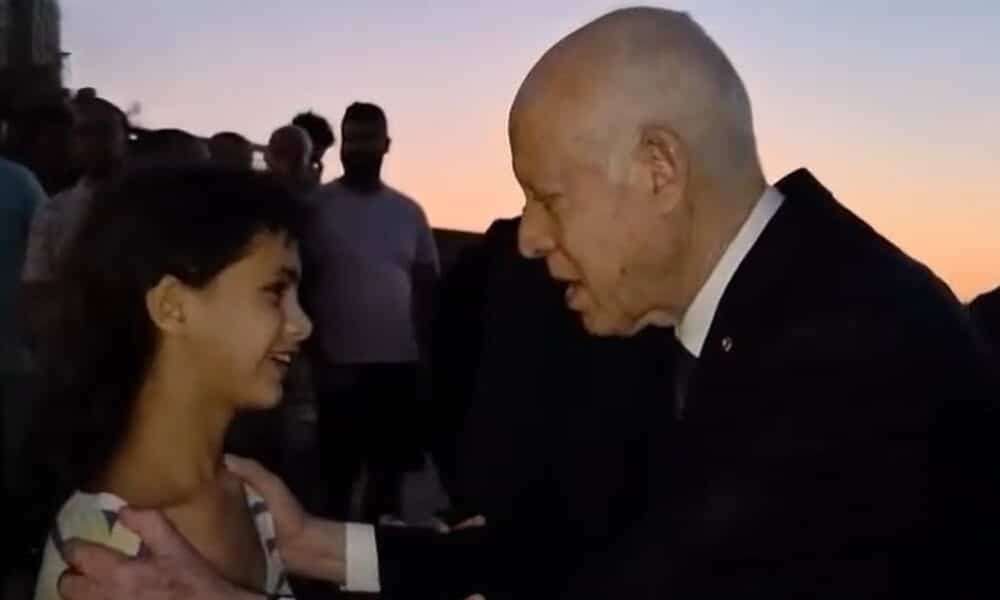
The President of the Republic, Kais Saied, traveled to Radès, in the Ben Arous governorate, on Sunday, August 2, 2026, for an unannounced visit dedicated to the environmental, health and infrastructural difficulties the city faces.
On the ground, the head of state observed several malfunctions and overruns affecting notably the progress of works at the Meliane river, the sewage networks, the pollution of Radès beach, the situation of fishermen and the accumulation of waste along the coastline.
Kais Saied also spoke with residents, who shared their concerns and the daily difficulties they encounter.
The Meliane River works examined on site
The visit notably focused on the progress of the works carried out along the Meliane River.
These interventions are part of flood risk protection and the improvement of the capacity of hydraulic structures to absorb the large amounts of water that can be recorded during intense rainfall episodes.
The issue is particularly important for Radès and several areas of Greater Tunis, where urbanization, obstruction of certain channels and the accumulation of waste can reduce the effectiveness of stormwater evacuation systems.
Sewer networks
Kais Saied also looked into the difficulties affecting the sewerage and wastewater evacuation networks.
The dysfunctions of these networks can cause overflows, unpleasant odors, degradation of the urban environment and discharges likely to reach the coastline.
In Radès, the proximity between residential areas, industrial facilities, sewer networks and the sea makes the management of these infrastructures particularly sensitive.
Pollution of Radès beach at the center of concerns
The environmental situation of Radès beach constituted another important aspect of the visit.
The head of state observed the pollution affecting this part of the coast, as well as the accumulation of waste and dirt on a portion of the coastal strip.
This situation directly affects the quality of life, the city’s image, and residents’ use of the beach. It also raises questions about the source of the discharges, the frequency of cleaning operations, and the effectiveness of coordination between the different public bodies involved.
Coastal protection does not rely solely on sporadic cleaning campaigns. It also requires controlling pollution sources, regular maintenance of sewer networks, and rapid intervention when discharges or illegal dumping are observed.
The fishermen express their difficulties
The visit also allowed addressing the difficulties faced by fishermen in the region.
Fisheries activity depends directly on water quality, the state of the coastline, and the availability of appropriate infrastructure. Pollution, waste accumulation, and shortcomings affecting certain equipment can undermine the livelihoods of professionals and complicate their working conditions.
Kais Saied took note of the concerns expressed in this sector, which remains a source of activity and livelihood for several families in Radès and nearby coastal areas.
During his visit, the President of the Republic met with citizens and listened to their grievances.
This unannounced visit now places local, regional and national authorities in the face of the need to translate the findings into concrete interventions, notably to secure the Meliane River, rehabilitate the failing networks, reduce pollution and sustainably clean the coastline.