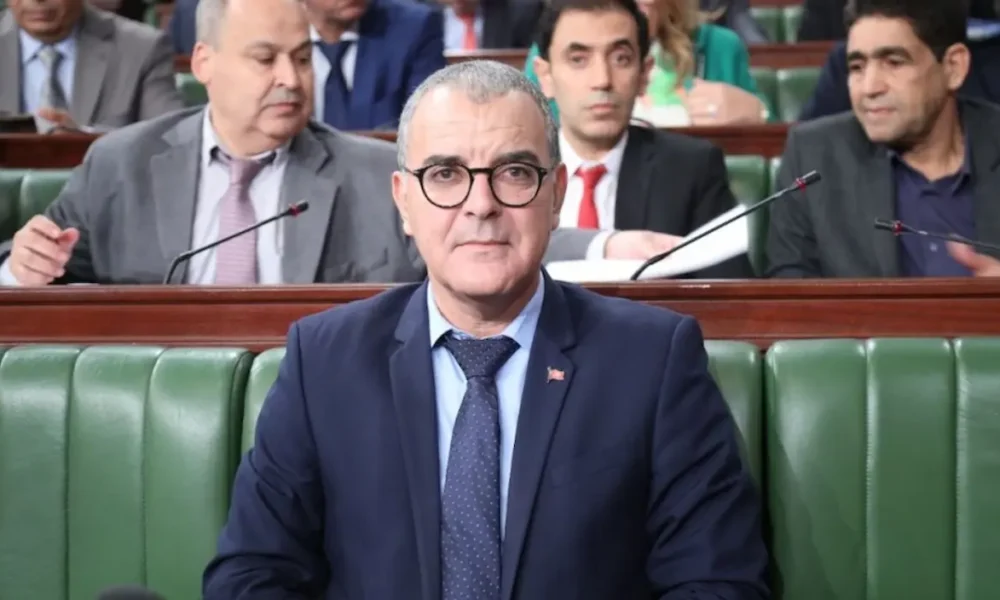
The Minister of Economy and Planning, Samir Abdelhafidh, presented, during a ministerial council devoted to examining the economic budget proposal for 2027, several data points relating to the state of the national economy.
The minister announced that the gross domestic product (GDP) had grown by 2.4% in the first half of 2026.
He indicated that the different economic sectors had recorded mixed developments, noting that agricultural production had shown notable improvement, particularly in the cereal and olive oil sectors. He also highlighted the strong performance of mechanical and electrical industries, which have strong export potential and offer significant employment opportunities.
The minister also highlighted the resilience of the tourism sector, the improvement in foreign direct investment, the decline in the inflation rate, and the maintenance of foreign exchange reserves at levels deemed acceptable.
Regarding the labor market, he stated that the downward trend in the unemployment rate, observed since the first quarter of 2025, had continued to reach 14.9%, compared with 15.3% in the same period of the previous year. He also reported a positive momentum of investment in the renewable energy sector, noting that these indicators demonstrate the economy’s ability to withstand internal and external shocks.
During the Council, the Minister of Economy and Planning also presented a detailed briefing on the 2027 economic budget project, in which he reviewed developments in the global economic climate.
He notably mentioned the Uncertainty Index, considered an important tool for analyzing the repercussions of uncertainty on investment decisions, consumption, trade and economic growth. The fluctuations of this index, according to him, reflect the strong sensitivity of the global economy to geopolitical, economic and commercial evolutions and shocks, as well as the risks that arise from them and changes in the expectations of economic actors.