Starting from November 1, 2026, mandatory cadastral surveys will be carried out in several areas of Kasserine, Mahdia, Jendouba, Médenine, Sfax and Gabès. Six decrees by the Minister of Justice, published in the Official Journal of the Tunisian Republic (JORT) No. 84 of August 21, 2026, precisely set the affected perimeters.
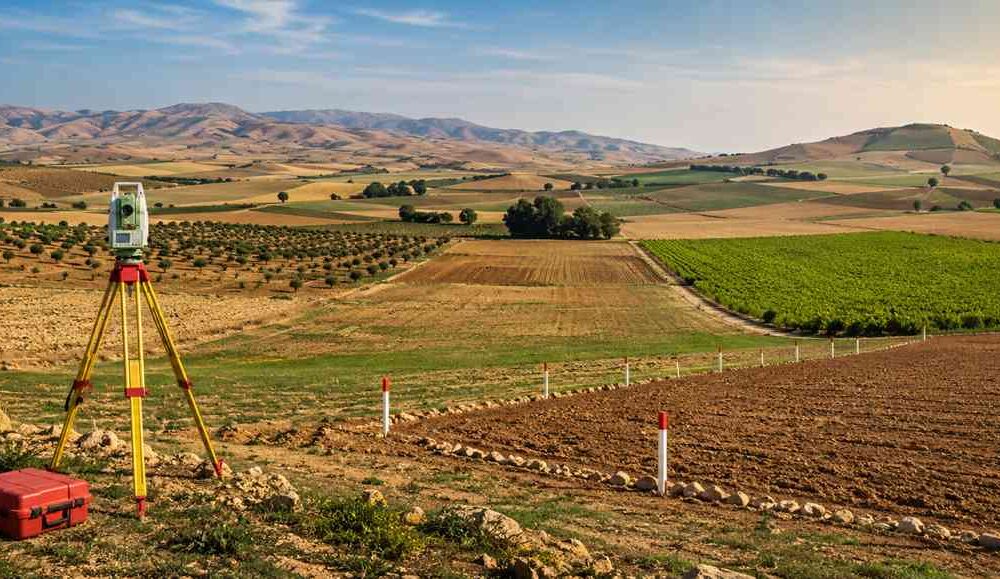
The texts provide for the census, by means of mandatory cadastral surveying, of unregistered and undeveloped properties located within the designated zones. Several of these areas are explicitly described as rain-fed lands (بعلي) or irrigated lands (سقوي), terms that refer to a land context that is largely rural and agricultural.
These decrees aim to trigger the cadastral census within the designated perimeters. They do not pronounce expropriation, transfer of ownership, or automatic issuance of a title deed.
Kasserine: two zones concerned
In the governorate of Kasserine, the operation will concern unregistered and undeveloped properties located in two zones:
- Henchir Oum El Khir, in the Imada of the same name, delegation of Majel Bel Abbès, designated as rain-fed land ;
- Zelfane, in the Imada of the same name, delegation of Thala, also described as rain-fed land.
The census will begin on November 1, 2026.
Mahdia: Hiboun affected
In the governorate of Mahdia, the decree targets the Hiboun zone, in the Imada of Hiboun, delegation of Mahdia.
The text designates it as an irrigated zone (سقوي). Here again, only properties that are both unregistered and undeveloped are targeted by the decree.
Jendouba: a zone in Fernana
In the governorate of Jendouba, the mandatory cadastral surveying will concern the zone of Ma Bared, located in the Imadas of Halima and Ouled Mofda, belonging to the delegation of Fernana.
The zone is described as rain-fed land (بعلي) by the decree.
Médenine: Médenine South, Djerba and Ben Guerdane affected
The decree relating to the Medenine governorate covers several sectors.
The unregistered and undeveloped properties located in the Imadas of Hassi Amor and Lebba, within the delegation of Médenine Sud, as well as in the Imada of Hachchan, within the delegation of Djerba Houmt Souk, are affected.
The text also adds the Chahbania zone, in the Imada of the same name, delegation of Ben Guerdane, described as rain-fed land.
Sfax: Kerkennah and El Amra
In the governorate of Sfax, two zones are designated:
- El Ataya, in the Imada of El Ataya, delegation of Kerkennah ;
- Bliana, in the Imada of Bliana, delegation of El Amra.
Both sectors are described as rain-fed lands (بعلي).
Gabès: six zones distributed between Matmata and Menzel Habib
Gabès is the governorate where the decree lists the greatest number of zones: six in total, spread across the delegations of Matmata and Menzel Habib.
In Matmata, the following are concerned:
- Tamazret Oum Echiah, irrigated zone ;
- Tamazret, rain-fed zone.
In Menzel Habib, the operation concerns :
- Aïtha Zeghrata, irrigated zone ;
- Sqi Errbaï, rain-fed zone ;
- Hmila 1, irrigated zone ;
- Hmila 2, irrigated zone.
The JORT specifies that the census of unregistered and undeveloped properties in these sectors will also begin on November 1, 2026.
What does the launch of mandatory cadastral surveying mean?
The six decrees rely on Decree-Law No. 3 of February 20, 1964, on mandatory land registration.
At this stage, their scope is precise: they designate the zones concerned and trigger, from November 1, the cadastral census of unregistered and undeveloped properties located there.
They do not, by themselves, imply that a piece of land changes ownership or that a title deed will be automatically issued.
For people with rights on parcels located within the designated perimeters, the challenge will now be to follow the various steps of the procedure and the information that will be published as the process is implemented.
A rural-dominated operation
The repetition, in several decrees, of the qualifications “rain-fed” (بعلي) and “irrigated” (سقوي) shows that the operation largely concerns lands located in rural or agricultural settings.
The November 1, 2026 thus marks the start of the census phase in the designated perimeters. The decrees published in the JORT currently specify the zones targeted and the start date; the operational modalities and subsequent steps will need to be followed as they are implemented.