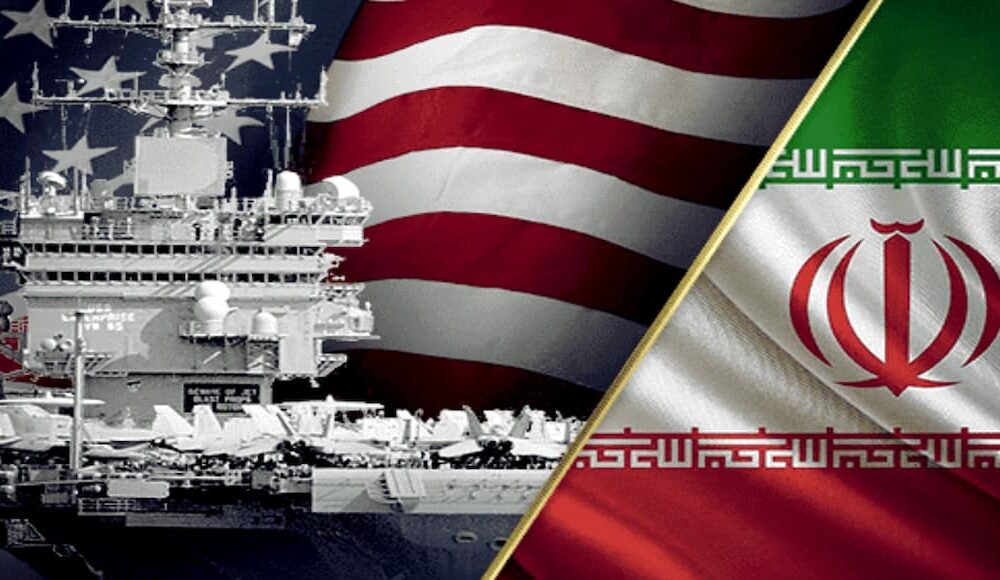
The conflict between the United States and Iran enters a new phase, with a multiplication of attacks against military ships and oil tankers in the Strait of Hormuz. Within the span of a day, nearly a dozen maritime targets would have been hit on both sides, while the consequences of the conflict continue to spread to oil exports, energy markets and the Lebanese front.
On the 190th day of the war between Washington and Tehran, the Iranian Revolutionary Guards announced that they had targeted three tankers that would have taken, according to them, an unauthorized route in the Strait of Hormuz, as well as three American vessels.
Tehran presents these strikes as retaliation for the American attack against three Iranian oil tankers.
On its side, the U.S. Central Command confirmed having targeted three ships carrying Iranian crude oil. Washington says that these operations were in response to Iranian ballistic missile launches directed at two U.S. Navy warships.
The essentials
Maritime escalation: Iran says it has targeted three oil tankers and three American ships, while Washington says it struck three Iranian tankers in retaliation for fire against two U.S. Navy vessels.
Strait of Hormuz under tension: the Revolutionary Guards say they have also targeted an unmanned American vessel and threaten to harden their response to American operations.
Oil already affected: according to TankerTrackers, Middle East oil exports fell by 39% in August compared with January-February, with a shortfall estimated at 7.2 million barrels per day.
Kharg at the center of threats: Donald Trump mentioned Kharg Island, the main export hub for Iranian oil, as a potential strategic target.
Pressure in Washington: nearly 50 members of the Joint Chiefs of Staff were reportedly questioned in an inquiry into leaks concerning declines in certain American ammunition stocks.
Lebanese front: Israel would be preparing a redeployment in southern Lebanon, while the Lebanese Health Ministry reports 4,358 dead and 12,359 wounded since March 2.
An escalation directly in the Strait of Hormuz
The multiplication of strikes against ships marks a significant evolution of the conflict.
Until now, the fighting had largely taken the form of air strikes, attacks on military infrastructure and measures aimed at limiting Iran’s export capacity.
Now, the Strait of Hormuz itself becomes a space of direct confrontation.
The Navy of the Islamic Revolutionary Guard Corps also claimed to have targeted an unmanned American vessel that would have attempted to enter a zone Tehran regards as protected.
In its statement, the Iranian organization asserted that the Strait of Hormuz was placed under Iran’s management and announced that it would respond “firmly” to American movements it considers hostile.
This stance is contested by Washington, which defends freedom of navigation in this strategic international sea lane.
Washington threatens to sink Iranian oil tankers
Threat exchanges are intensifying as well.
The United States warned that it could “sink” Iranian oil tankers if Tehran continued its attacks against American navy ships.
In response, the Iranian military headquarters Khatam al-Anbiya warned that attacks against American military vessels could become “more severe than before”.
The risk now is a cycle of retaliation: attack on a tanker, response against a military vessel, then a new strike against infrastructure or energy exports.
Such a dynamic could directly affect oil traffic through the Strait of Hormuz, one of the most sensitive chokepoints in global energy commerce.
Middle East oil exports decline sharply
The maritime crisis is already having visible effects on hydrocarbon flows.
According to the specialized platform TankerTrackers, Middle East oil exports fell by 39% in August compared with volumes observed in January and February.
The current shortfall relative to usual flows would be about 7.2 million barrels per day, versus 12.4 million barrels per day previously.
These data show that export routes have partially reorganized, without returning to their normal operation.
The Strait of Hormuz remains at the center of concerns, due to the Gulf’s significant weight in global oil and gas supply.
Kharg, the “crown jewel” of Iranian oil
In this context, another target regularly features in American statements: Kharg Island.
Located in the Gulf, this small island is one of the main export hubs for Iranian oil and occupies a major strategic role in Tehran’s energy infrastructure.
Donald Trump called it the “crown jewel” of the Iranian oil system, mentioning the possibility of striking it, or even taking control of it.
A large-scale attack on Kharg would represent a further escalation, as it would directly target one of the main outlets for Iranian oil to global markets.
More than six months of war and a question rising in Washington
The conflict has now lasted more than six months and has become one of the longest-running American air campaigns since the invasion of Iraq.
Its effects go far beyond the military arena: rising energy prices, disruption of maritime transport, tensions on supply chains and growing pressure on the American economy.
As midterm elections approach, a question becomes increasingly hard to avoid for the American administration: how long can the war last?
U.S. Vice President JD Vance, however, this week challenged the very use of the term “war,” saying it did not describe the situation and arguing that actual fighting was, in his view, momentarily paused.
Yet these remarks come as maritime attacks multiply in the Strait of Hormuz.
Unusual tensions within the Pentagon
The duration of the conflict is also beginning to produce tensions inside the American military apparatus.
According to reports from the American press, about 50 members of the Joint Chiefs of Staff have been investigated as part of an inquiry into leaks of sensitive information to the media.
The leaks would concern, in particular, the decline in American stocks of certain weapons deemed essential.
Officers and civilian personnel have reportedly been questioned to determine whether they disclosed classified information or data on the evolution of military reserves to the press.
The proliferation of these investigations illustrates the growing sensitivity, in Washington, to information concerning the United States’ ability to sustain a prolonged war.
In Lebanon, Israel is preparing a new deployment in the south
Regional escalation also continues on the Lebanese front.
According to Israeli security sources cited by public Israeli broadcasting, the army would be preparing to reduce part of its forces in southern Lebanon, after the destruction of tunnels in the Ali al-Taher region.
This reduction would not, however, mean the disappearance of the Israeli military presence.
The redeployment project would be named “gray line”, along which positions would be maintained to allow the continuation of military operations.
The Lebanese Health Ministry states, for its part, that the toll of Israeli operations in Lebanon since March 2 reached by Saturday 4,358 dead and 12,359 wounded.
A conflict increasingly difficult to contain
The multiplication of attacks against tankers is one of the most worrying developments in recent days.
Washington and Tehran no longer confine themselves to striking military targets or land infrastructures: energy flows and the ships carrying them are now directly exposed.
This evolution increases both military risk and economic risk.
A sustained disruption of the Strait of Hormuz could affect global oil prices, fuel prices and transport costs far beyond the Middle East.
At the same time, the Lebanese front remains active and internal tensions appear more visible within the American military apparatus.
After 190 days of conflict, the question is therefore no longer only about the intensity of strikes between the United States and Iran, but about the ability of the various players to prevent maritime, energy and regional war from spreading further.