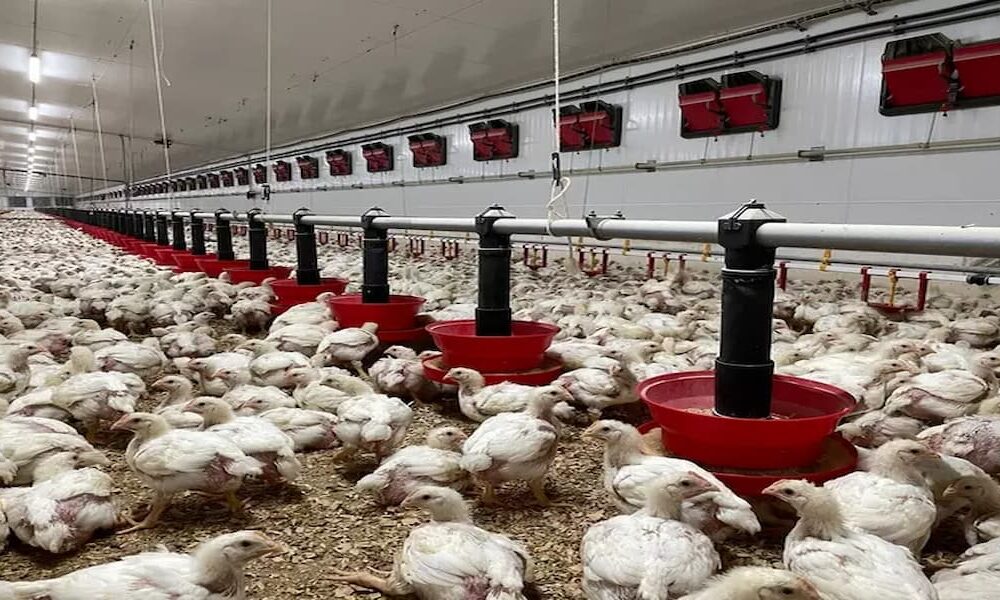
Electric outages recorded during the intense heat of July 2026 heavily affected several poultry farms in the Mahdia governorate. According to the president of the Regional Agricultural Union, Salah Charfeddine, between 150,000 and 200,000 birds would have died in about 200 farms in the region, representing between 30% and 40% of the affected stock.
3,500 birds lost in a single farm
In Sidi Alouane, Oussama Ben Aïcha, a poultry farmer, says he has lost nearly 3,500 chickens, for damages he estimates at about 20,000 dinars.
Despite buildings equipped with air conditioners and fans and precautions taken over the years, notably drilling wells and acquiring generator sets, the farmer explains to the TAP agency that he was overwhelmed by repeated power outages that occurred alongside unusually high temperatures in July.
According to him, the equipment generally allows professionals to cope with the heat, but prolonged power cuts can quickly compromise the operation of ventilation and cooling systems.
Oussama Ben Aïcha estimates that his own losses are still limited compared to those recorded by some of his colleagues, who would have reached, in some cases, 50,000 dinars or more.
Between 150,000 and 200,000 birds dead in Mahdia
The president of the Mahdia Regional Agricultural Union, Salah Charfeddine, estimates that repeated electricity outages led to the death of 150,000 to 200,000 poultry during July.
These losses would represent, according to him, between 30% and 40% of the stock of around 200 poultry farms in the region.
The regional union received on Monday a petition from farmers detailing the damages they claim to have suffered. Its leaders also carried out field visits to several affected farms.
Salah Charfeddine called on the Ministries of Agriculture and Trade to intervene to support the professionals and enable them to continue their activity.
A farm that raises 120,000 birds per year
Oussama Ben Aïcha has worked in poultry farming for many years. He says he helped his father in this activity for 24 years before taking over the family operation after his death six years ago.
He says he chose to continue investing in Tunisia despite obtaining documents allowing him to reside in France.
His operation currently raises about 120,000 birds per year. He nevertheless believes that the accumulation of difficulties disproportionately weakens small breeders and threatens the viability of some operations.
Farmers also denounce their commercial conditions
Beyond power outages, Oussama Ben Aïcha mentions other difficulties that he attributes to the organization of the supply chain and to the commercial relationships between small farmers and some suppliers.
According to his testimony, a limited number of companies supply professionals with chicks and feed before buying a portion of the poultry intended for slaughter.
The farmer says he decided, with several peers, to stop working with one of these companies, believing that certain commercial terms greatly reduce their margins.
These are, however, assessments made by the farmer. The information provided does not allow an independent assessment of the overall sector’s commercial situation or the practices of the companies involved.
Feeds: price disparities highlighted by the farmer
Oussama Ben Aïcha cites, in particular, the cost of raw materials. According to the figures he provides, the import price of a quintal of soy or corn would not exceed 1,000 dinars, while his selling price to farmers could reach about 1,560 dinars.
He also mentions a gap between the import price of hatching eggs and the price at which the chicks hatched from these eggs are subsequently marketed to farmers.
These amounts are based on his testimony and do not constitute, at this stage, official consolidated data on import and marketing prices across the sector.
The farmer also raises the issue of the quality of the chicks delivered to him and states that a high proportion of females may, in some farms, affect the expected yield.
A kilogram sold for 4.3 dinars with an estimated cost of 4.4 dinars
The farmer also highlights the slim margin at the production level.
According to his experience, a breeder can sell a kilogram of chicken to companies for around 4.3 dinars, while he estimates his actual production cost at nearly 4.4 dinars. The same kilogram would then be marketed around 5.3 dinars, according to the figures he provides.
Again, these amounts reflect the experience reported by the farmer and do not allow determining the actual margins of each participant, which may depend on slaughter, transport, packaging, and distribution costs.
The survival of small farms at stake
Oussama Ben Aïcha estimates that the dependence of some small operators on their suppliers for purchasing feed and chicks, marketing the production, or certain credit-based services reduces their bargaining power.
He also states that some companies operating in the sector invest in large breeding centers whose capacity can exceed 150,000 poultry.
For the farmer, the issue now goes beyond losses in a single season. It concerns the ability of small farms to continue their activity, as well as the jobs and incomes they generate in the region.
He thus calls for state intervention to support small farmers and improve the balance of the sector, which he considers essential to preserving agricultural activity and food supply.