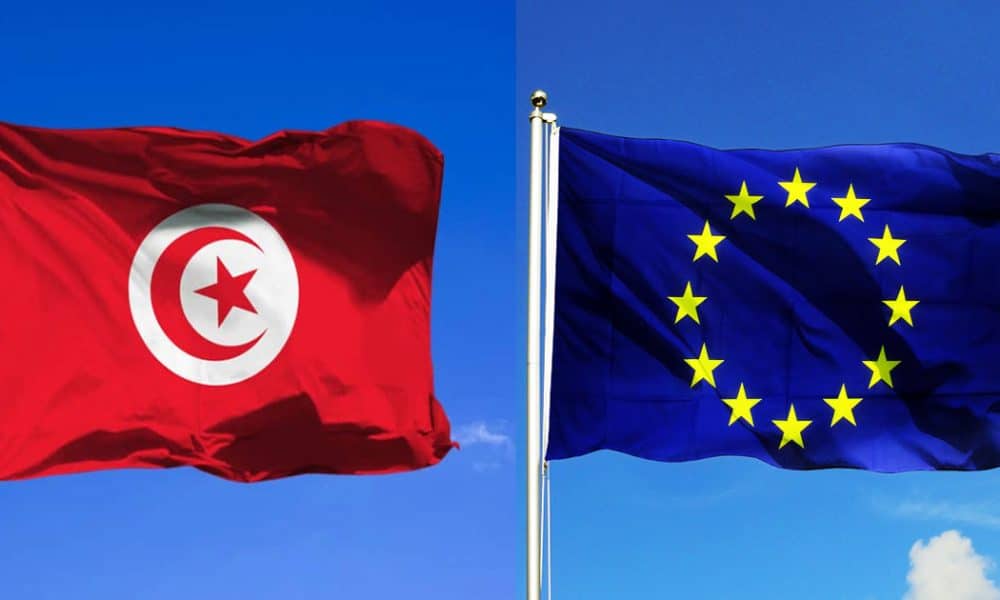
Tunisia places the revision of its association agreement with the European Union at the center of dialogue with Brussels. On September 24, 2026 in New York, Foreign Minister Mohamed Ali Nafti argued for a partnership better suited to current economic transformations.
But this request is no longer merely political: as of January 29, Tunisia had officially requested the revision of the agricultural protocol, and Brussels has since refused to grant new concessions on its most sensitive component, olive oil.
L’essentiel
• Tunisia officially requested on January 29, 2026 a revision of the agricultural protocol of the association agreement.
• In a written response to the European Parliament dated March 23, European Commissioner for Agriculture Christophe Hansen indicated that Brussels did not plan any additional trade concessions for Tunisian agricultural products, including olive oil.
• The European Union has also, since 2021, wished to Modernize the trade and investment relationship with Tunisia, but the two sides do not necessarily place the same priorities behind this modernization.
• The annual quota of Tunisian olive oil at zero duty remains fixed at 56,700 tonnes and is fully utilized.
• In industry, Tunisia benefits largely from free trade with the EU and maintains a positive bilateral balance.
The New York declaration reopens a dossier already open
On September 24, on the margins of the United Nations General Assembly, Mohamed Ali Nafti spoke with Dubravka Šuica, European Commissioner for the Mediterranean.
According to the Tunisian press release, the minister called for an evolution of the association agreement to better take into account economic and geopolitical transformations and spoke about trade, financial cooperation and scientific programs.
The position had already been formulated on May 8, 2026 in Tunis, when Mohamed Ali Nafti spoke of better access to the European market, more high value-added investments, energy and digital transitions, value chains, and mobility of students, researchers and entrepreneurs.
An agreement that entered into force on March 1, 1998
The Euro-Mediterranean Association Agreement was signed in July 1995 and entered into legal force on March 1, 1998. The date March 30, 1998 sometimes cited in some European documents corresponds to its publication in the Official Journal of the European Communities.
The agreement progressively eliminated customs duties on industrial products, while agricultural products remained subject to specific regimes, with tariff preferences, quotas and other restrictions.
Tunisia and Brussels want to modernize, but not necessarily in the same way
The debate is not simply about a Tunisia seeking to reform the agreement while the European Union clings to the status quo.
Since its 2021 trade policy review, Brussels has also expressed support for modernization of the trade and investment relationship with Tunisia. The current framework remains less developed in several areas that have become central in recent trade agreements, notably services, investment and digital trade.
There is thus a convergence on the principle of modernization. The divergences mainly concern its content, pace and the sectors involved.
The Pact for the Mediterranean provides a new framework
The European Commission and the High Representative presented the Pact for the Mediterranean on October 16, 2025. It was then officially launched in Barcelona on November 28, 2025, on the occasion of the thirtieth anniversary of the Barcelona Declaration.
On April 17, 2026, the Commission presented its first action plan, comprising 21 concrete actions for the year, in areas ranging from investment and renewable energy to digital, higher education and mobility.
The framework inherited from the 2023 memorandum
The relationship is also governed by the memorandum of understanding signed on July 16, 2023, which covers five axes: macroeconomic stability, economy and trade, energy transition, people-to-people rapprochement, migration and mobility.
In its statement of September 24, 2026, the Tunisian Ministry of Foreign Affairs uses the terms mutual respect, reciprocity and sovereignty to describe the partnership it seeks.
A leading economic partnership
The European Union remains by far Tunisia’s main economic partner. According to the European Commission, it accounted for 59.5% of Tunisia’s external trade in 2025. That year, 73.2% of Tunisian exports were directed to the EU and 49.6% of Tunisian imports came from the Union.
Goods trade reached €26 billion in 2025. The EU imported €13.4 billion worth of Tunisian products, including around €6 billion of machines and equipment, i.e., 44.5% of the total, and €2.5 billion of textiles, or 18.9%.
The European Union also accounts for about 85% of the stock of foreign direct investment in Tunisia. Conversely, Tunisia is only the 34th trading partner of the EU and represents about 0.5% of its total external trade.
Tunisia’s 2026 figures confirm Europe’s weight
The latest official Tunisian data provide a more recent picture, but for a different period. According to the National Institute of Statistics, in the first eight months of 2026, 70.2% of Tunisian exports were destined for the European Union, for a value of 31.3464 billion dinars.
In the same period, 45.1% of Tunisian imports came from the EU, for 28.175 billion dinars.
These figures must not be directly compared with those of the European Commission for the whole year 2025: the periods and statistical sources differ.
Tunisia remains in surplus with the European Union
Based on INS figures for the first eight months of 2026, Tunisian exports to the EU exceeded imports from the Union by about 3.17 billion dinars.
This positive balance is a data point on goods trade. It does not, by itself, allow conclusions about the overall balance of the economic relationship between the two parties.
It nevertheless highlights an important reality: in industry, access to the European market and integration into EU value chains already constitute a significant economic advantage for Tunisia.
Rules of origin: an achievement secured after a tight sequence
The EU-Tunisia Association Council adopted on January 22, 2025 Decision No. 1/2025 replacing Protocol No. 4 on rules of origin. The text was published in the Official Journal of the European Union on February 20, 2025, under reference JO L 2025/324.
The new protocol allowed for looser rules of origin and notably provides temporary exemptions for certain Tunisian textile products.
This application, however, was part of a transitional regime that was to expire at the end of 2025 for countries that had not completed the necessary procedures. Tunisia ultimately ratified in early January 2026, securing the continuity of the favorable regime.
The Arab Institute of Business Leaders at the time estimated the stake at around 150,000 jobs and 3 billion dinars of annual exports, mainly in textiles and clothing.
Agriculture: a request already filed, and already refused
Agriculture has never been liberalized to the same extent as industry. Olive oil is the clearest illustration: the agreement provides an annual quota of 56,700 tonnes that can enter the European Union duty-free.
This issue is no longer theoretical. The European Commission confirmed having received, on January 29, 2026, an official communication from Tunisian authorities requesting the revision of the agricultural protocol of the association agreement.
In a written reply to the European Parliament dated March 23, 2026, European Commissioner for Agriculture Christophe Hansen stated that Brussels “does not envisage additional commercial concessions” for Tunisian agricultural products, including olive oil.
The Tunisian request to raise the duty-free olive oil quota to 100,000 tonnes therefore runs into, at this stage, a negative European position.
A quota fully used
For 2026, the quota was allocated at 56,699.981 tonnes, i.e., almost the entire ceiling, and it is fully allocated for the ninth consecutive year.
At the same time, Tunisian olive oil exports have grown strongly. INS indicates that their value reached 3.7697 billion dinars in the first eight months of 2026, up from 2.7024 billion a year earlier.
Data from the National Observatory of Agriculture, reported by the economic press, show 301,400 tonnes exported in the same period, versus 210,700 tonnes a year earlier, i.e., an increase of about 43%.
Andalusia asks to suspend a customs regime
September 2, 2026, the regional government of Andalusia asked the Spanish Ministry of Agriculture to bring the matter to the European Commission to suspend the inward processing regime applicable to olive oil.
According to the Junta de Andalucía, 61.6% of Spain’s imports of Tunisian olive oil were covered by this regime in 2025. Between January and April 2026, this share would have reached 76.3%.
This mechanism allows goods from outside the EU to be used in the European customs territory without immediate payment of duties when they are destined to be processed before re-export or released for free circulation under applicable rules.
The Spanish government, however, did not adopt this request. Agriculture Minister Luis Planas said that Spain had imported 83,187 tonnes of Tunisian olive oil up to June, about 5.2% of the market’s available resources, and challenged the idea that these imports would have a decisive effect on prices.
The DCFTA remains at a standstill
The revision of the association agreement must not be confused with the Deep and Comprehensive Free Trade Area Agreement, the DCFTA.
Negotiations began in 2015. Four rounds were held, the last in 2019, and the process is today officially on hold.
In Tunisia, the project has faced opposition from several agricultural, union and association organizations, notably on opening the agricultural sector, services and the degree of alignment of Tunisian regulations with European standards.
What Tunisia now seeks to obtain
No complete Tunisian project for a new agreement has yet been made public. Official statements and the steps already taken allow nonetheless to identify several topics: increased access for certain agricultural products, higher value-added investments, financial cooperation, energy, digital, mobility and integration into value chains.
On some dossiers, positions can converge. On others, disagreement is already documented. Olive oil today provides the most concrete example: Tunisia formally requested an evolution of the agricultural protocol in January, while Brussels replied in March that it did not envisage new agricultural concessions.
Mohamed Ali Nafti’s statement in New York thus appears as the political relaunch of a dossier already officially opened with the European Union, thirty-one years after the signing of the association agreement.