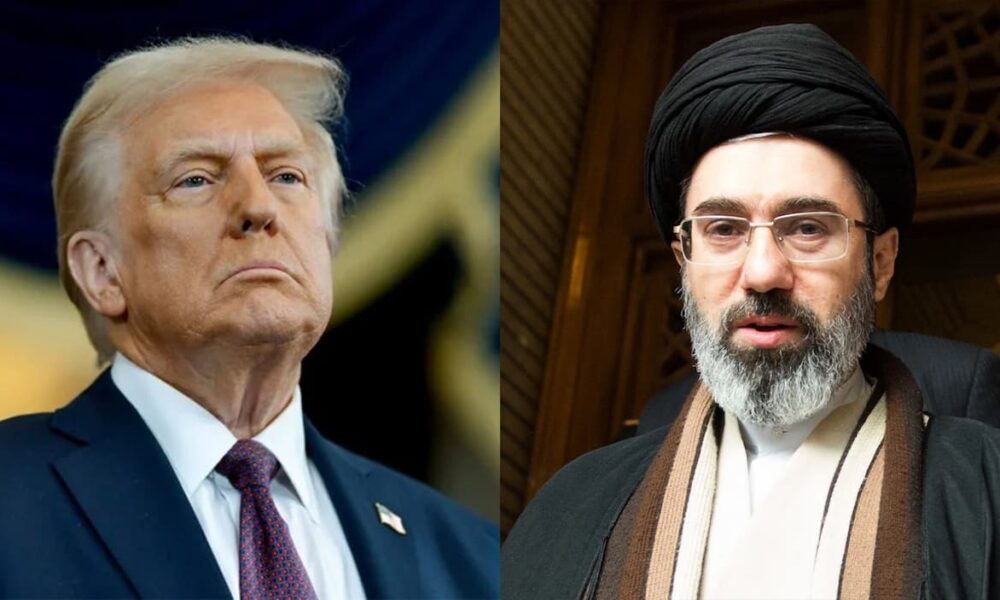
Donald Trump rejected the new Iranian plan that proposed reopening the Strait of Hormuz and launching a seven-day de-escalation process. Tehran, however, says it is still awaiting a formal response transmitted through the mediators.
Behind the diplomatic standoff, the crisis is now producing very concrete effects: gasoline around $4.50 a gallon in the United States, diesel above $6, higher airfares, pressure on transport and new disruptions in Gulf air travel.
The Essentials
- Donald Trump rejected the Iranian plan proposing to reopen the Strait of Hormuz in seven days.
- Tehran says it is waiting for the final American response through mediators in Qatar and Pakistan.
- Brent settled on Friday, September 25 at $104.32 per barrel.
- U.S. regular gasoline is around $4.49 per gallon, versus about $3.16 a year earlier.
- In the United States, diesel has surpassed $6 per gallon, with stocks at their seasonally lowest level since the start of statistics in 1982.
Trump shuts the door on the Iranian plan
On the 102nd day since the memorandum of understanding reached in June between Washington and Tehran and 211 days after the start of the war on February 28, no durable exit from the crisis is yet in sight.
Iran had presented in New York, on the margins of the United Nations General Assembly, a roadmap outlining a series of steps over seven days. According to Tehran, the Strait of Hormuz could be reopened on the sixth day, ahead of the seventh day negotiations aimed at reaching a broader agreement.
The Iranian plan notably envisages the lifting of the American naval blockade on Iranian ports, waivers to sanctions on oil sales, the release of about $12 billion of Iranian assets frozen abroad and a ceasefire covering other regional fronts as well.
Donald Trump, however, indicated on Saturday that he had rejected this proposal. He stated that Iran now wished to reach a quick agreement because closing the strait would itself cause it heavy losses.
The American president said he remained favorable to a deal, while describing the plan presented by Tehran as “unacceptable.” Washington contends that some Iranian demands would amount to removing several of its main levers of pressure before negotiations open on the nuclear, ballistic and regional dossiers.
Tehran says it has not yet received a formal response
Despite Donald Trump’s public statements, Iranian Foreign Minister Abbas Araghchi said on Sunday that Tehran had not yet received Washington’s final position through the mediation channels.
Iran says it has taken note of the initial reaction from the American president, but it intends to wait for the mediators to formally convey Washington’s response before deciding what to do next.
Iranian President Massoud Pezeshkian also told Al Jazeera that his country no longer trusts the negotiating process with Washington. According to him, several rounds of talks were followed by new strikes or additional sanctions.
Pezeshkian confirmed that Qatar and Pakistan are currently playing the role of intermediaries and are transmitting messages between the two capitals.
Hormuz remains at the center of the power struggle
The Strait of Hormuz remains Tehran’s main lever of pressure. Before the conflict, around 20% of global oil flowed through this strategic shipping lane.
Flows, however, have partially rebounded in recent days. According to Reuters-cited preliminary maritime tracking data, 33.7 million barrels of crude passed through the strait during the week starting September 20.
On Wednesday, about sixty commercial ships had crossed Hormuz, carrying the highest daily crude volume recorded since the start of July.
This improvement remains fragile. The Iranian authority in charge of the strait’s management warned shipowners against using routes it considers unauthorized.
It says these routes can entail human and material risks and warns that offending companies could have their ships subjected to restrictions on future passages.
Brent remains above $100
Hope for a compromise prompted a price retreat on Friday, but levels stay very high.
| Indicator | September 25 |
| Brent | $104.32/barrel |
| U.S. WTI | $92.41/barrel |
Brent fell 2.1% on Friday and WTI down 2.3% in reaction to hopes for de-escalation. But these levels remain high enough to continue fueling tensions over fuels, transport and production costs.
In the United States, the conflict is now visible at the pump
This is probably the most noticeable effect for American households.
According to the American Automobile Association (AAA), regular gasoline was around $4.49 per gallon on September 25. By September 24, the average stood at $4.48, about 5 cents higher in a week.
One month earlier, the gallon cost about $4.10 and a year earlier $3.16. This represents roughly a 42% year-over-year increase.
What this means for a full tank
For a car with a 15-gallon tank, a full fill-up at the current average price comes to about $67, versus about $47 at the price seen a year earlier: roughly $20 more per fill.
AAA also notes that September 2026 is on track to set a record for that month: the monthly average has so far been about $4.30 per gallon, versus a previous record of $3.83 in September 2023.
Diesel becomes a problem for the entire economy
Diesel poses an even broader challenge, as its price directly affects heavy trucks, agriculture, construction, industry, and supply chains.
In the United States, diesel topped $6 per gallon for the first time in September. Data available in the third week of the month even placed it above $6.50 according to several market reports.
U.S. distillate stocks fell to 107.9 million barrels on September 11, the lowest level ever observed for this time of year since the Energy Information Administration began the series in 1982.
The EIA now projects that these stocks could fall below 100 million barrels and stay under their five-year low average through the end of 2026 and for much of 2027.
For households, the effect is indirect but significant: when the cost of the truck transporting food, materials, or goods rises, part of that increase can gradually be passed on to final prices.
Inflation: energy +16.3%, airfare +23.4% year over year
U.S. statistics show that the energy shock is already visible in consumer prices.
In August, U.S. inflation stood at 3.4% year over year, according to the Bureau of Labor Statistics. But the gap between categories is substantial.
| Category | Year-over-year change |
| Overall inflation | +3.4% |
| Energy | +16.3% |
| Gasoline | +27.4% |
| Home heating oil | +52.0% |
| Airfare | +23.4% |
| Food | +2.7% |
In August alone, gasoline rose by 3.9% and accounted for more than a third of the monthly rise in the general price index.
Airline tickets, meanwhile, rose by 2.7% in one month. This trend cannot be attributed entirely to the Iranian conflict, but higher aviation fuel costs and airspace disruptions are now major cost factors for airlines.
Global aviation also pays the bill
The global aviation sector has already markedly revised its outlook for 2026. The International Air Transport Association (IATA) had cut its sector net profit forecast from $41 billion to $23 billion, in a context of rising kerosene prices and disruptions to air routes in the Middle East.
Global airline fuel expenditures were then expected to be around $350 billion, nearly a third of their operating costs, while average profit per passenger was trimmed to around $4.50.
For travelers, the consequences can take several forms: more expensive tickets, reduced service frequencies, longer detours, or temporary suspension of certain routes.
U.S. sanctions directly affect regional air links
Washington has also stepped up pressure on Iranian aviation. The new U.S. measures have led several countries to restrict operations of Iranian carriers.
The United Arab Emirates halted flights operated by Iranian airlines. Oman and Turkey have also imposed some restrictions, while four Iraqi airports — Baghdad, Najaf, Erbil and Sulaymaniyah — suspended links with Iran.
Baghdad is now negotiating with Washington exemptions to restore certain rotations for humanitarian reasons: medical treatments, studies, religious visits and civil needs.
Iran’s international air capacity had already been heavily affected: in August, it was about 49% below its 2025 level, notably due to the absence of several foreign carriers.
Dubai and Abu Dhabi stock exchanges react to threats to aviation
The tensions also reflected on the United Arab Emirates’ financial markets on Friday after Iranian statements mentioning potential disruptions to regional aviation and airport services.
The Abu Dhabi index fell by 0.1%. National Bank of Fujairah dropped 4.8% and Abu Dhabi National Hotels 1%.
In Dubai, the main index closed down by 0.05%, with notably a 2.6% slide in Talabat and a 0.7% drop for Salik.
Energy stocks, by contrast, held up better: Adnoc Gas gained 0.3% and Adnoc Drilling 0.4%.
Washington also extends economic pressure beyond Iran
U.S. Treasury Secretary Scott Bessent said that American teams had been dispatched to many countries to achieve greater economic isolation of Tehran.
According to The Wall Street Journal, Treasury officials have engaged in discussions with more than 50 countries in the Middle East and Europe.
Washington warns that institutions continuing certain operations with Iran may face secondary sanctions or restrictions on access to the dollar-based financial system. The campaign targets in particular the banking, aviation, maritime, technology and energy sectors.
China, Turkey and several other Iran trading partners, however, challenge the legitimacy of extraterritorial U.S. sanctions or seek to preserve certain economic ties with Tehran.
In the United States, the cost of the war also becomes an internal issue
Rising energy prices are now at the heart of the American political debate.
A Reuters/Ipsos poll of 1,277 American adults, with a margin of error of about three points, measured Donald Trump’s approval rating at 32% in September. Among respondents, only 17% approved of his handling of the cost of living.
Among Republican supporters, the president’s overall approval had fallen from 82% to 73% in a week. This shift comes as several Republican candidates themselves start calling for a quicker exit from the conflict or measures to curb fuel prices.
On the Democratic side, House Minority Leader Hakeem Jeffries said his group would continue to use war powers resolutions to seek an end to the conflict. These positions come amid the U.S. midterm elections scheduled for November.
Tehran meanwhile maintains military pressure
Despite the diplomatic initiatives, military signals remain notably firm.
The spokesperson for the Iranian armed forces warned that any new miscalculation by the United States would trigger, in his view, a broader response than in previous confrontation phases.
A political official in the Revolutionary Guards’ navy said that, in the event of a new open war, Iranian forces could target American facilities even in the Indian Ocean. He also challenged U.S. claims concerning the number of oil tankers traversing Hormuz daily.
These statements are part of Iranian military communications and do not by themselves establish the operational capacities that would actually be mobilized in a new cycle of clashes.
A crisis that has become economic as well as military
The durable reopening of the Strait of Hormuz is no longer solely a regional security issue. For the United States, Europe, Asia and Gulf countries, it now directly affects energy prices, road transport, aviation, inflation and financial markets.
In the United States, the translation is already very tangible: around $20 more to fill a 15-gallon tank than last year, diesel at record levels and airfares rising by more than 20% over twelve months.
The rejection of the Iranian plan by Donald Trump therefore keeps a level of uncertainty that markets had momentarily begun to reduce. Tehran continues nonetheless to assert that negotiations remain possible and now awaits the official response transmitted by the mediators.