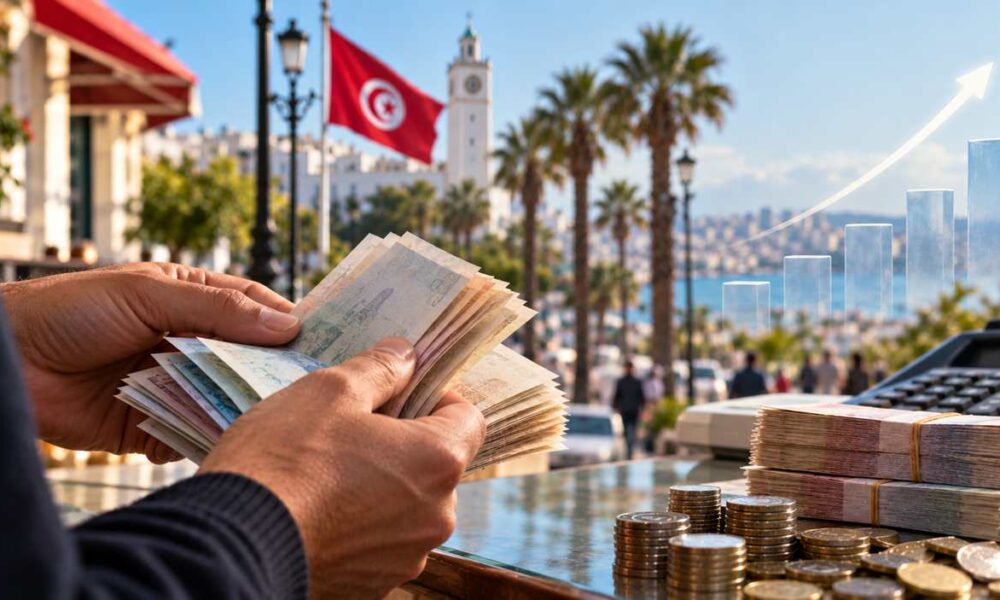
A dinar spent is never a simple purchase. It is an impulse launched into the economy, whose reach depends less on the amount than on the distance it travels before leaving the territory. This idea, elementary in microeconomics, changes the way we read the debate on national consumption.
The moment is favorable for it. According to the World Trade Organization, the value of global trade has been multiplied by 382 between 1950 and 2024. This expansion has standardized consumer baskets, but the shocks of 2008 and 2020 have shaken confidence in a model based on the standardization of exchanges. A current, the ‘locavorism’, now advocates for short supply chains, proximity, and cultural anchoring.
This is the starting point of a note from IACE, the Arab Institute of Business Leaders, titled “Promoting national production: first demolish the concept of the universal consumer.” We reproduce here its key data to offer a reading centered on an issue that patriotic discourse often leaves aside: the retention of value.
A Growing Basket, A Distorted Structure
The latest survey by the National Institute of Statistics, conducted in 2021, establishes that average expenditure per person rose from 3,871 dinars in 2015 to 5,468 dinars, a 41.3% increase. This figure is expressed at current prices, so it includes inflation and does not measure real wealth growth.
The most instructive is the composition of the budget. Food and non-alcoholic beverages account for 30.1% of expenditures, up from 28.9% in 2015. Clothing rises from 7.6% to 11.6%, with spending doubling, from 293 to 635 dinars. Health and hygiene rise from 9.4% to 11.1%. By contrast, housing falls from 26.6% to 23.9% and transport from 9.3% to 6.9%. Households therefore allocate an increasing share of their budget to goods where imported production is massive.
World Bank data on final consumption expenditure per capita also show a distinctive trajectory. Tunisia records positive peaks in 2001 and especially in 2010, contrary to the global trend, followed by pronounced troughs in 2020 and 2023.
When demand turns to the rest of the world