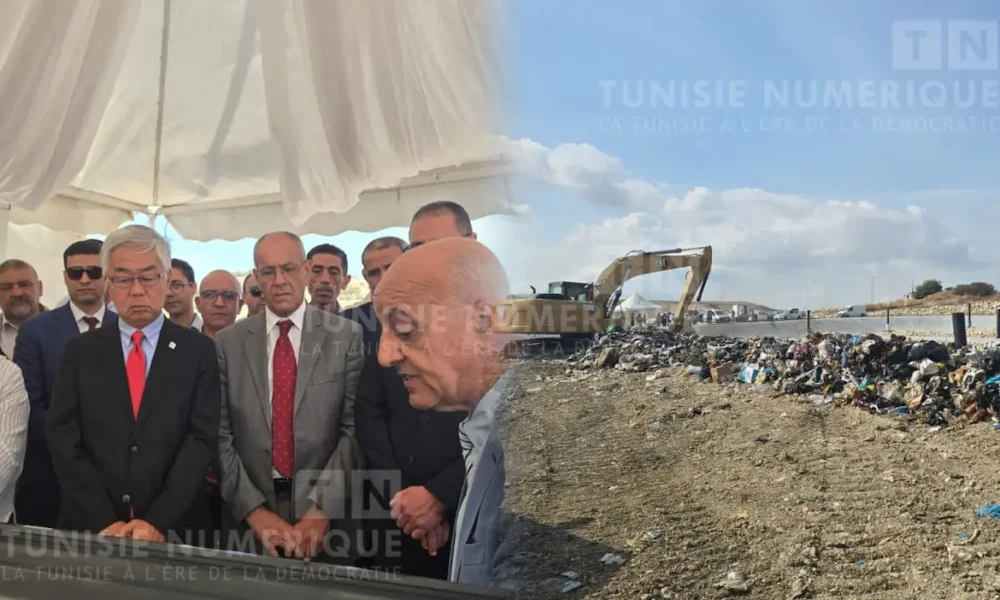
The Minister of the Environment inaugurated the extensions of the Bir Joua municipal landfill in the Béja governorate. This pilot project relies on the “Fukuoka” technology to reduce greenhouse gas emissions related to waste.
The site’s processing capacity is estimated at around 30,000 tonnes of waste per year. The project aims for an annual reduction of approximately 5,150 tonnes of CO2 equivalent over the period 2026-2036, according to the data provided.
A Tunisian-Japanese cooperation project
The project is part of the cooperation framework between Tunisia and Japan and the Joint Crediting Mechanism (JCM) carbon credit exchange agreement, which came into effect on April 1, 2025. Its operation began on September 1, 2026.
The “Fukuoka” technology is expected to help improve the operating conditions of the landfill and to reduce the environmental impacts of waste, notably greenhouse gas emissions.
A ten-year emissions reduction target
According to the data presented, the project aims to reduce emissions by about 5,150 tonnes of CO2 equivalent per year over ten years, from 2026 to 2036. Its processing capacity is estimated at nearly 30,000 tonnes of waste per year.
Implementation is carried out by the United Nations Industrial Development Organization (UNIDO), with the contribution of the technical assistance office “EXRI”.
The project is part of efforts to support environmental initiatives and to rely on technical solutions for waste management and emission reductions.