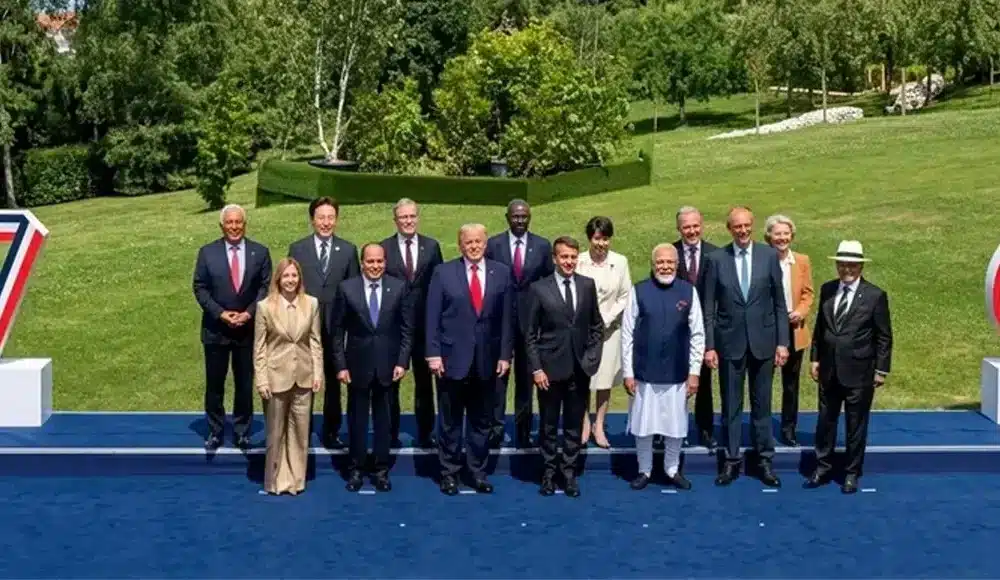
The G7 leaders agreed on Friday, October 2, 2026, to strengthen their coordination in order to fully restore freedom of navigation in the Strait of Hormuz and to respond to tensions in energy markets.
In a statement issued following a virtual meeting chaired by French President Emmanuel Macron, the G7 countries announced a coordinated release of 100 million barrels of oil and petroleum products via the International Energy Agency (IEA), over a four-month period. The measure is to begin immediately, with a substantial amount of diesel made available within the first 20 days.
A coordinated release of reserves
Emmanuel Macron specified that this operation would be conducted in a coordinated manner through the IEA in order to rapidly increase the available supply on the markets and help contain the rise in fuel prices.
The G7 leaders also agreed to coordinate refinery maintenance schedules to avoid simultaneous interruptions of production capacity. They called, where possible, for temporarily increasing the use of refining capacities, especially for refined products such as diesel.
No restrictions on exports among G7 countries
The G7 also reaffirmed its commitment to not imposing restrictions on energy exports and energy products among its members.
The group also called on other producing countries to avoid export bans that could amplify tensions in energy markets.
The Strait of Hormuz at the center of concerns
The G7 leaders, in parallel, called for a full restoration of navigational rights and principles in the Strait of Hormuz, a strategic passage for global trade and energy supplies.
They condemned disruptions to international trade and energy security linked to the situation in the region and stated their intention to intensify their collective efforts to enable the full resumption of navigation through the strait.
According to the statement, the IEA will monitor the implementation of the measures and present a report within 20 days, accompanied by recommendations on the next possible actions and, in particular, on replenishing reserves.
The G7 thus intends to act both on the immediate supply of oil and refined products and on the security of supplies, as tensions around the Strait of Hormuz continue to weigh on energy markets.