Spectacular reversal in the energy relations between Washington and Moscow. U.S. President Donald Trump announced, on Friday, October 9, 2026, an agreement with Vladimir Putin to channel Russian diesel to American and global markets.
An initiative presented by Donald Trump as a means to lower fuel prices, but vehemently denounced by Ukrainian President Volodymyr Zelensky.
The announcement comes as prices for petroleum products suffer from the repercussions of the war in Iran and disruptions to global supply. It also marks a significant shift in strategy, less than a month after the tightening of U.S. sanctions targeting the Russian economy because of the war in Ukraine.
The essentials
More than 300,000 tonnes of Russian diesel announced for immediate market delivery.
500,000 tonnes additional planned in November, then 1 million tonnes shortly after.
3 million tonnes additional envisaged in the short term, subject to the condition of Russian refineries.
Sanctions: the U.S. Treasury announces a temporary license concerning Russian diesel, while Kyiv denounces a concession to Moscow.
Stepwise diesel deliveries promised
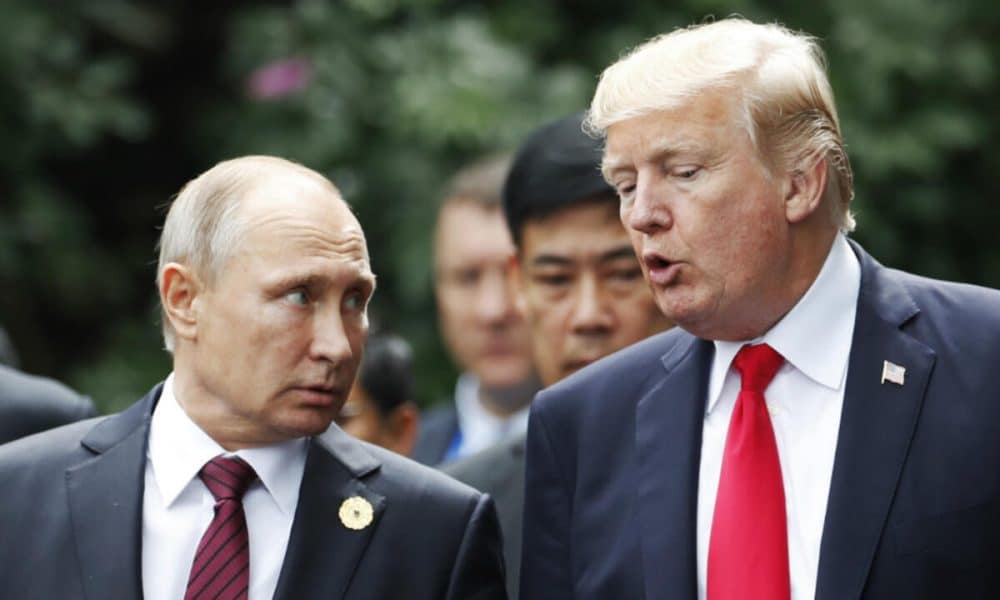
Donald Trump reported, on his Truth Social network, a “very fruitful” telephone exchange with his Russian counterpart. He claims that Moscow has agreed to supply more than 300,000 tonnes of diesel immediately to both American and international markets.
According to the schedule presented by the American president, Russia must then supply 500,000 tonnes during November, followed by 1 million tonnes additional shortly thereafter. Trump also mentions 3 million tonnes to be delivered within a relatively short timeframe, depending on the state of Russian refineries.
In total, the volumes cited exceed 4.8 million tonnes if all announced tranches materialize. These are however promised quantities, not a record of deliveries already made. Details of buyers, contract prices, and the actual arrival dates of the cargoes have not been made public.
The Kremlin confirmed that the two leaders discussed the prospects for supplying the markets with oil and with petroleum products. Russian envoy Kirill Dmitriev also praised the energy exchanges between the two countries.
Washington temporarily eases the sanctions stranglehold
Following the announcement, the U.S. Department of the Treasury said it would issue a general temporary license intended to facilitate the arrival of Russian diesel onto international markets.
According to the Associated Press, the authorization covers diesel already loaded on ships as of Friday, October 9, and envisions loosening through April 2027. This targeted measure does not imply that all economic sanctions against Russia have been lifted.
The shift is all the more notable as Donald Trump had signed, in September 2026, a law strengthening restrictions against Russia. The measure targets Russian officials, banks and oil players of the “shadow fleet,” while framing new American investments in Russia and transactions related to its sovereign debt.
The United States had already banned in 2022 the import of Russian oil and gas, following Russia’s large-scale invasion of Ukraine, according to the U.S. Energy Information Administration (EIA).
Zelensky denounces an agreement that could prolong the war
Ukrainian President Volodymyr Zelensky strongly criticized the American announcement. In a message posted on X, he said that the concessions granted to Moscow risk strengthening Russia’s economic means, engaged in war against his country since February 2022.
He warned that allowing Russia to sell its petroleum products would, in his view, amount to financing the continuation of the war rather than helping bring it to a halt. Zelensky also called for genuine, reciprocal de-escalation, rather than a unilateral easing of pressure on Moscow.
The Ukrainian leader recalled Kyiv’s proposal: to suspend Ukrainian strikes against Russian refineries if Moscow ends its attacks on Ukraine’s energy infrastructure. This proposal does not constitute a ceasefire agreement at this stage.
Why does Trump want to lower diesel prices?
Diesel plays a crucial role in freight transportation, agriculture, and heating in several countries. Its prices have surged due to supply tensions, notably linked to the war in Iran and disruptions affecting Russian oil infrastructure.
According to the American automobile association AAA, cited by the Associated Press, the average price per gallon of diesel in the United States was still $6.23 on October 9, after a record of $6.52 on September 22.
With the U.S. midterm elections approaching on November 3, 2026, fuel costs are a major economic and political issue. Trump asserts that the deal with Russia, combined with what he presents as American control of the Strait of Hormuz, will lead to a steep drop in prices. This outlook remains a presidential forecast: the volumes actually delivered and their impact on prices still have to be observed.
This announcement thus places Washington before a delicate contradiction: trying to ease the global diesel market while maintaining a sanctions policy aimed at pressuring Moscow over Ukraine.